Things to do in Caviahue and Copahue: activities, hot springs and how to get there from Neuquén
We wrote this guide in Spanish and translated it with the help of AI. Leer en castellano
Caviahue is a picturesque destination in the Andes, surrounded by araucaria trees and the majestic Copahue Volcano. Just 360 km from the city of Neuquén, the provincial capital, it's ideal for a short getaway. This guide shows you the best summer activities to enjoy in this charming place, which you can explore in just 3 days.
This article has affiliate links: if you book or buy through them, we earn a commission at no extra cost to you.
When to visit Caviahue
You can visit Caviahue all year round. In winter it has a snow resort that's ideal for cross-country and alpine skiing and snowshoeing. In summer you can visit waterfalls and lakes and climb to the crater of Copahue Volcano.
How to get to Caviahue
Getting to Caviahue is an adventure that takes you through impressive Patagonian landscapes. Here are your options:
1. By plane:
From Buenos Aires: You can take a flight from Buenos Aires to the city of Neuquén, which takes about 2 hours. Once in Neuquén, you can rent a car or take a bus to Caviahue. The trip by car or bus takes around 5-6 hours (about 360 km).
2. By car:
From Neuquén: Take National Route 22 (Ruta Nacional 22) west to the city of Zapala. From Zapala, continue on Provincial Route 21 and then Provincial Route 26, which takes you straight to Caviahue. The trip takes about 5-6 hours.
From Buenos Aires: It's about 1,500 km. Take National Route 5 to Santa Rosa, in La Pampa province, then continue on National Route 35 toward Neuquén. From there, follow the route described above from Neuquén. The trip takes around 16-18 hours, so it's best to do it over two days.
3. By bus:
From Buenos Aires: Long-distance buses leave from the Retiro terminal for Neuquén or Zapala. From there, you can take a local bus straight to Caviahue. The whole trip by bus can take between 20 and 24 hours, depending on connections.
From Neuquén or Zapala: Daily buses connect Neuquén and Zapala with Caviahue. The trip takes around 6 hours from Neuquén and 3 hours from Zapala.
Tip
We recommend traveling by car if you want the freedom to explore the area around Caviahue, since some of the most interesting places are a few kilometers from the center of town. The scenery along the way is also spectacular, with views of the Andes and araucaria forests. If you don't want to drive from Buenos Aires, you can rent a car in Neuquén: you'll find the best deals here.

Rent a car here to get around Caviahue
Rent a car on Rentalcars.com (opens in a new tab)
This is an affiliate link: if you book or buy through it, we earn a commission at no extra cost to you.
What to do in Caviahue
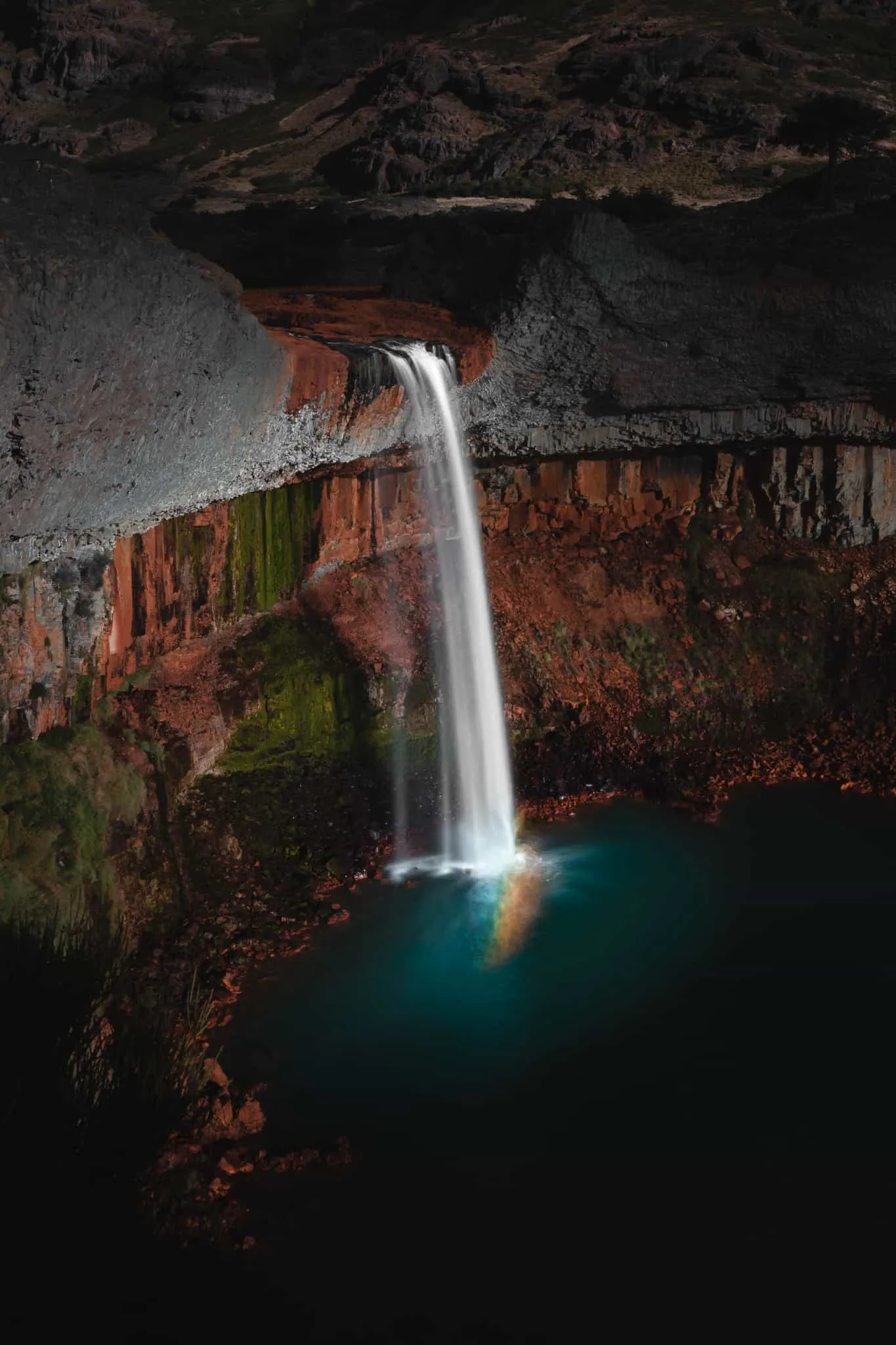
1. Salto del Agrio waterfall
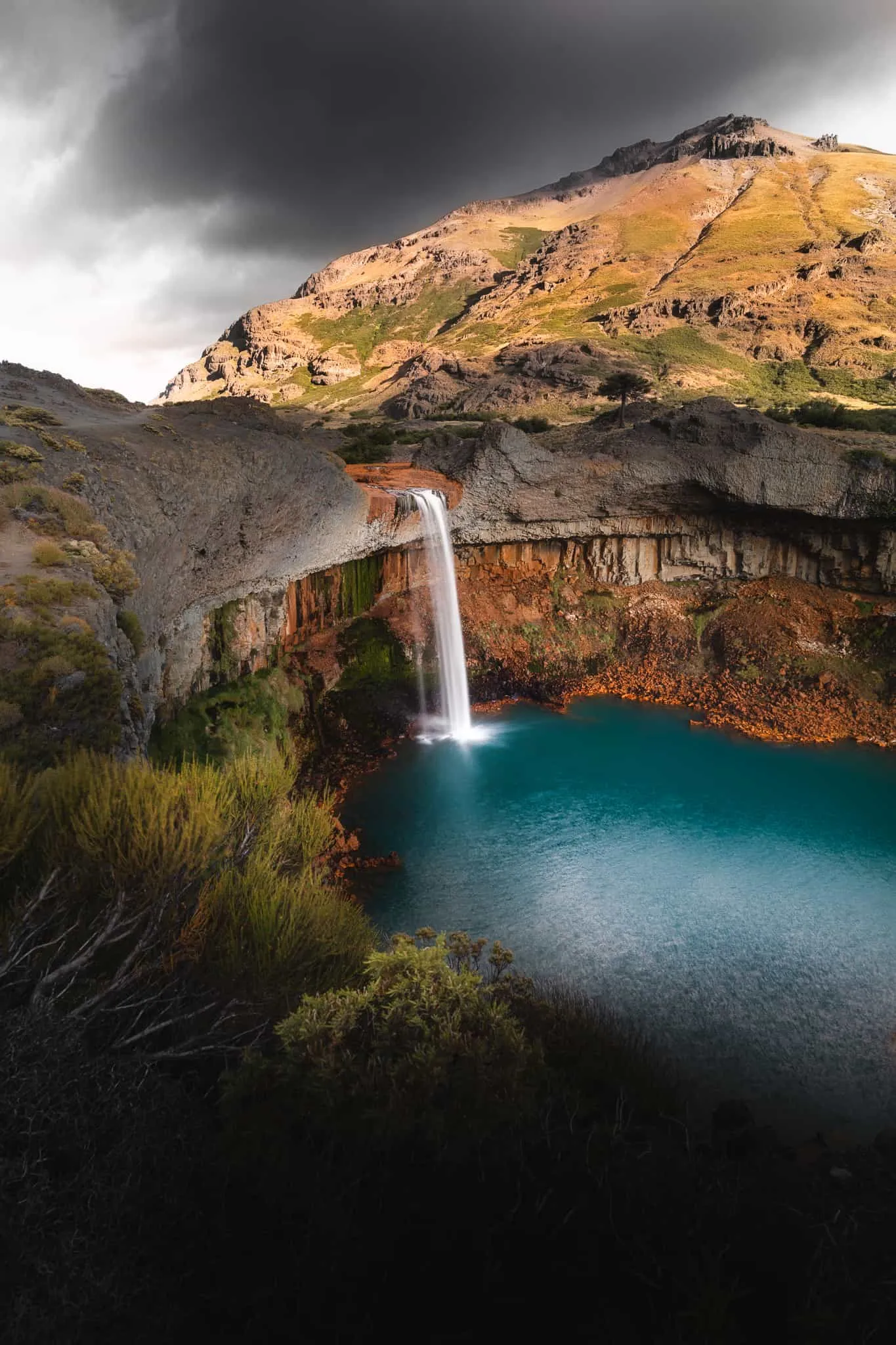
One of Caviahue's most famous attractions is the incredible Salto del Agrio. It's a waterfall over 40 m (131 ft) high, in a canyon formed by lava flows from the ancient volcanic activity that marked this area. Minerals carried by the Río Agrio, like iron and sulfur, tint the landscape in shades of ochre, orange, green and yellow.
This incredible place is just 14 km from the center of town, and you can get there in your own vehicle, by bike or on a tour like this one.
There's no entrance fee to visit it.
Tip: The best time to visit is in the morning, when you can better appreciate the colors of the landscape.
2. Laguna Escondida
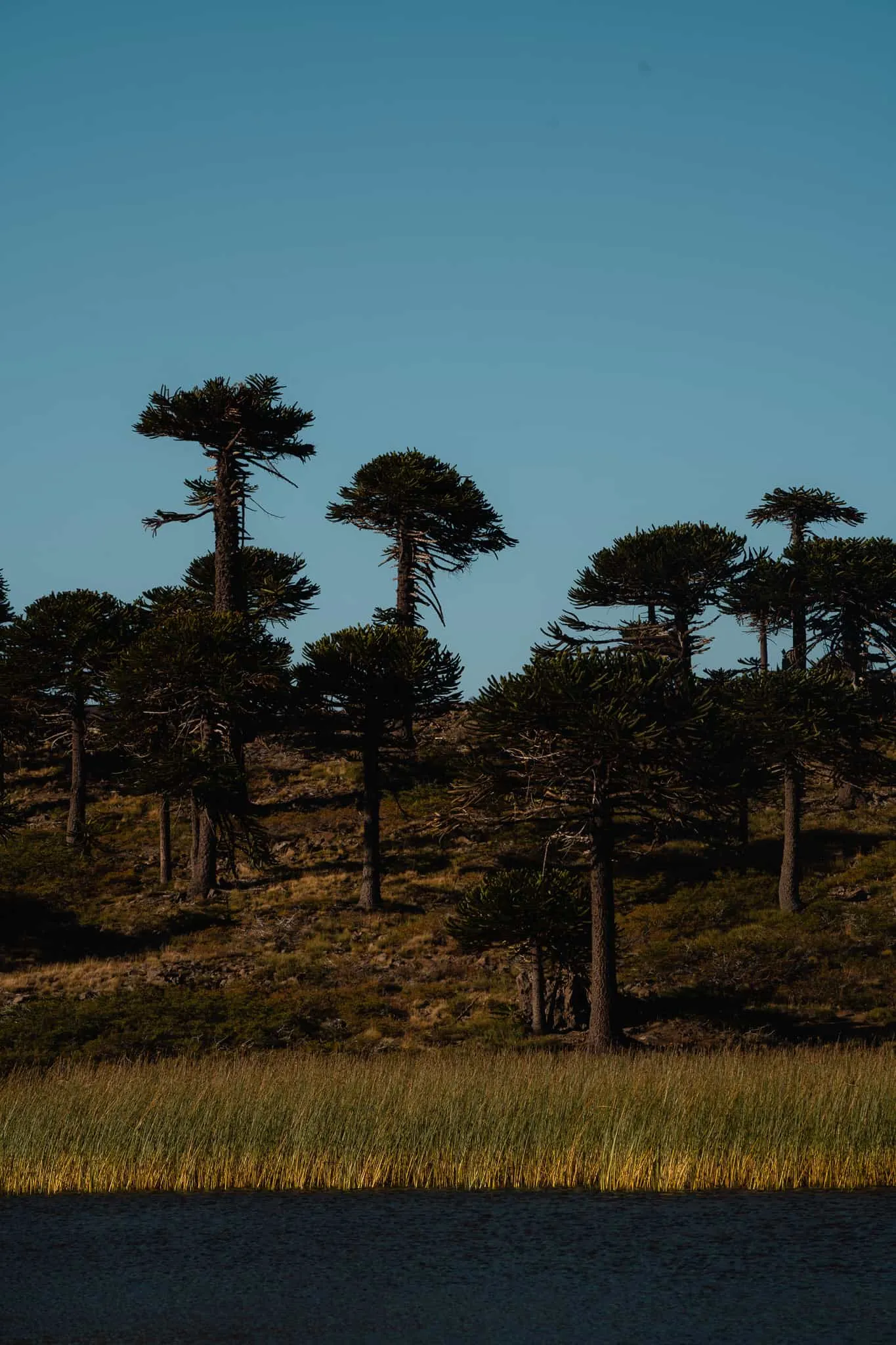
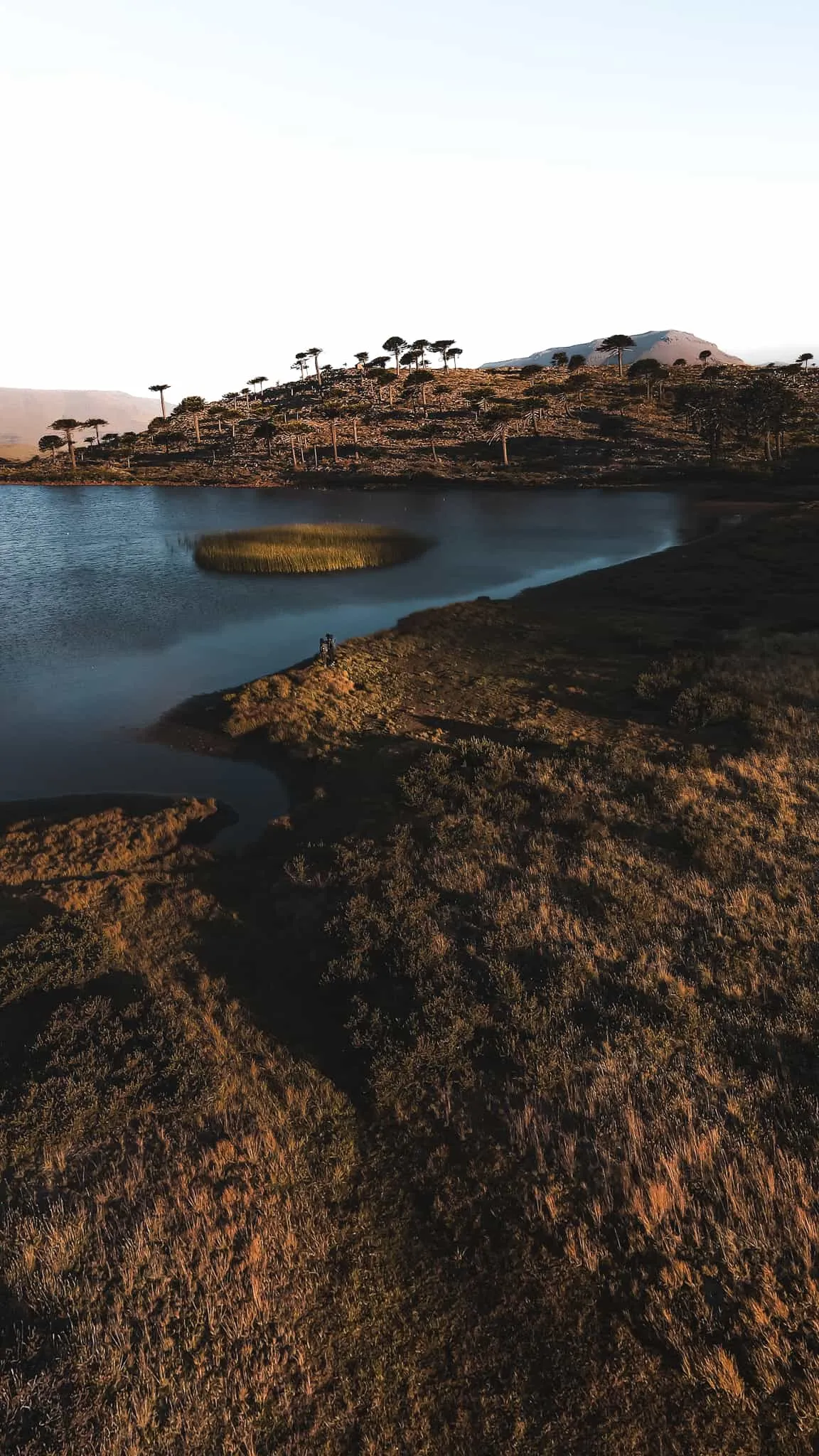
It's a small natural lake on a farallón (a rock wall that rises abruptly from flat ground) behind the village, with an impressive panoramic view of Lago Caviahue and Copahue Volcano. It's surrounded by araucarias, which turns it into an incredible Jurassic landscape.
To get there you do an easy walk of about 2 km (1.2 miles), with a few slightly steeper stretches. In winter you do it on snowshoes or by snowmobile. To reach the starting point from the tourist office, go along Calle 8 de Abril until you get to Calle Volcán Copahue. From there, turn left and go to the end of the street. Then turn right and go about 50 m (164 ft), and at that point the sign marking the start of the trail is on your left.
If you'd rather do it with a mountain guide, you can book this tour.
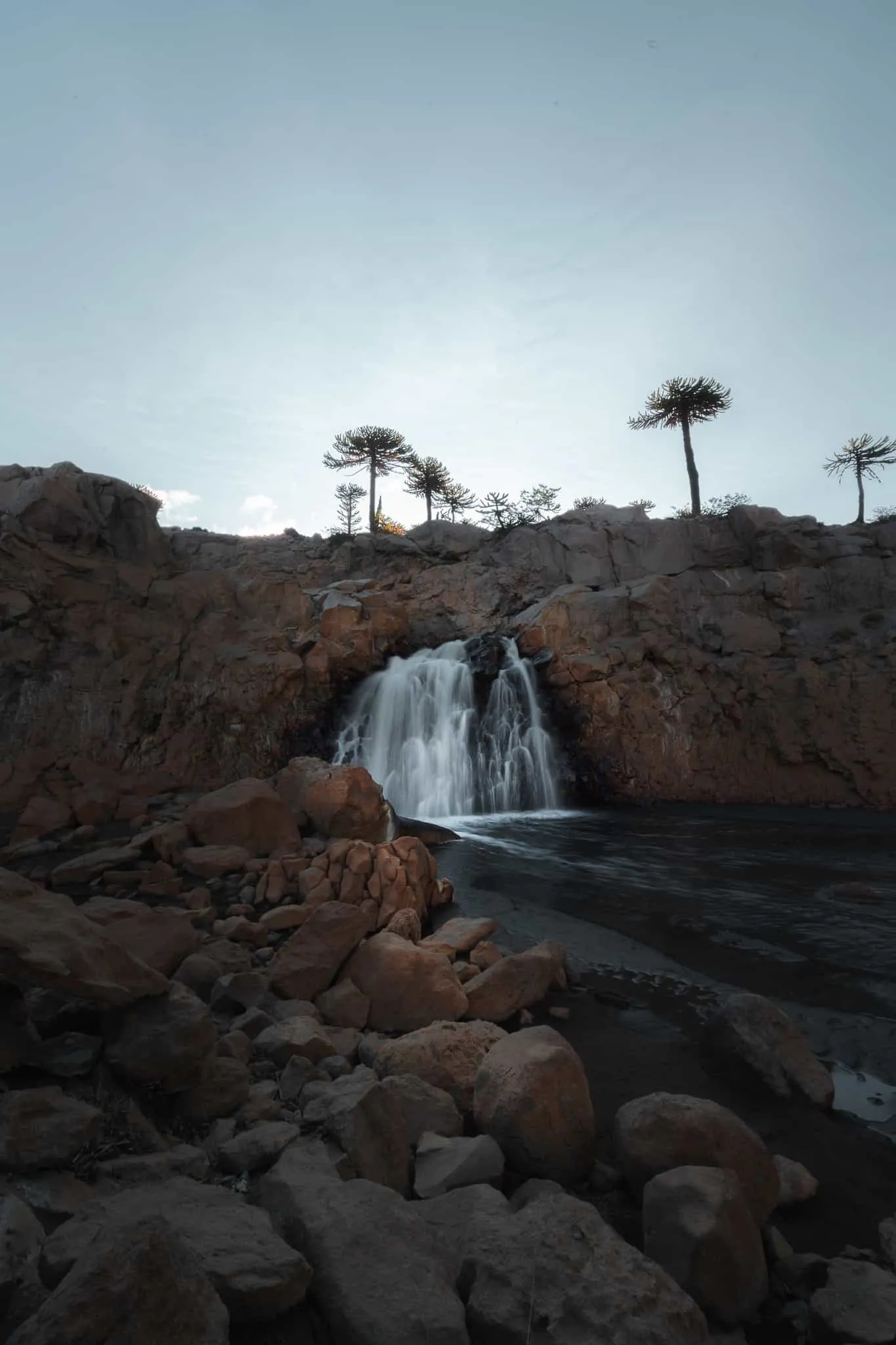
3. The seven waterfalls of the Agrio
The circuit of the 7 waterfalls is 2 km (1.2 miles) from Caviahue, and you can do it on foot (about 3 hours) or by car. The seven waterfalls are formed by the Río Agrio as it descends from the mouth of the volcano's crater, until it finally feeds Lago Caviahue.
Among the waterfalls you can admire are Del Basalto, Cabellera de la Virgen, De la Culebra and La del Gigante. The first four are the most accessible and the largest, an impressive sight for visitors.
Los Siete Saltos are a calm, peaceful setting in the middle of nature, ideal for relaxing and enjoying a few rounds of mate (the herbal tea Argentines love to share). It's a perfect place to admire the beauty of the waterfalls and appreciate the force of the water flowing through these picturesque surroundings.
4. Copahue Volcano
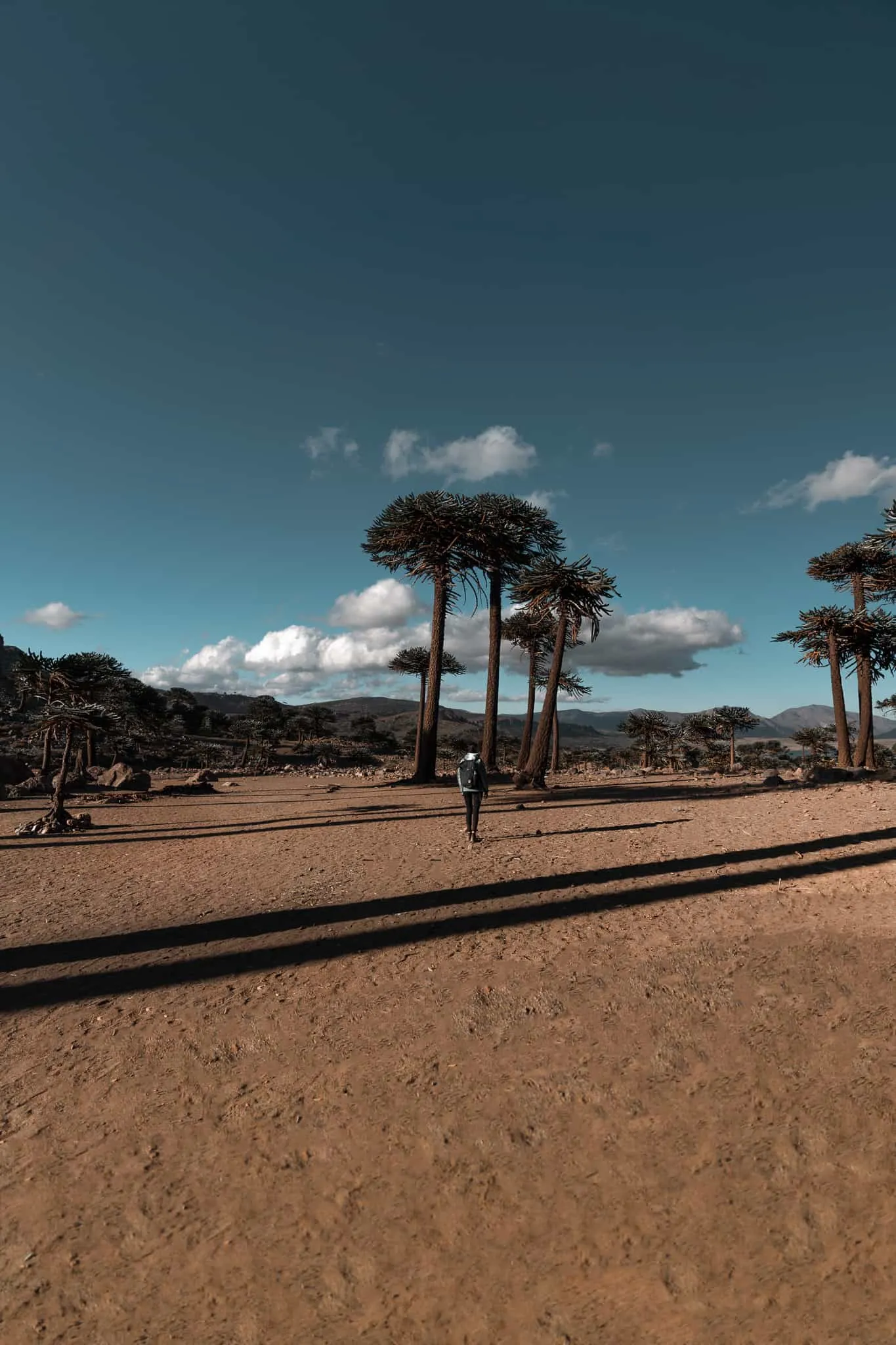
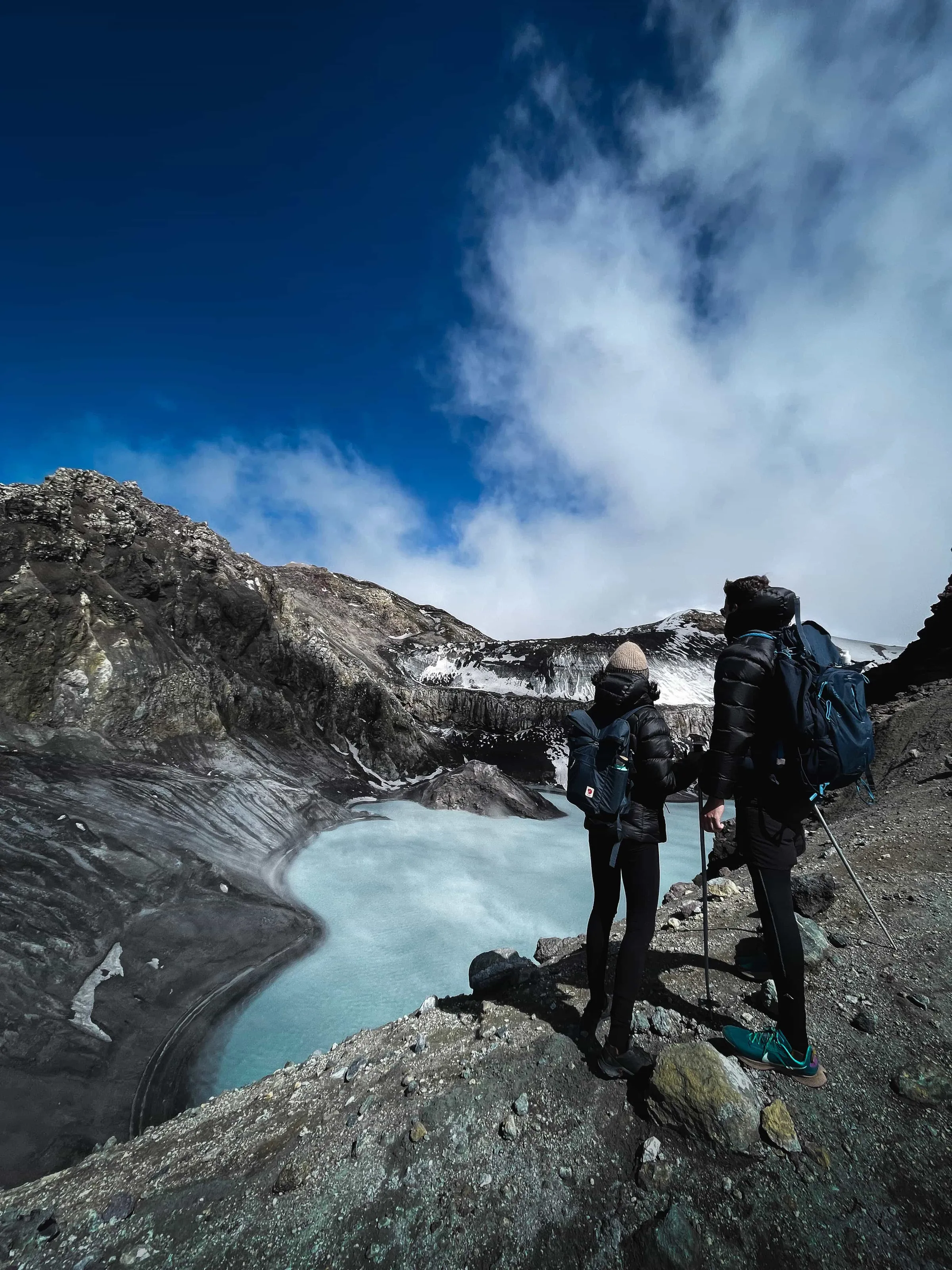
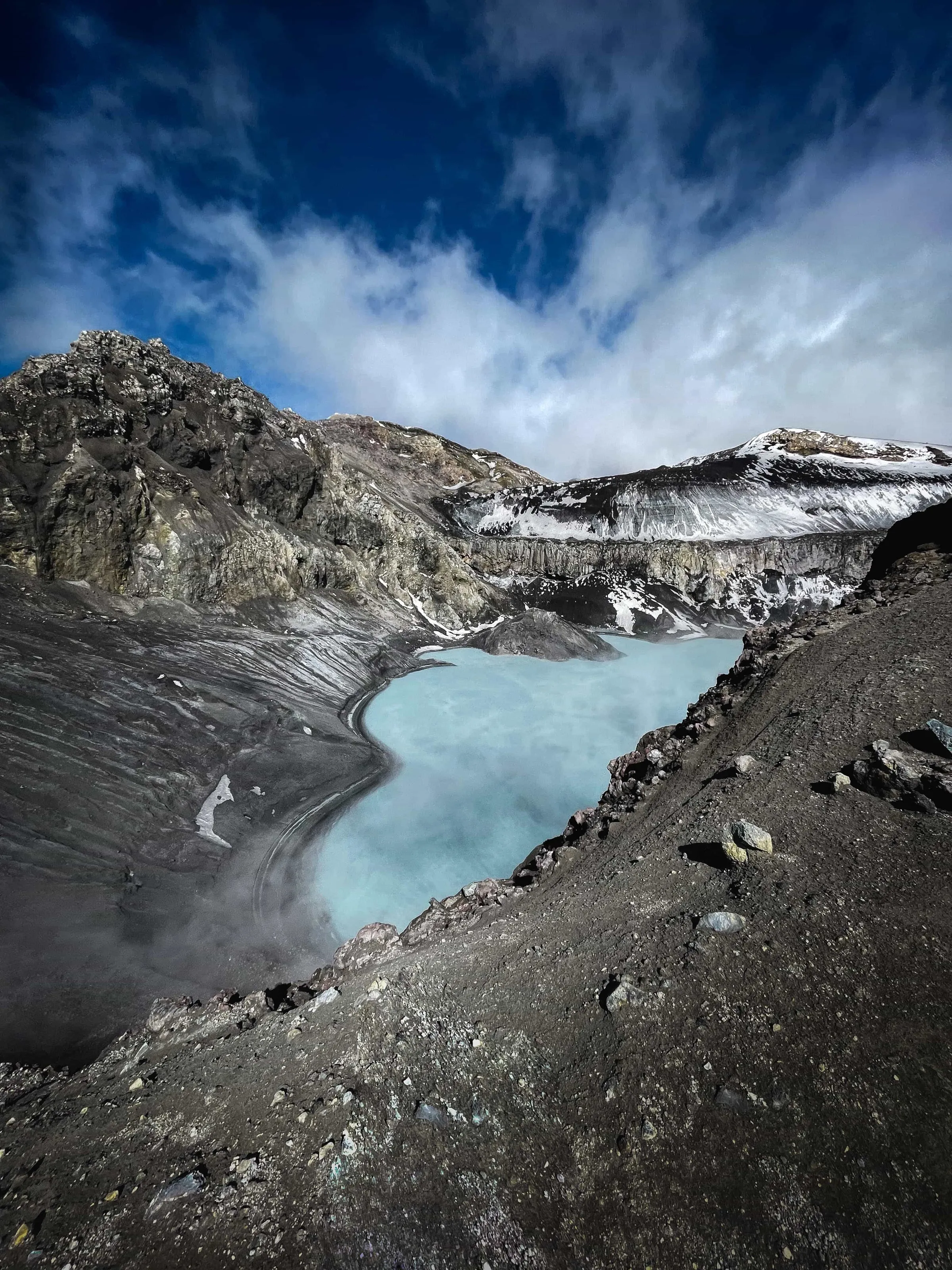
This active volcano is one of Caviahue's main attractions. You can climb to its crater, at 2,800 m (9,186 ft) above sea level.
It's best to do this climb with an experienced mountain guide who knows the area, since much of the trail isn't marked because of the volcanic ash, and it's an active volcano. The route starts in a 4x4 vehicle up to 2,300 m (7,546 ft) above sea level, and from there you continue on foot until you reach 2,800 m (9,186 ft) above sea level. The walking part takes about two and a half hours.
The view from the crater, with its small glacier and lake, was simply impressive.
You can book this tour to climb Copahue Volcano.
5. Puente de Piedra
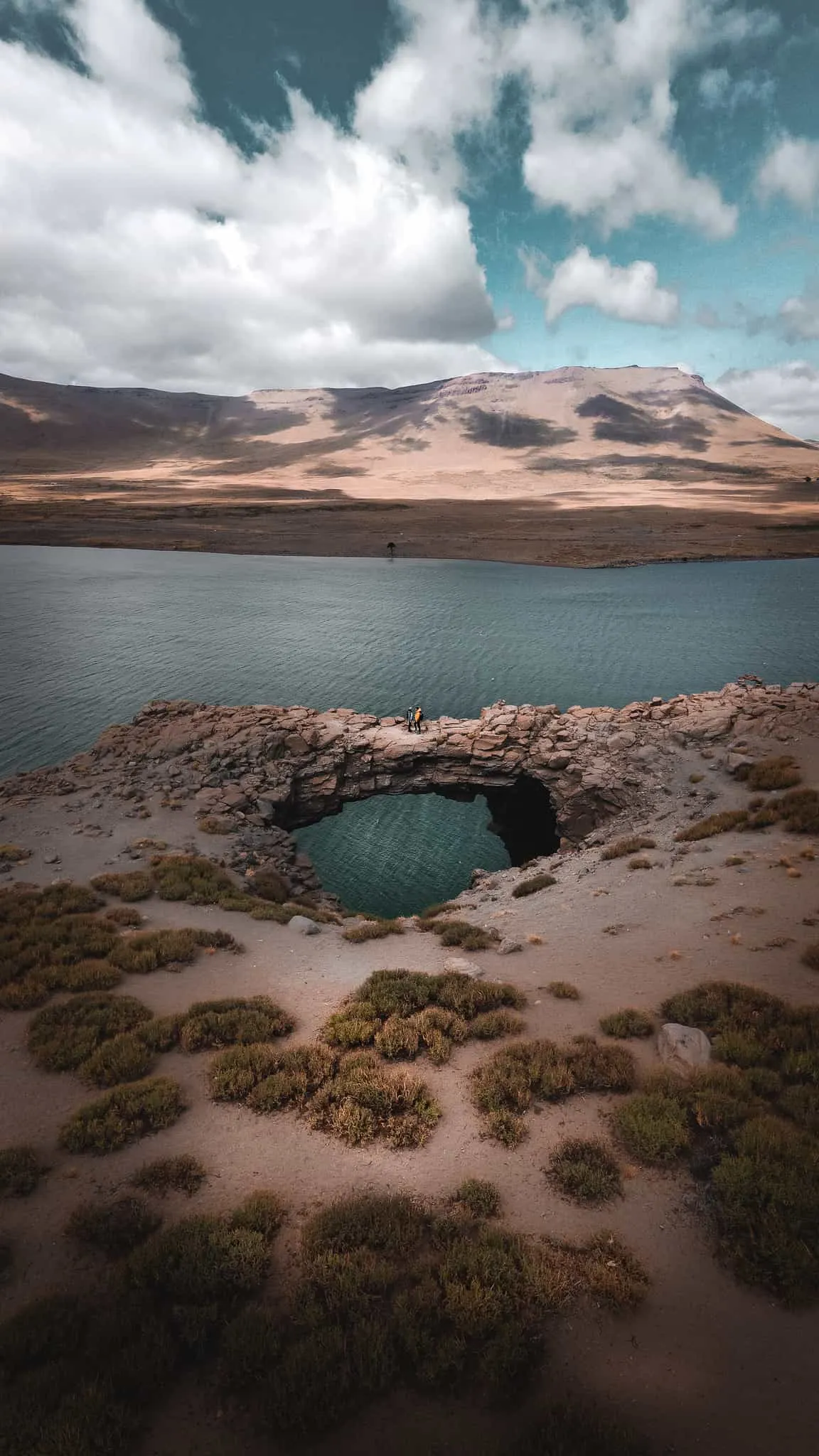
Puente de Piedra is a rock formation shaped by erosion over the years into a fascinating natural stone bridge. From the parking lot it's a short walk of 20-30 minutes.
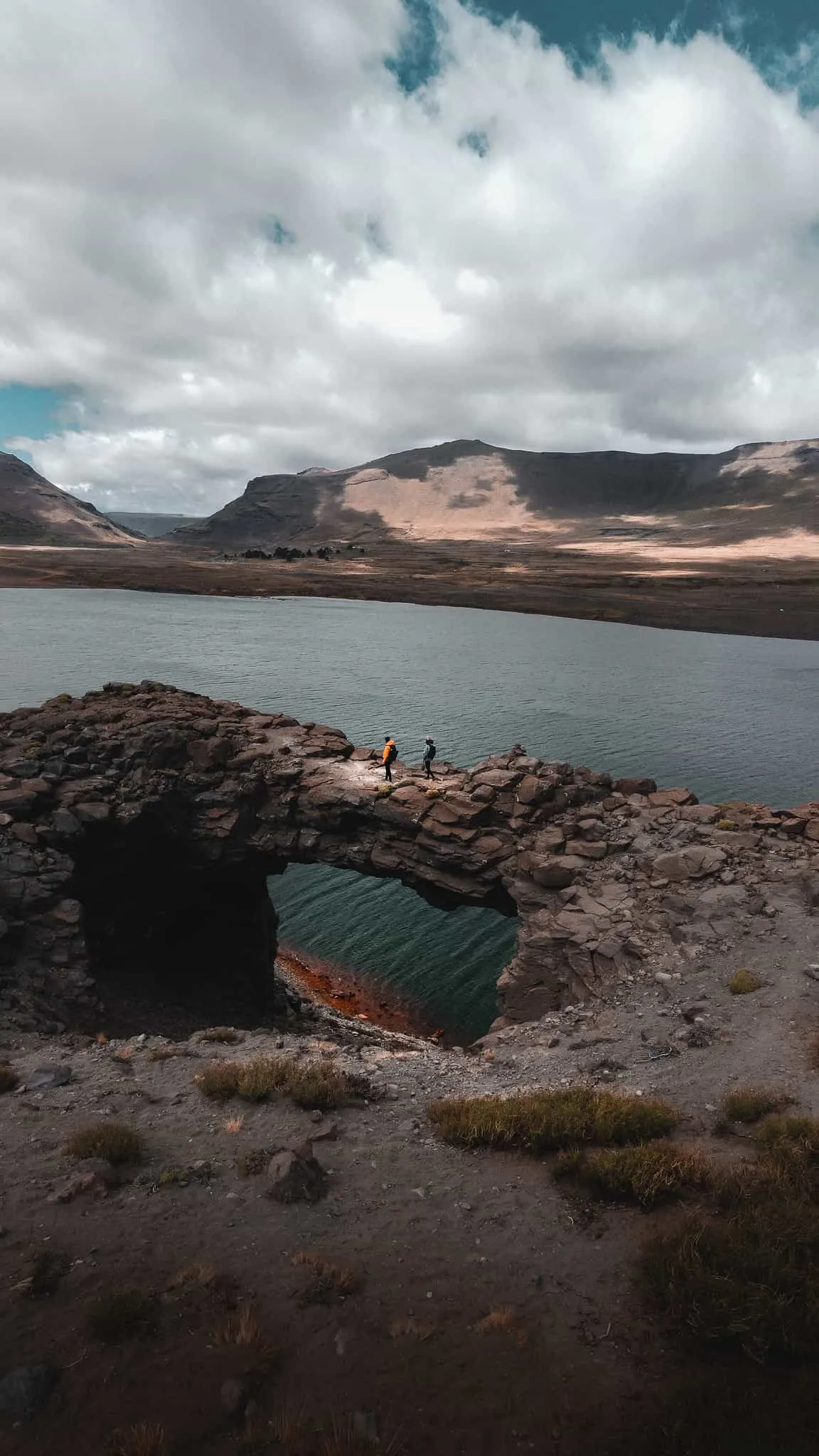
6. Cascada Escondida
It's a waterfall with a 15 m (49 ft) drop, about 3 km (1.9 miles) from Caviahue. It's surrounded by a beautiful forest of araucaria, ñire and lenga trees, a lovely setting.
7. Termas de Copahue hot springs
About 18 km from Caviahue is Copahue, known for its healing hot springs. These waters, which contain minerals and are naturally heated by volcanic activity, make for a relaxing experience. You can soak in the pools and enjoy the warm, therapeutic temperatures.
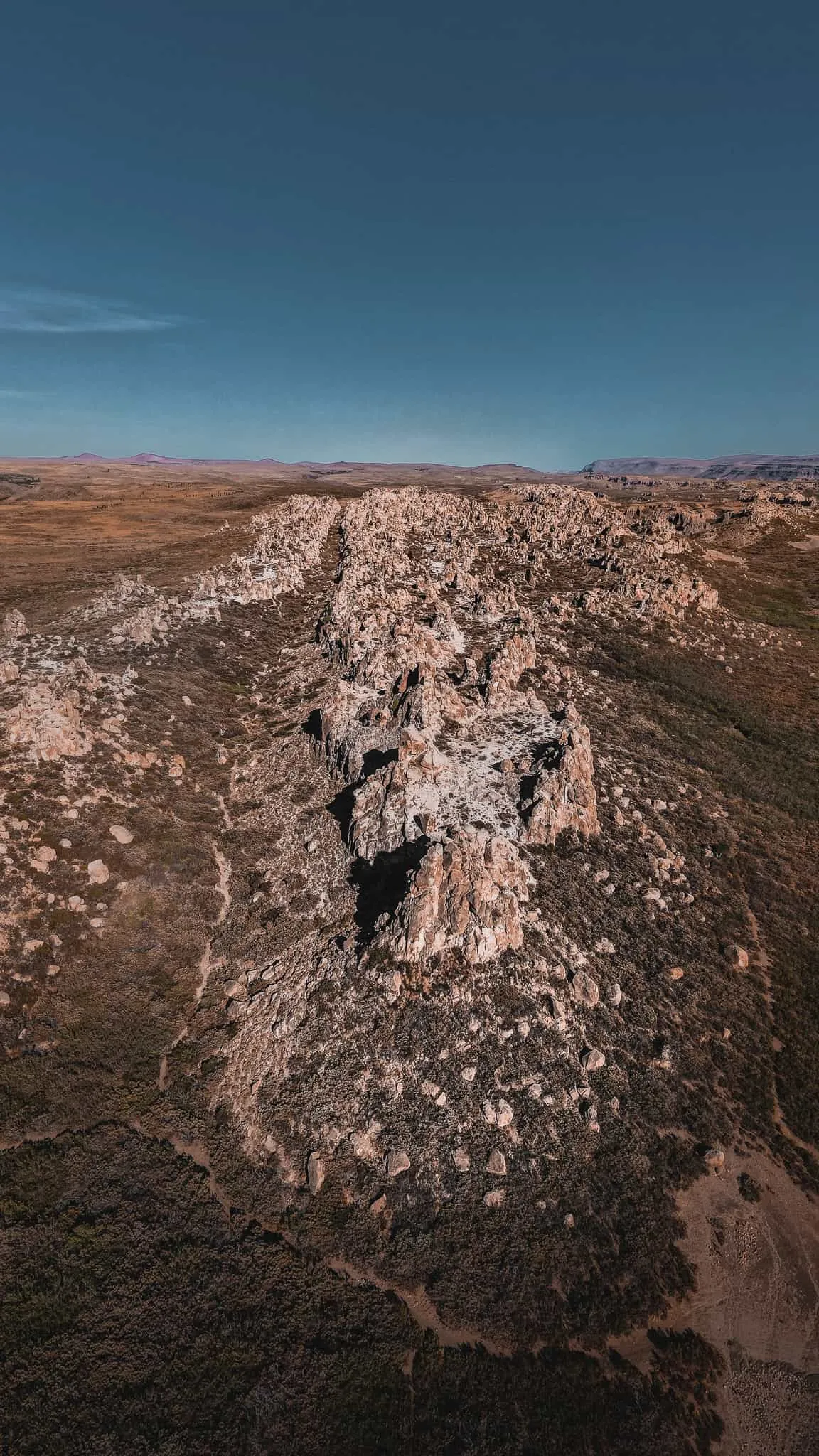
8. Riscos Bayos
Also known as "Las Lágrimas del Volcán" (The Tears of the Volcano), these are unique rock formations named for their appearance and their origin in volcanic activity. These formations exist in only two other places in the world: Turkey and Mexico.
They're 10 km from Caviahue, at kilometer 16 of Route 26, the road to Copahue. They're on private land, but you can take a hiking tour to visit them.
Where to stay in Caviahue
Here are some recommendations for places to stay in Caviahue, by preference and budget.
Cabins and apart hotels
- Cabañas Patagonia Village: Almost 2 km from the center of Caviahue, in a quiet setting. It's excellent value for money, with personalized service. Spacious cabins, a full kitchen, parking and Wi-Fi.
- Ruca Pehuén: 200 m from Lago Caviahue. These are rustic-style cabins with views of the volcanic landscape.
Hotels and inns
- Hostería del Sauquén: Very close to Lago Caviahue and the trails. Comfortable rooms, homemade breakfast and a living room with a fireplace.
- Hostería Quiñe: In a natural setting with quick access to the center of the village. It's an affordable, well-equipped option for a rest.

Here are all the places to stay in Caviahue
Book your stay on Agoda (opens in a new tab)
This is an affiliate link: if you book or buy through it, we earn a commission at no extra cost to you.
- Did a price or a detail change? Tell us at hello@charoandmarcos.com
- Still have a question? Ask us on Instagram (opens in a new tab)

Your next step
Salta and Jujuy Itinerary: A Complete 10-Day Guide to Northern Argentina
Planning a trip to northern Argentina and not sure where to start? In this guide we tell you what to do in Salta and Jujuy in 10 days, with…