Bahía Bustamante: A Complete Guide to Discovering Patagonia Azul
We wrote this guide in Spanish and translated it with the help of AI. Leer en castellano
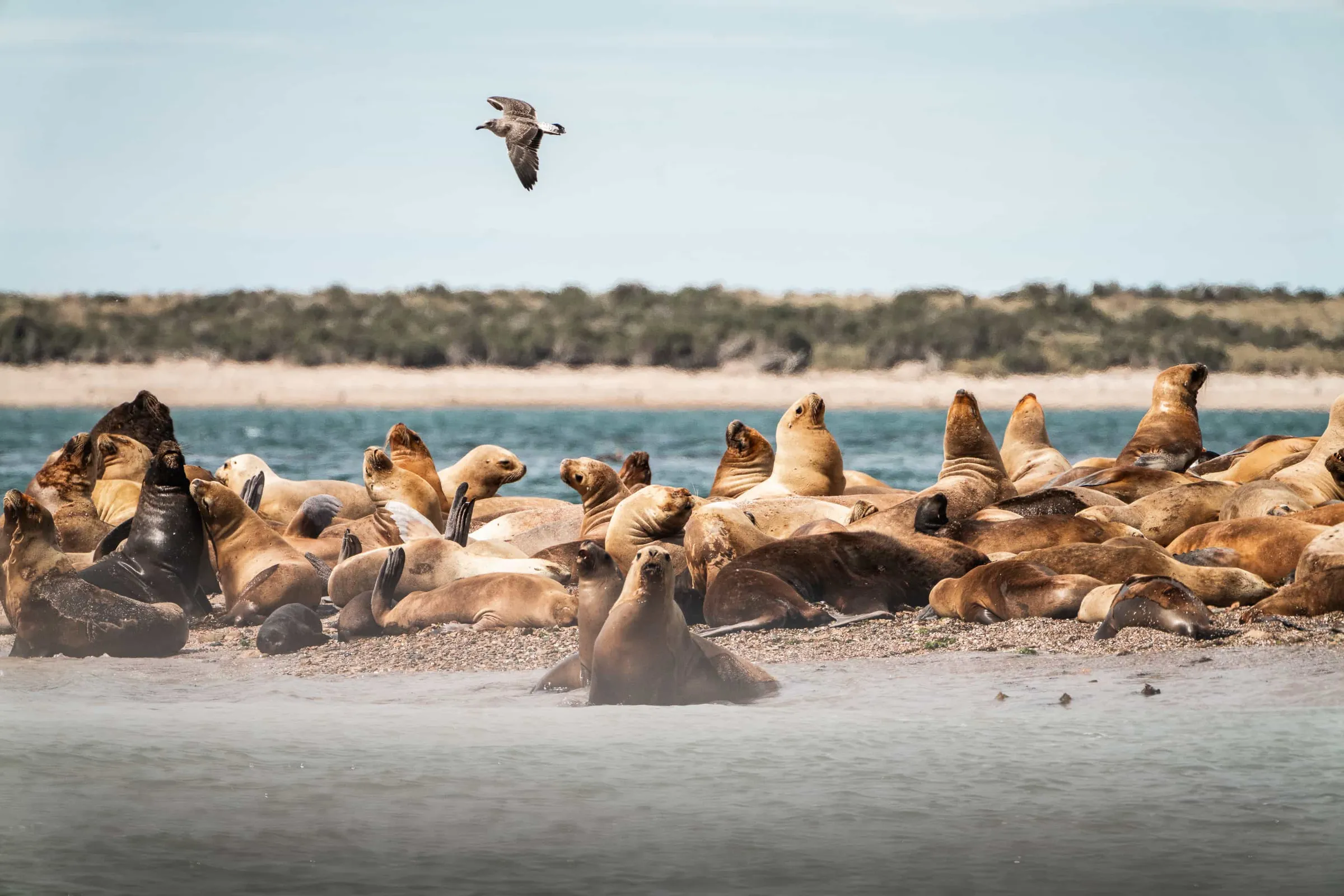
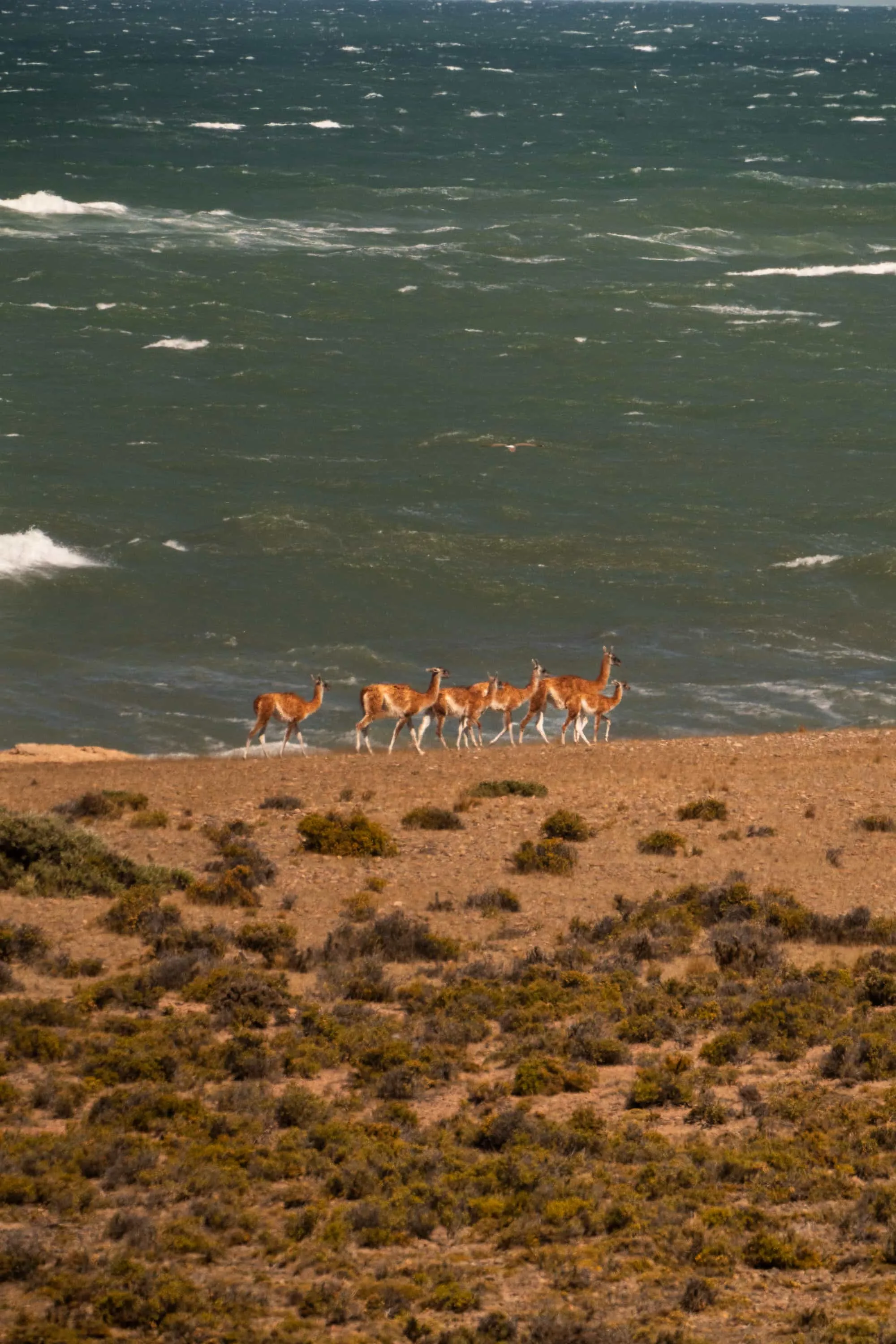
Bahía Bustamante is one of those hidden corners of Patagonia that surprise you with their beauty and their commitment to sustainability. In Chubut province, this Patagonian estancia (ranch) is a nature sanctuary with unique biodiversity, and it's part of the Patagonia Azul Biosphere Reserve. It's a place that has held on to its silence, where you can walk among penguins, spot guanacos, choiques (lesser rheas), sea lions and maras (large Patagonian rodents), and enjoy deserted white-sand beaches without running into anyone but the local wildlife.
This article has affiliate links: if you book or buy through them, we earn a commission at no extra cost to you.
When to visit Bahía Bustamante
Bahía Bustamante is open from October until Easter. The best time to visit is during those months, when the weather is warmer and you can enjoy the outdoor activities. This is also when the wildlife is at its most active, and you can see a wide variety of birds and marine mammals.
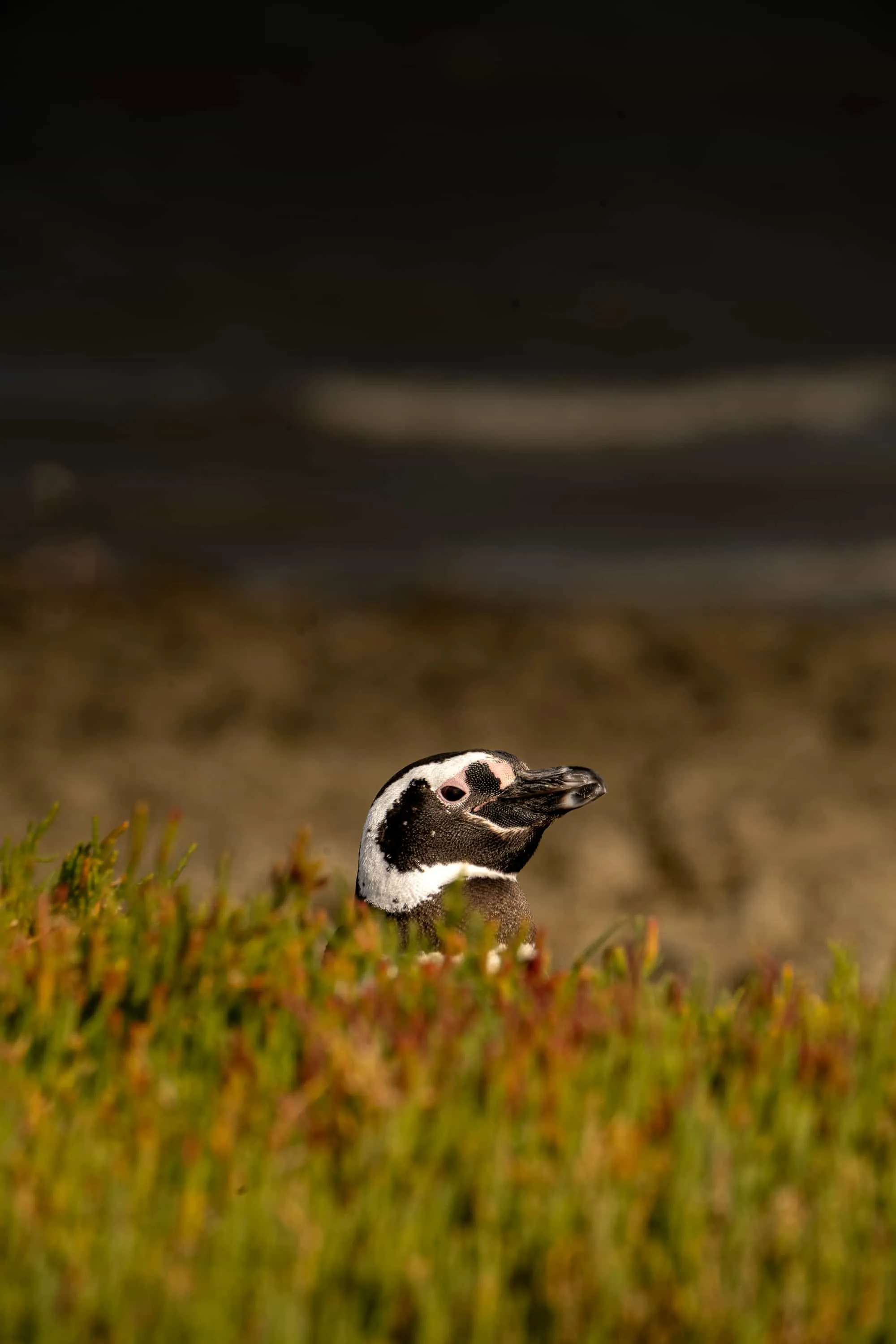
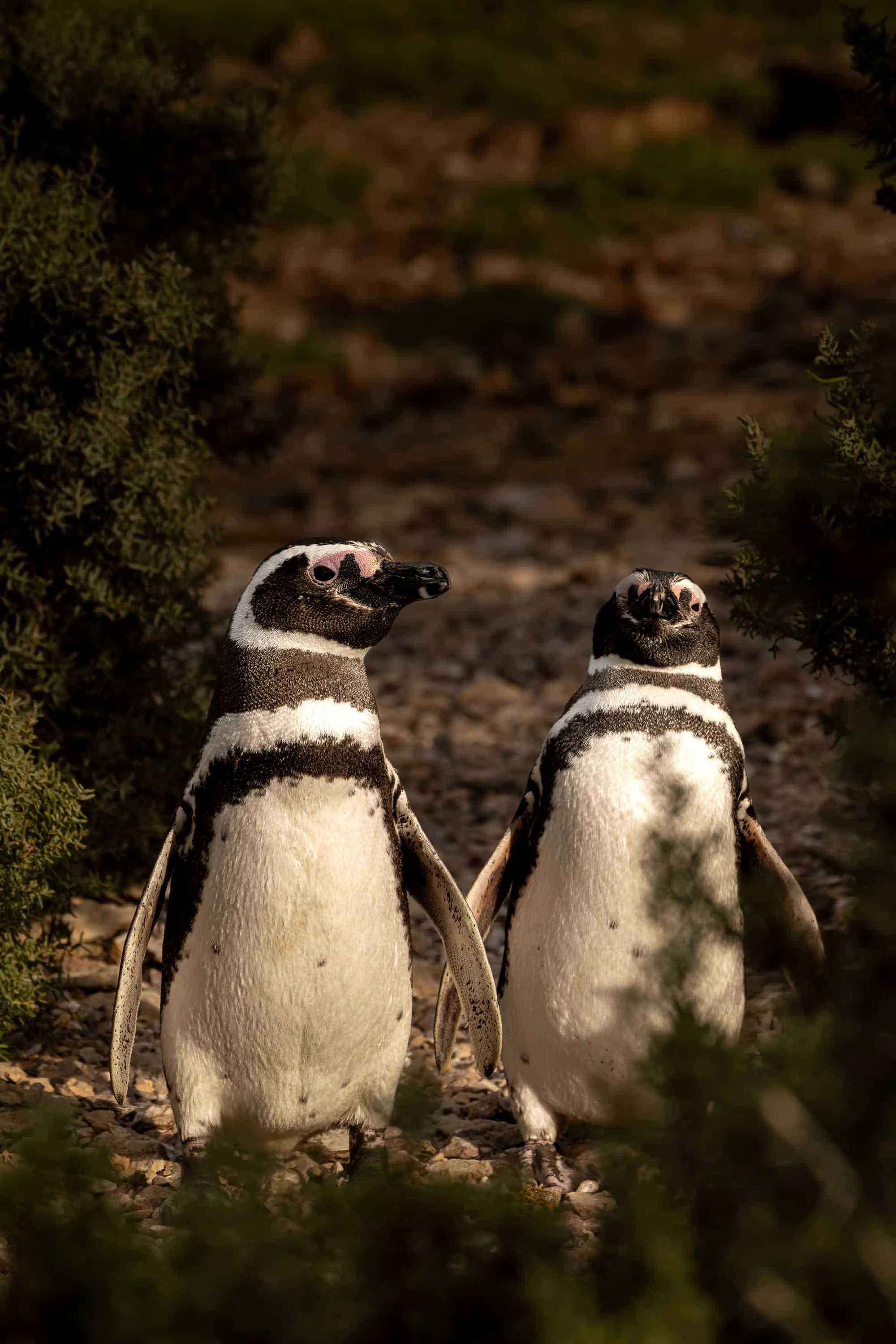
For example, from September on, Magellanic penguins start migrating to Bahía Bustamante to nest. During this time you can watch them prepare their nests and care for their chicks.
Where is Bahía Bustamante and how do you get there?
It's on the coast of Chubut, about 180 km south of Trelew and 80 km from Camarones. To get there you need your own car or a transfer booked to the lodge. The road crosses typical Patagonian steppe, which you'll really enjoy if you're driving yourself. Having your own car also gives you more freedom to explore nearby places like Camarones and other natural spots in the region. If you need to rent a car, you can find options here.
The closest airports are Trelew (REL) and Comodoro Rivadavia (CRD), both with flights from Buenos Aires and other major Argentine cities. From either one you can rent a car or book a transfer to Bahía Bustamante.
What is there to do in Bahía Bustamante? Activities and experiences
Bahía Bustamante is an ideal destination for ecotourism. The lodge offers several tours, which may or may not be included depending on the lodging option you choose.
Some of the activities you shouldn't miss:
1. Boat trip
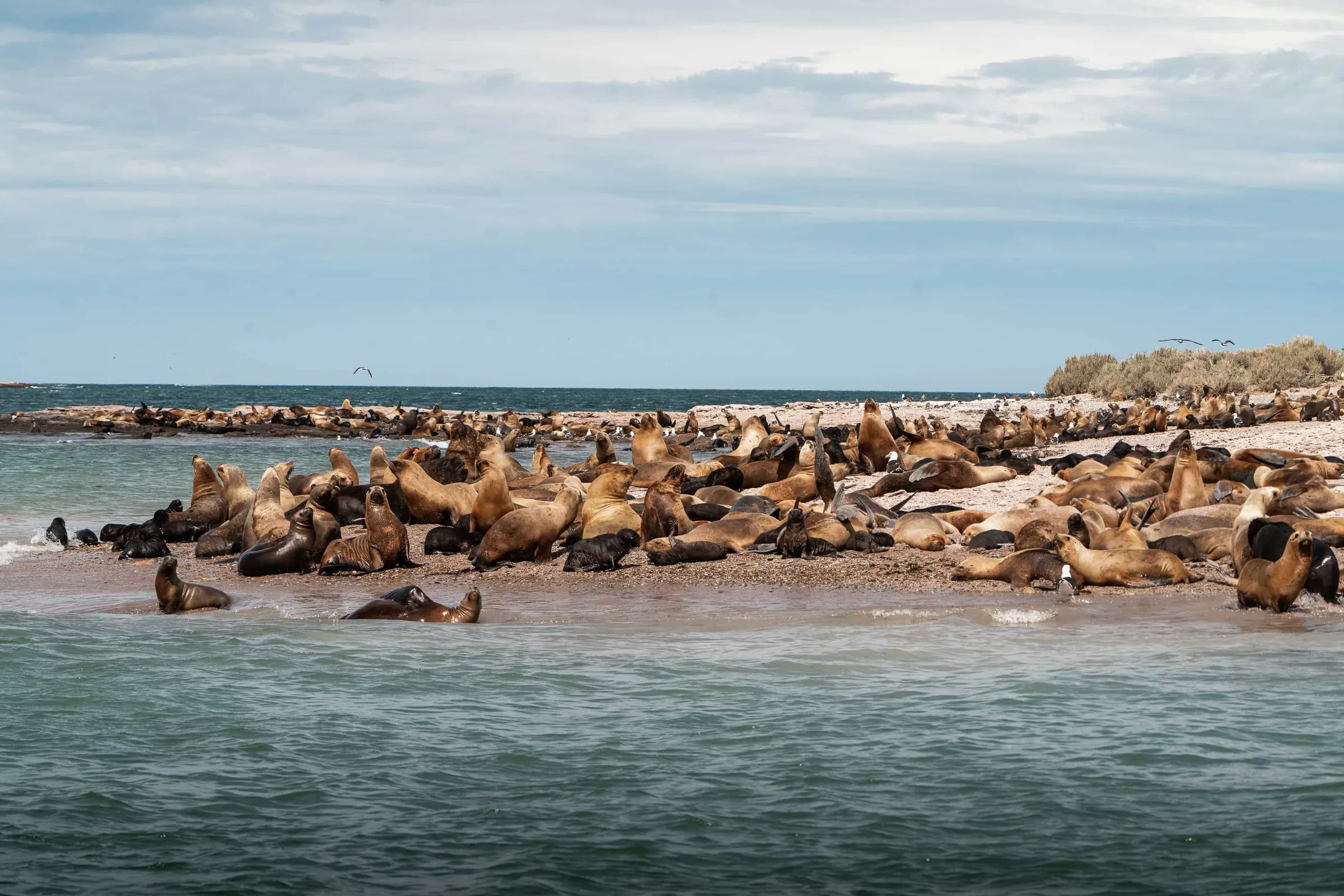
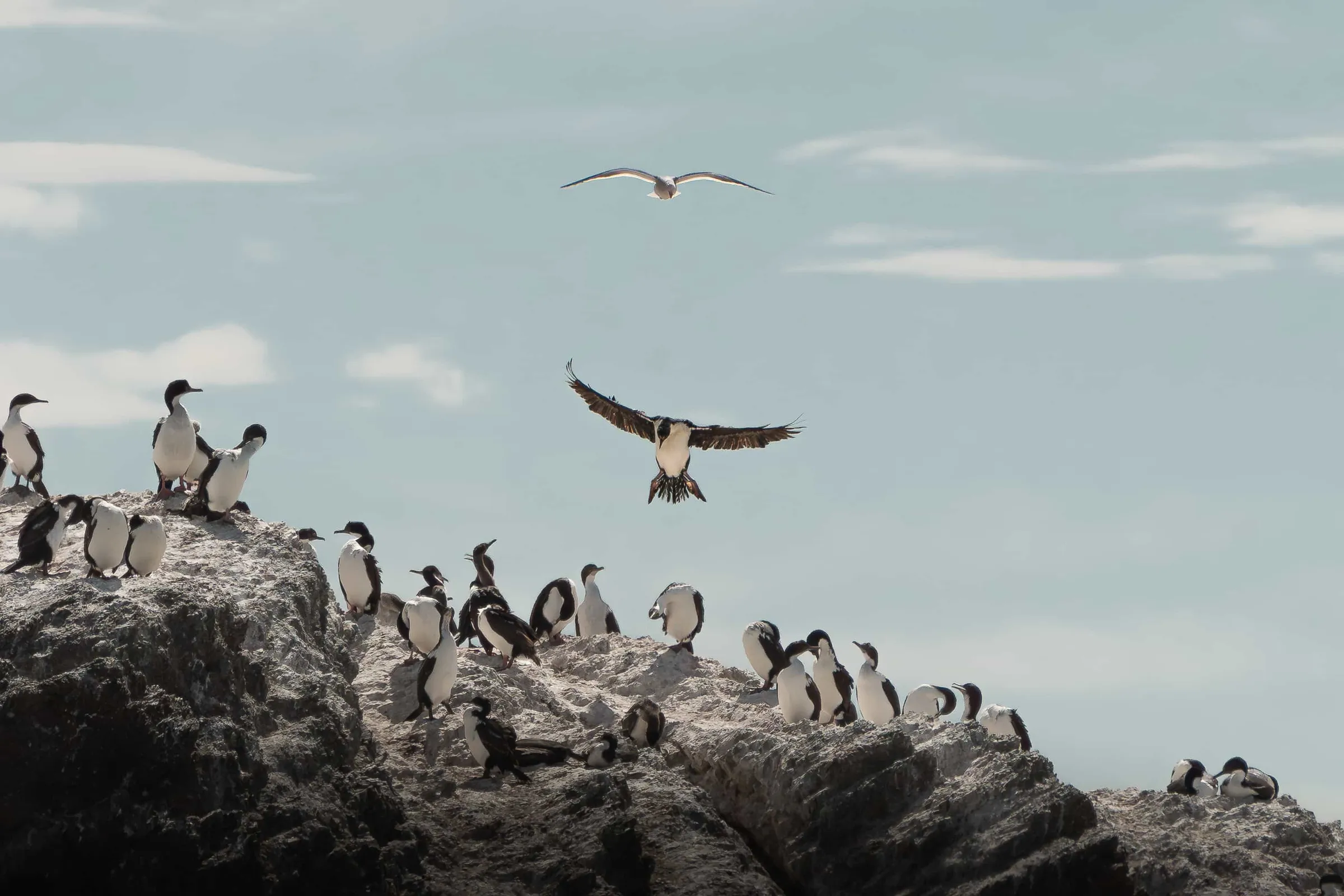
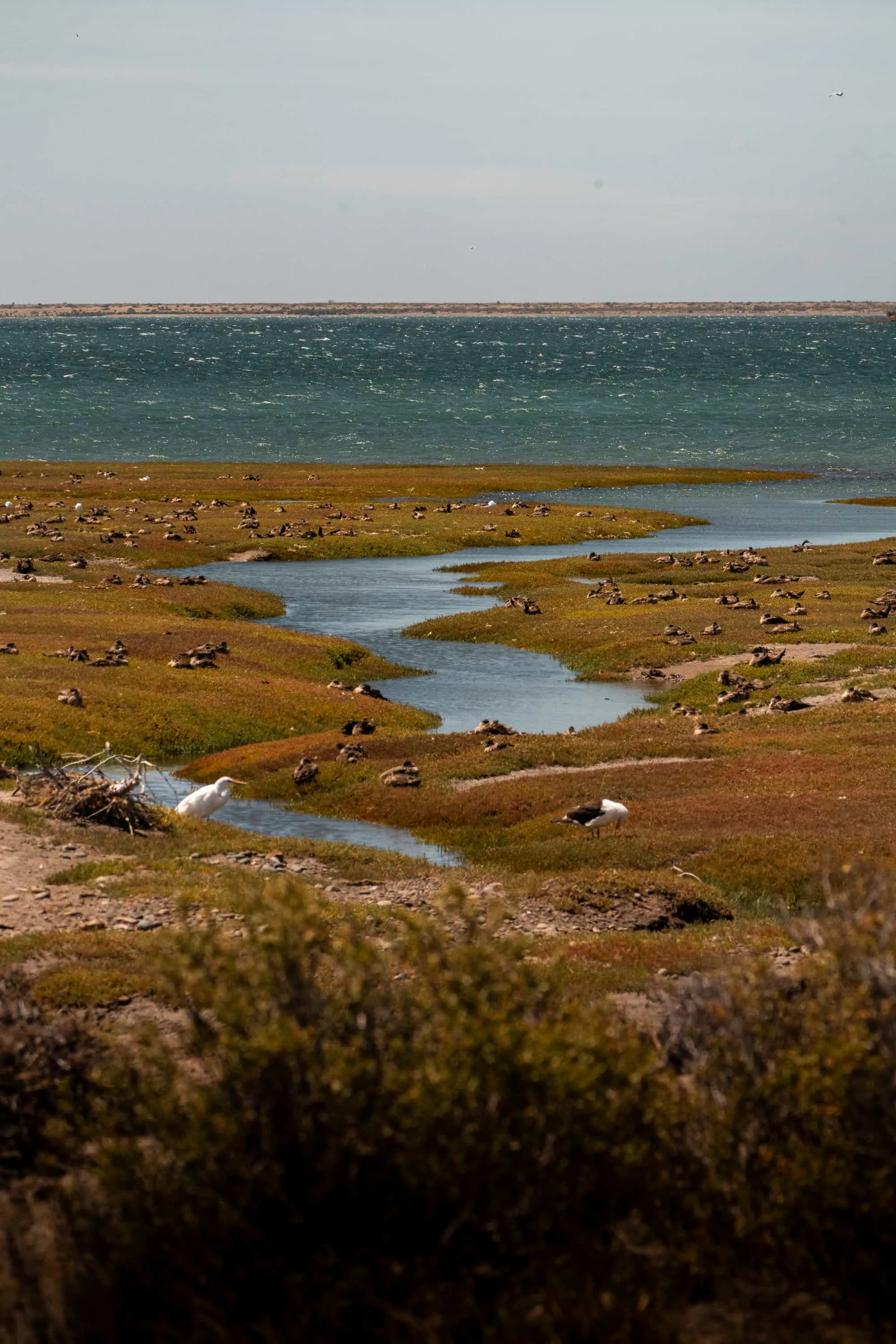
The boat tour visits several islands in Caleta Malaspina, where you see nature at its purest. Keep in mind that it can only run at high tide and in good weather. We got a few days of strong wind and thought we wouldn't be able to do it, but luckily, on our last day, conditions came together.
They also call this tour the “safari” because of how many animals you see along the way. In breeding season, Caleta Malaspina is home to more than 4,000 sea lions and 100,000 Magellanic penguins. You also see colonies of seabirds such as cormorants, petrels, steamer ducks and gulls, among others. It was one of the best tours we did, and we were amazed by how much wildlife there was. We also learned a huge amount about the area's biodiversity and the importance of protecting its ecosystems, since these places are key to these birds' nesting.
2. Explore the peninsula
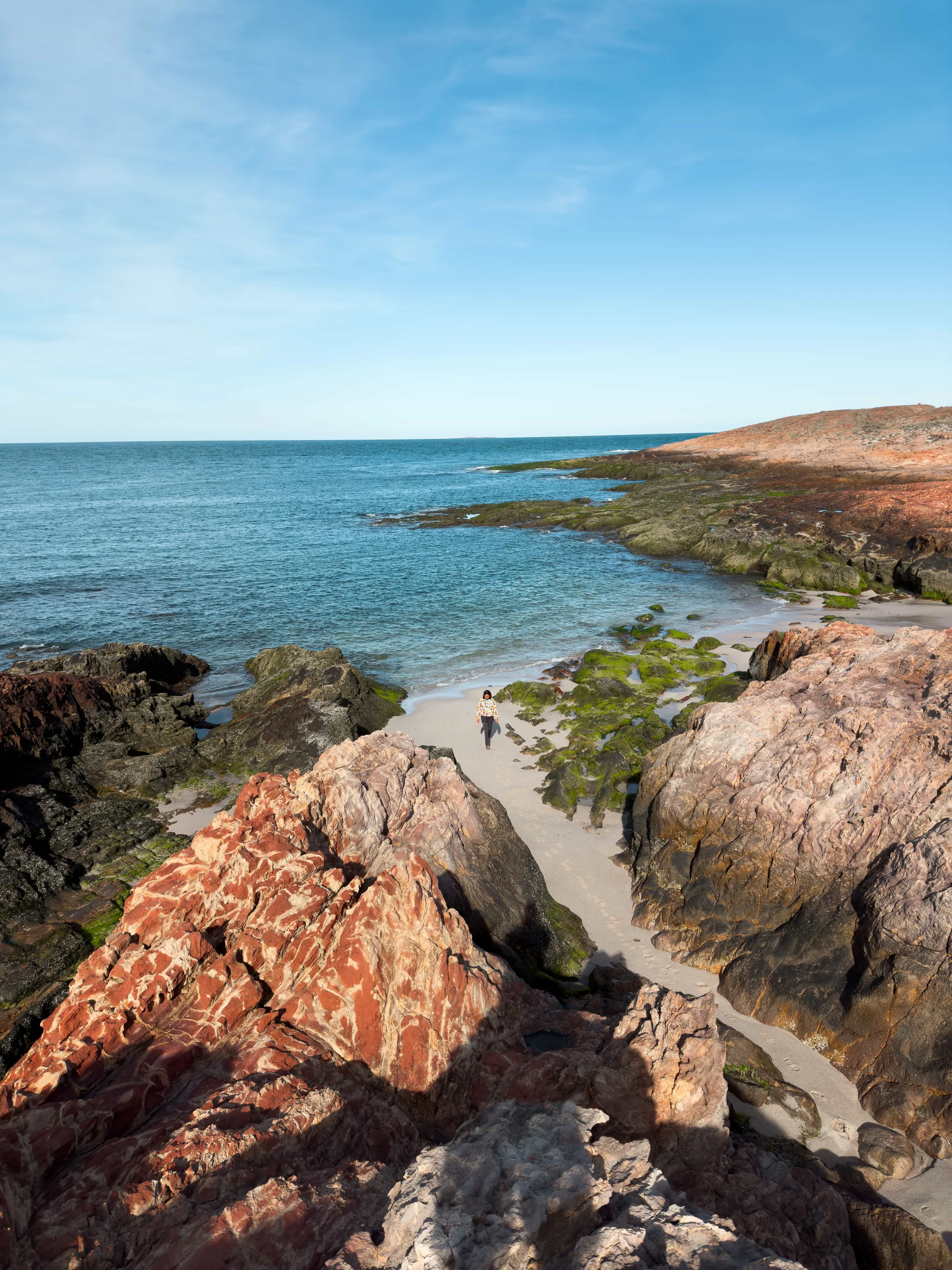
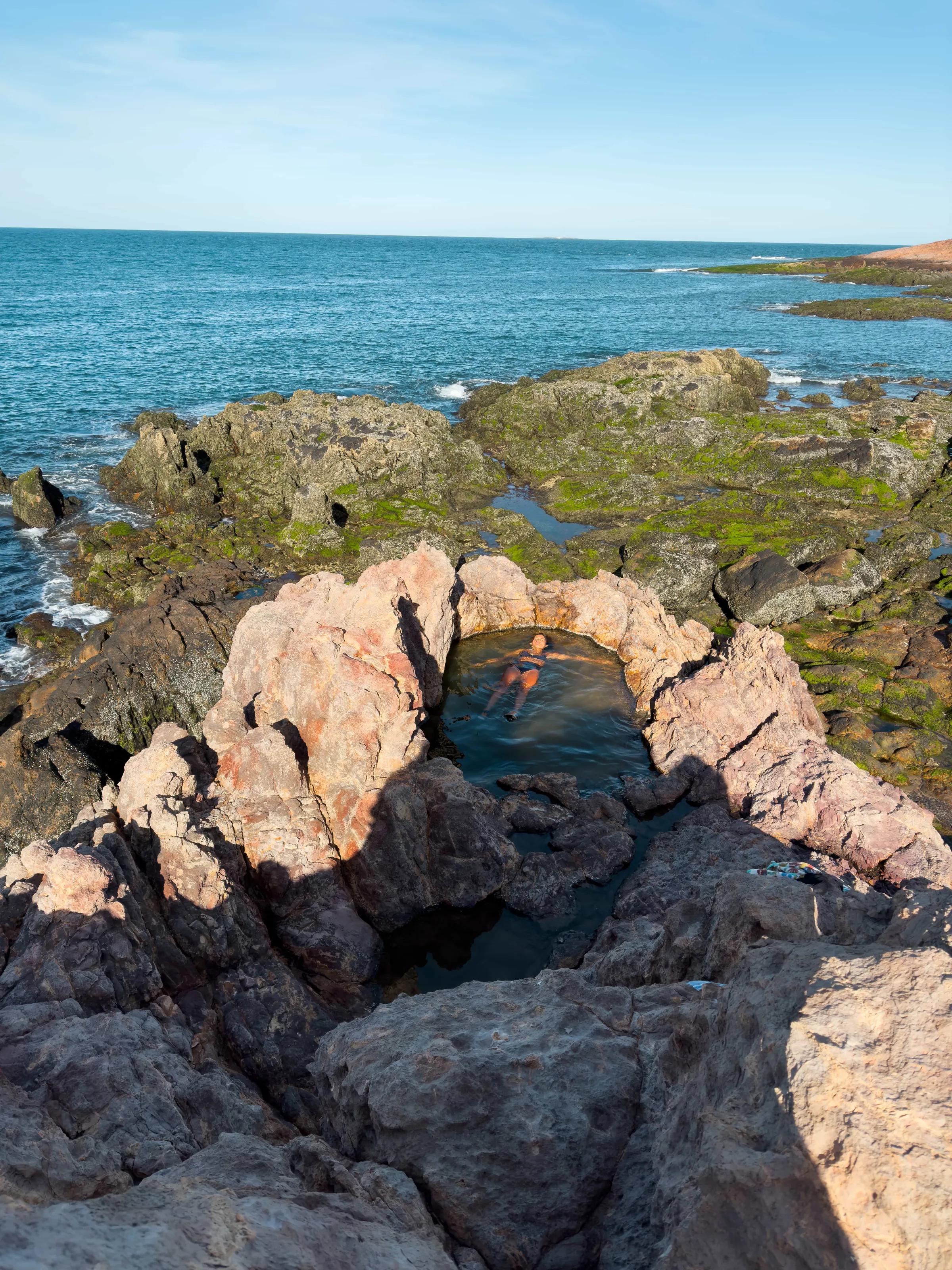
Since we had a car, we explored the peninsula on our own, but you can also do it on a tour, on foot or by bike. One of our favorite things about the peninsula is the impressive natural pools that form along part of its coast. We took our time enjoying the peace of its white-sand beaches and had some mate (the traditional Argentine herbal drink) in the sea breeze. Besides the incredible scenery, the peninsula hides sites of great geological and archaeological value. You could spend a whole day exploring and enjoying this place.
3. Petrified forest (Bosque Petrificado)
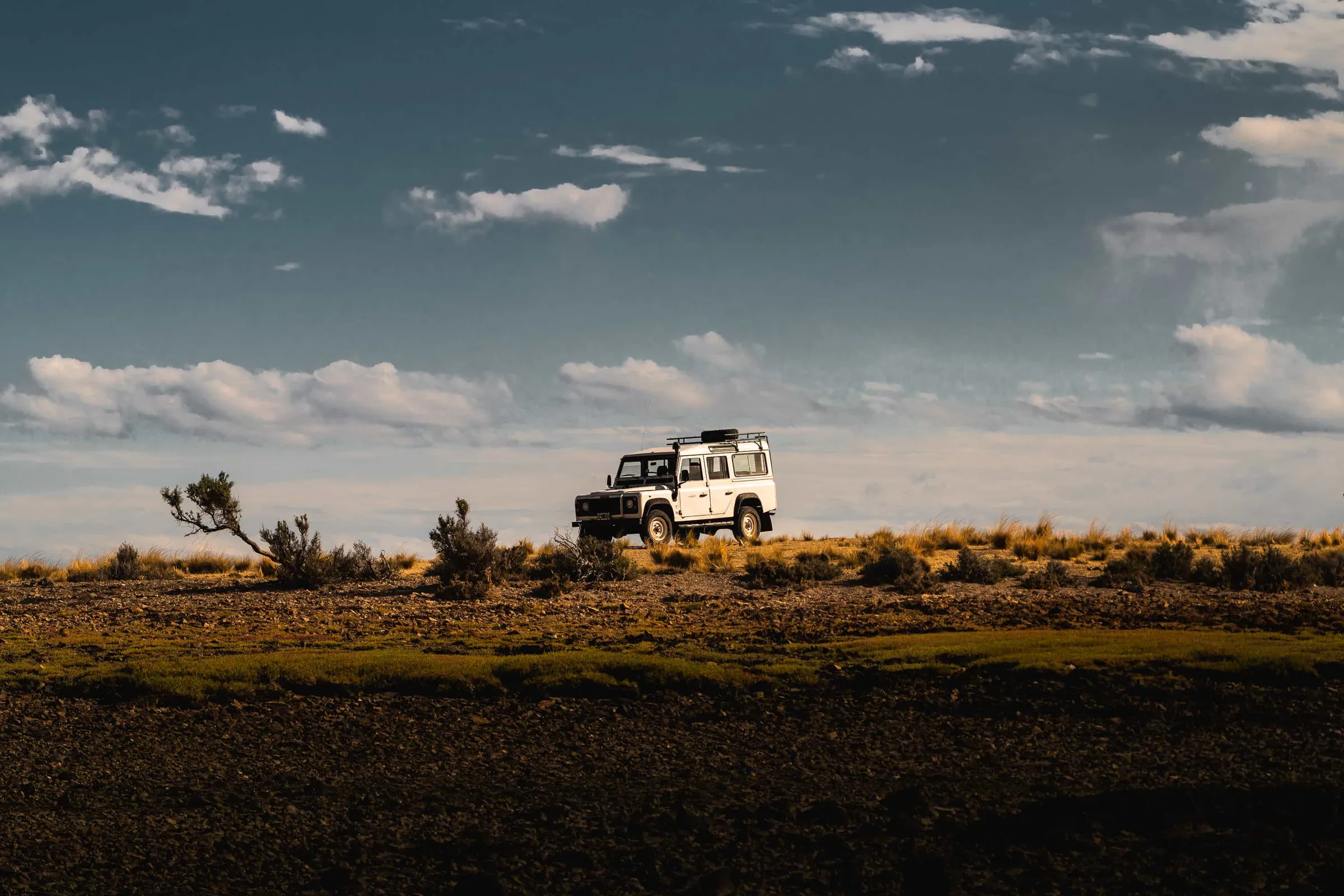
The petrified forest is literally a trip 60 million years into the past. To see all of it, you combine a 4×4 ride with hiking. It's 30 km from the lodge, on the same property. The landscape is a lunar desert full of fossil trunks: wood turned to hard rock. It's still on our list, because we ran out of time. There's so much to do!
4. Isla Pingüino
Just 15 minutes from the lodge, this island is home to a colony of Magellanic penguins. You can only visit at low tide, when you can walk across to the island. When we went, we got to see dozens of penguins, their chicks and their nests. Thanks to Belu, our guide, we learned a ton about their migration, feeding and nesting. Walking among the penguins and watching how they behave in their natural habitat is simply beautiful.
On the way back to the lodge we also saw choiques, guanacos and even a pair of maras with their baby.
5. Cabo Aristizábal
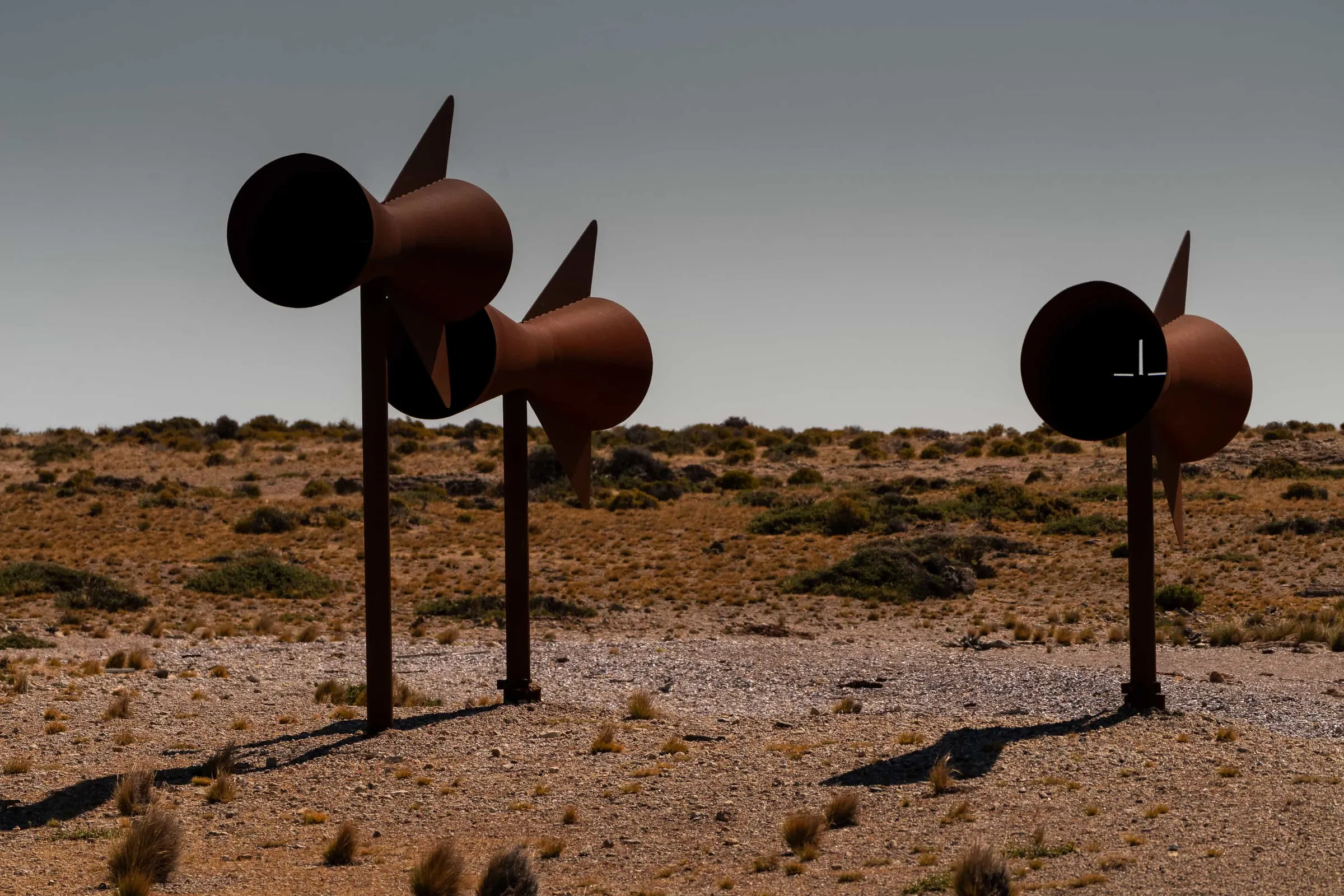
At Cabo Aristizábal the steppe meets the open sea. You can walk on its beaches full of shells and see the skeletons of huge mammals and a striking art installation by the French artist Christian Boltanski.
6. Cañadón de Piedra
This is a hike through a canyon, following the course of a river (dry today) all the way to the sea. You walk between walls more than 15 m (49 ft) high, formed in the Jurassic Period. We couldn't do it because it had rained a lot in the previous days and there was water in the canyon, so we've left it for another time.
7. History tour
This is a walk through the old seaweed-harvesting settlement, where you can learn the history of the place and how it evolved into a destination for conservation and sustainable tourism. There's also an interpretation center with skeletons of animals they've found on the property, ideal for learning more about the local wildlife.
8. Hiking and mountain biking
The property has a fascinating, rugged and varied coastline, and the views are spectacular. The hikes range from easy to moderate, and there are bikes you can use to get around.
Where to stay in Bahía Bustamante
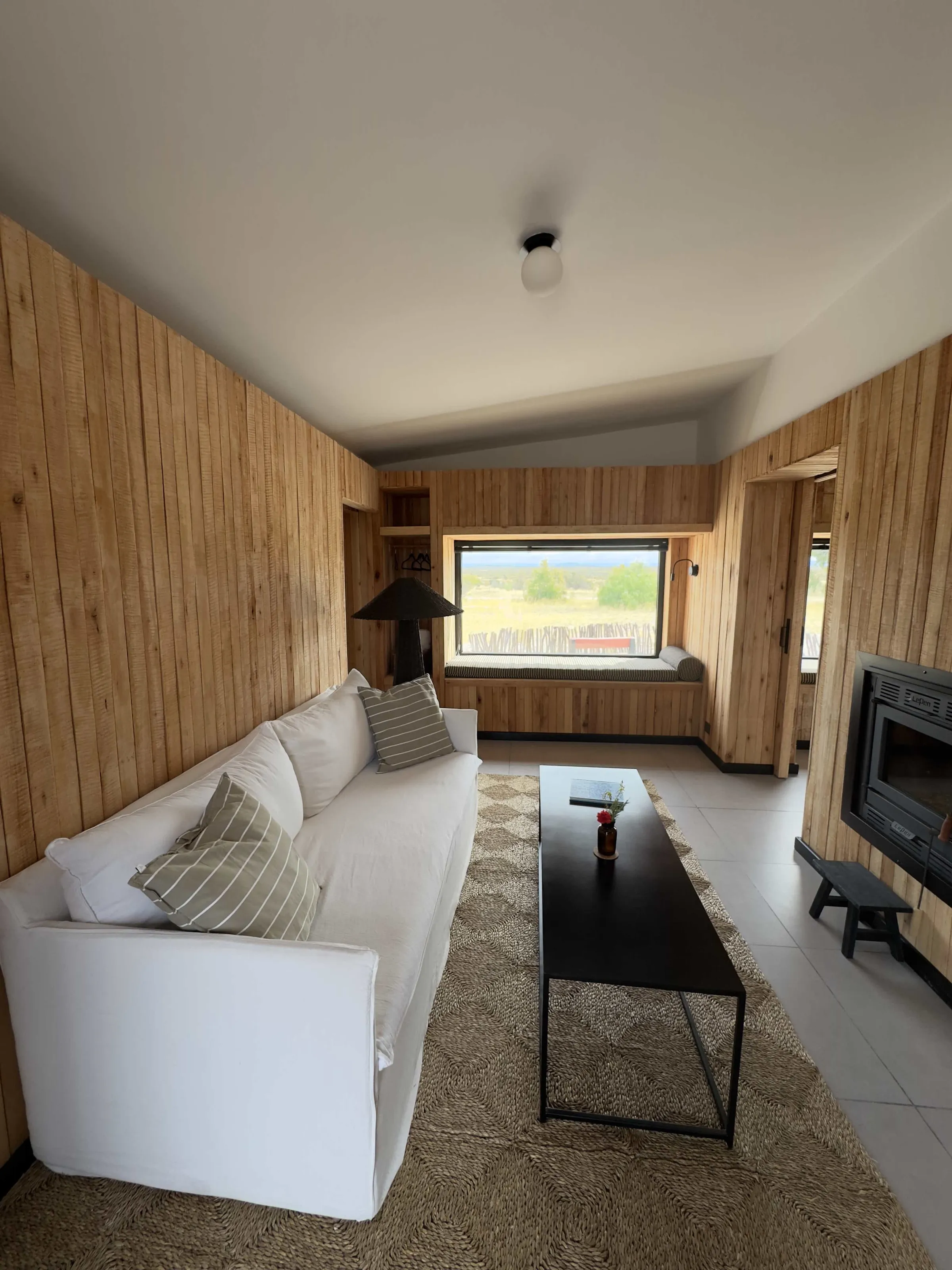
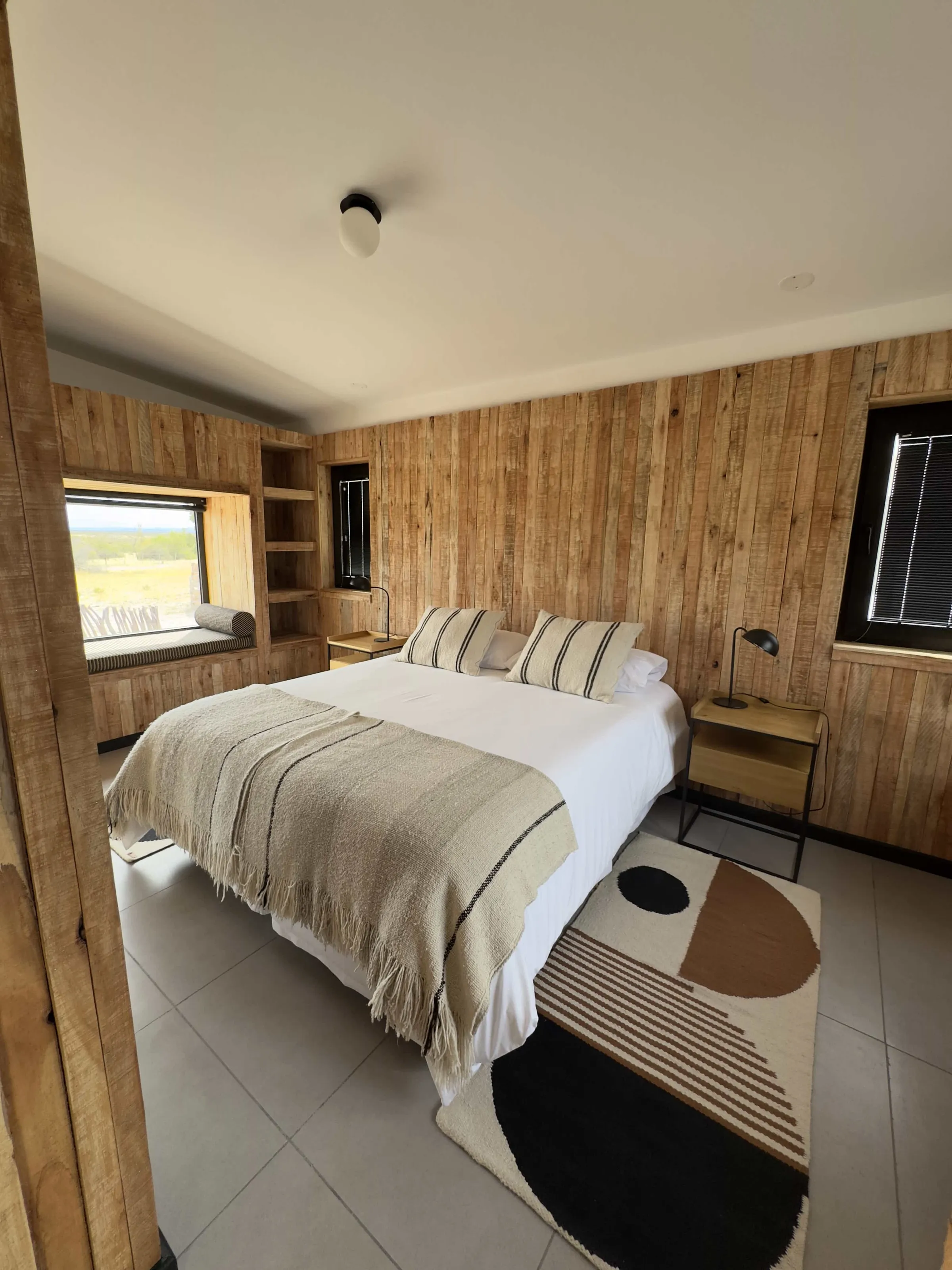
Bahía Bustamante Lodge is the only place to stay on the estancia, and one of the main reasons to visit this remote corner of Patagonia. It has a rustic, comfortable, authentic charm, ideal for connecting with nature and disconnecting from the world.
There are different lodging options. Some have their own kitchen, and others include full board, with home-cooked breakfast, lunch and dinner. The food is a real bonus: many of the ingredients come from their own vegetable garden or are made locally.
The atmosphere is very relaxed and the service is excellent. Everyone who works there is deeply committed to the place and its conservation, and it shows in every detail.
We recommend booking ahead, especially in high season, since space is limited and it fills up fast.
The history and sustainability of Bahía Bustamante
Bahía Bustamante's past is tied to harvesting seaweed, the activity that gave rise to the estancia and shaped the identity of the place. Over time, the project evolved into a model of sustainable tourism, focused on preserving its surroundings and protecting the wildlife of this unique part of Patagonia.
The conservation work done at Bahía Bustamante is key to caring for both the marine and the land ecosystems. The estancia is part of the Patagonia Azul Biosphere Reserve, a recognition that highlights its huge ecological value. The lodge also runs on renewable energy and keeps its environmental impact low. During our stay we saw this commitment to the environment firsthand, which made us value the experience even more.
But Bahía Bustamante isn't just nature: there's a human story behind it too. Today the place is run by Matías Soriano, grandson of the original founder of the seaweed camp, along with Astrid, his partner in life and in the project. Matías drove the transformation of the old seaweed settlement into a lodge for nature and conscious tourism, keeping the original architecture and the spirit of the place while actively promoting the conservation of the ecosystem.
Why Bahía Bustamante's ecosystem matters
This Patagonian paradise is key to the nesting of many bird species. The region is also a refuge for marine mammals, with impressive biodiversity that needs protecting. The mix of steppe, sea and rock creates a unique ecosystem that deserves to be valued and cared for. It really struck us to see how many species depend on this place and to understand how crucial it is to preserve it.
- Did a price or a detail change? Tell us at hello@charoandmarcos.com
- Still have a question? Ask us on Instagram (opens in a new tab)

Your next step
Salta and Jujuy Itinerary: A Complete 10-Day Guide to Northern Argentina
Planning a trip to northern Argentina and not sure where to start? In this guide we tell you what to do in Salta and Jujuy in 10 days, with…