Things to Do and See in Jujuy: A Complete Travel Guide
We wrote this guide in Spanish and translated it with the help of AI. Leer en castellano
Jujuy is a province full of natural wonders, striking landscapes and a rich culture that blends pre-Hispanic history with Andean traditions. In this guide we go through the best places to visit in Jujuy, from the famous Quebrada de Humahuaca to the Cerro de los 14 Colores, with stops in charming towns like Purmamarca, Tilcara and Iruya. We also share practical tips on how to get around the region, what you shouldn't miss and how to make the most of your time in this one-of-a-kind corner of northwestern Argentina.
This article has affiliate links: if you book or buy through them, we earn a commission at no extra cost to you.
How to get to Jujuy
Getting to Jujuy is easy, with plenty of transport options. If you're traveling by plane, you'll land at Gobernador Horacio Guzmán International Airport, just 30 minutes from San Salvador de Jujuy. It has direct flights from Buenos Aires and Córdoba.
You can also get there by bus, since many companies connect Jujuy with places like Buenos Aires, Salta, Tucumán, Mendoza and Córdoba.
If you'd rather go by car, the most common route is from Salta, along Route 9 (Ruta Nacional 9), a drive of about 2 hours.
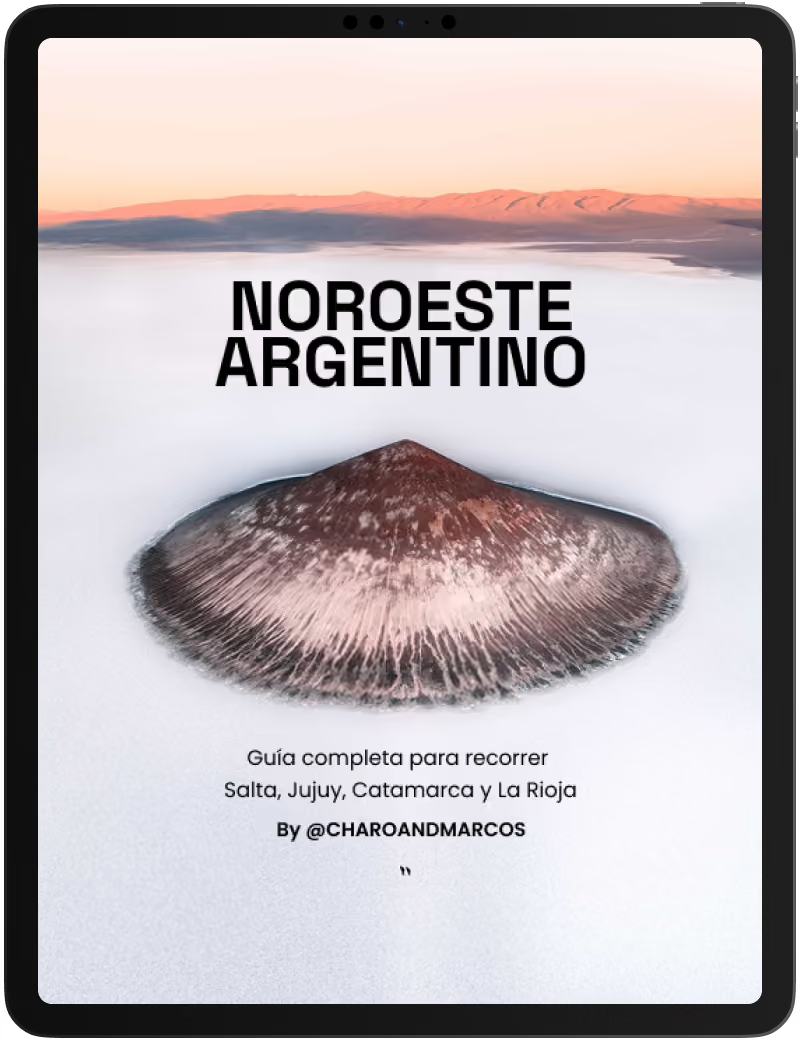
Traveling around Northwest Argentina?
We put everything we learned in Salta, Jujuy, Catamarca and La Rioja into our Northwest Argentina ebook.
- A PDF for your phone that works offline
- Itineraries for each province, with where to stay and eat
- Maps of each province with every stop marked
- Free updates forever
Only going to Jujuy? There's also the Jujuy ebook.
Best time to visit Jujuy
You can enjoy Jujuy all year round, but the best time to go is from April to October, when the weather is dry, the skies are clear and it rarely rains. These months are ideal for touring the Quebrada de Humahuaca, taking in its colorful landscapes and exploring Jujuy's Puna (high plateau).
If you're after a unique cultural experience, February is also an excellent choice: that's when the Humahuaca Carnival takes place, an ancestral celebration full of music, dance, color and Andean traditions.

Rent a car in Jujuy
Rent a car on DiscoverCars (opens in a new tab)
This is an affiliate link: if you book or buy through it, we earn a commission at no extra cost to you.
How to get around Jujuy
The best option is your own car or a rental, which gives you total freedom to explore the unique landscapes of northern Argentina and reach places you shouldn't miss, like Purmamarca, Salinas Grandes, Iruya or the Serranía del Hornocal. You can rent a car in Jujuy at a good price through this link.
There are also plenty of organized tours in Jujuy that leave from San Salvador de Jujuy, Salta city or Purmamarca and take you to the main sights with local guides.
Another option is the new Tren Solar de la Quebrada, a sustainable, panoramic way to see the Quebrada de Humahuaca. This electric train links Volcán, Tumbaya, Purmamarca, Maimará and Tilcara. You can use it to get from town to town, or buy a hop-on hop-off day pass and get on and off as you like during the day.
💡 Tip: There are also packages that include the transfer from Salta or San Salvador de Jujuy to Volcán. 👉 More info at trensolar.com.ar
If you're on a tight budget, another option is public transport in Jujuy, mainly local buses. Just keep in mind that schedules tend to be limited and the buses don't cover all the tourist areas.

See everything you can do in Jujuy
See tours on Civitatis (opens in a new tab)
This is an affiliate link: if you book or buy through it, we earn a commission at no extra cost to you.
Things to do in Jujuy
1. Purmamarca
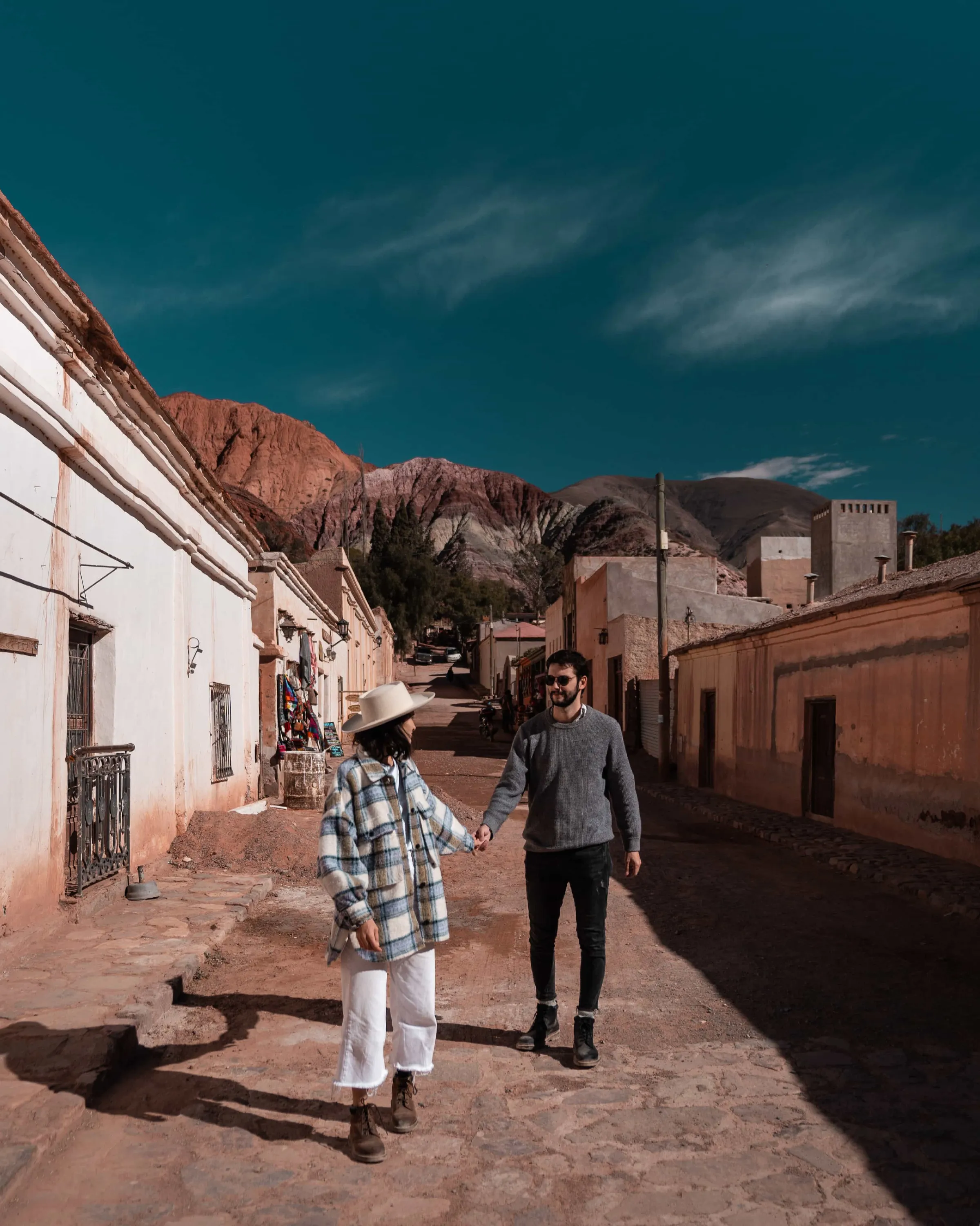
Purmamarca is one of the most picturesque towns in northern Argentina and, if you're wondering what to do in Jujuy, a stop you can't skip. This small town is only 1 hour by car from San Salvador de Jujuy and sits at the foot of the Cerro de los Siete Colores (Hill of Seven Colors), with unique landscapes, local crafts and lovely walks.
Main sights in Purmamarca:
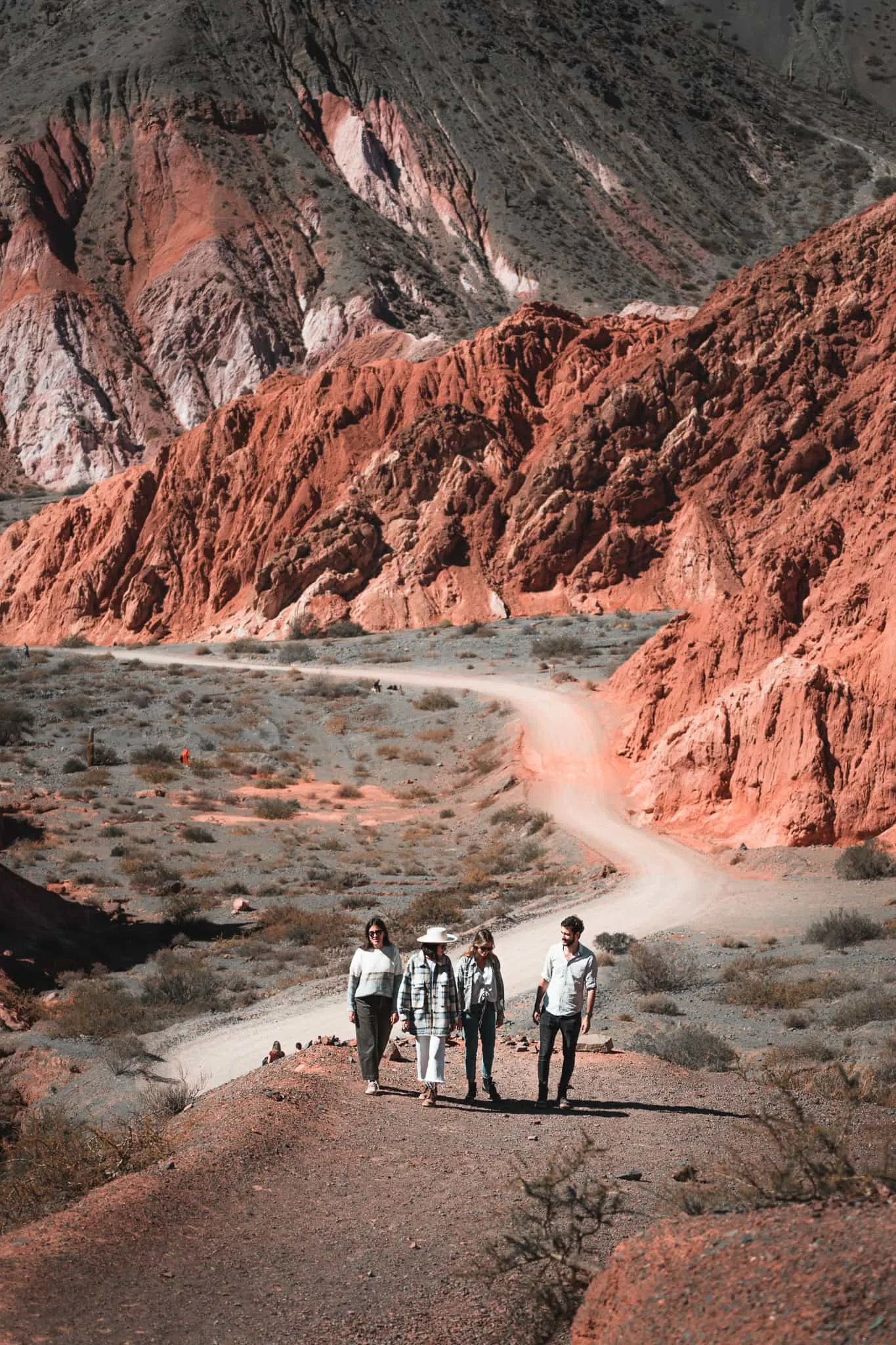
- Cerro de los Siete Colores: Without a doubt, Jujuy's most famous postcard view. Layers of minerals oxidizing over millions of years give this geological formation its striking mix of colors. We recommend seeing it from Cerro Porito, the best spot for the views. The best time is between 10 a.m. and 12 noon.
- Sendero Los Colorados: A 3 km (1.9 miles) route that skirts part of the town among reddish and brown hills. You can do it on your own on foot, and it takes almost 45 minutes.
- Plaza de los Artesanos: The market in the center of town, where they sell traditional textiles, ponchos, tapestries and one-of-a-kind crafts from the Altiplano.
📌 Tip: If you're not traveling by car, you can see Purmamarca on an organized tour. Here are some options we recommend:
- Tour to Purmamarca, Tilcara and El Hornocal from San Salvador de Jujuy
- Tour to Purmamarca, Tilcara, Uquía and El Hornocal from Salta city
Some places to stay in Purmamarca that we recommend:
- Los Colorados Cabañas: Very nice boutique cabins on the Sendero Los Colorados.
- Colores Purmamarca: Apartments with amazing views and a pool. Ideal for families or groups.
- La Posada de la Candelaria: Very good value for money.
Our recommendations for where to eat in Purmamarca:
- Los Morteros
- La Posta
- El Mesón
2. Tilcara
Tilcara sits in the heart of the Quebrada de Humahuaca and is one of the most visited towns in northern Argentina. Its mix of history, nature and culture makes it a stop you shouldn't miss.
Many travelers choose Tilcara as a base for touring the Quebrada, since its location is more strategic for visiting places like Humahuaca, Uquía or El Hornocal. Personally, we prefer to base ourselves in Purmamarca, because the town has more charm and is very picturesque, but it's true that Tilcara is more practical if you're going to be moving around the area a lot.
What to do in Tilcara:
- Pucará de Tilcara: An ancient pre-Inca fortress with amazing panoramic views of the valley. The site also has a small archaeological museum that's worth a visit.
- Jardín Botánico de Altura: This high-altitude botanical garden, inside the Pucará, has a variety of native plants and enormous cacti.
- Cascada del Diablo: Just 5 km (3.1 miles) from the center, this waterfall makes an ideal outing if you love hiking. You can get there on foot, by car or on horseback.
📌 Tip: Tilcara also has a good choice of places to eat, plus fairs and cultural festivals. If you like to combine culture with nature, it's a great place to stay for at least one night.
Where to stay in Tilcara
- Villa del Cielo: A beautiful boutique hotel, ideal for couples.
- Alas del Alma: A more affordable option, ideal for families.
- Glamping El Obrador Tilcara: Somewhere to stay that's good, pretty and cheap.
3. Uquía
Just 10 km north of Tilcara, the small town of Uquía is a gem.
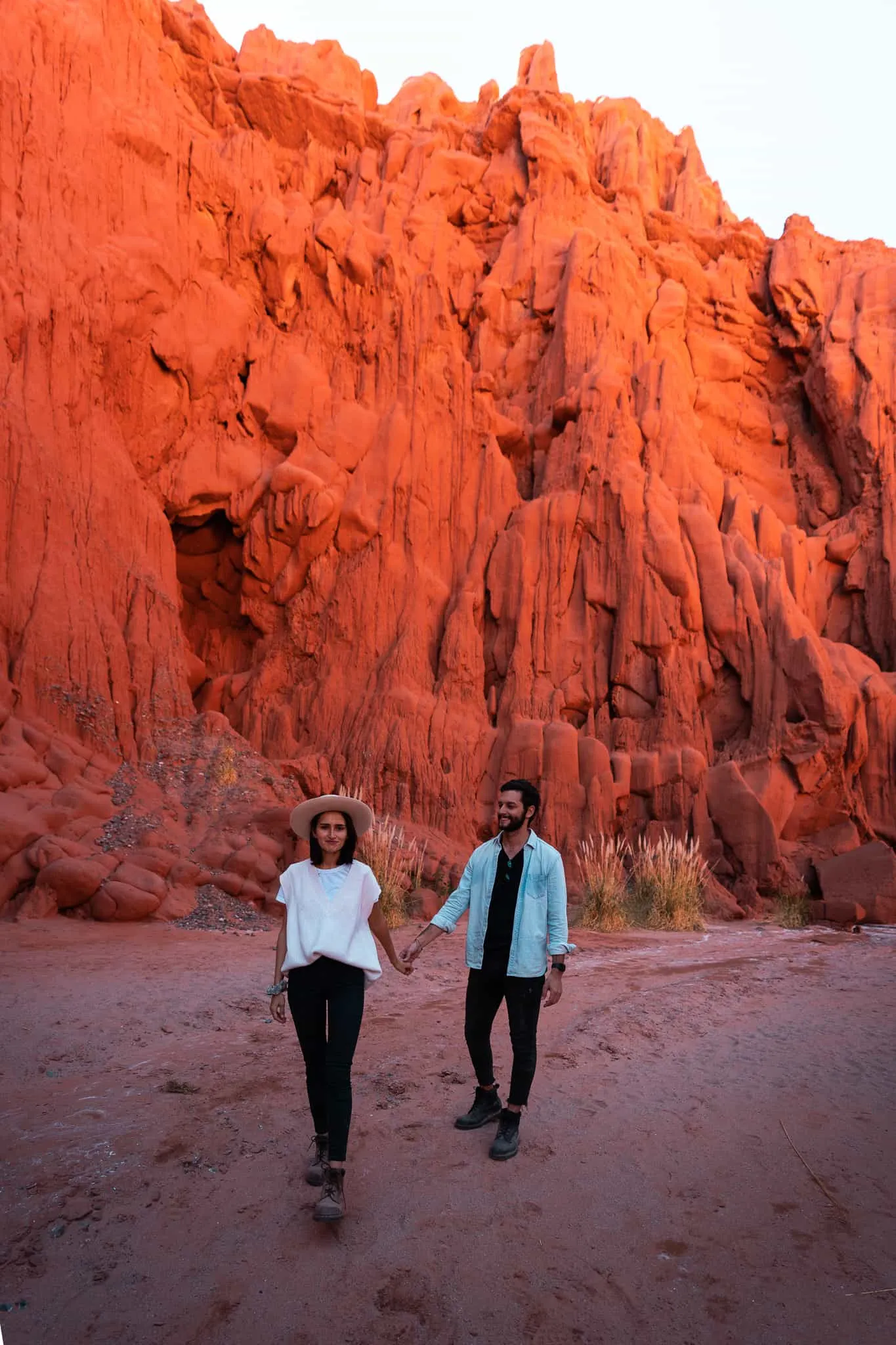
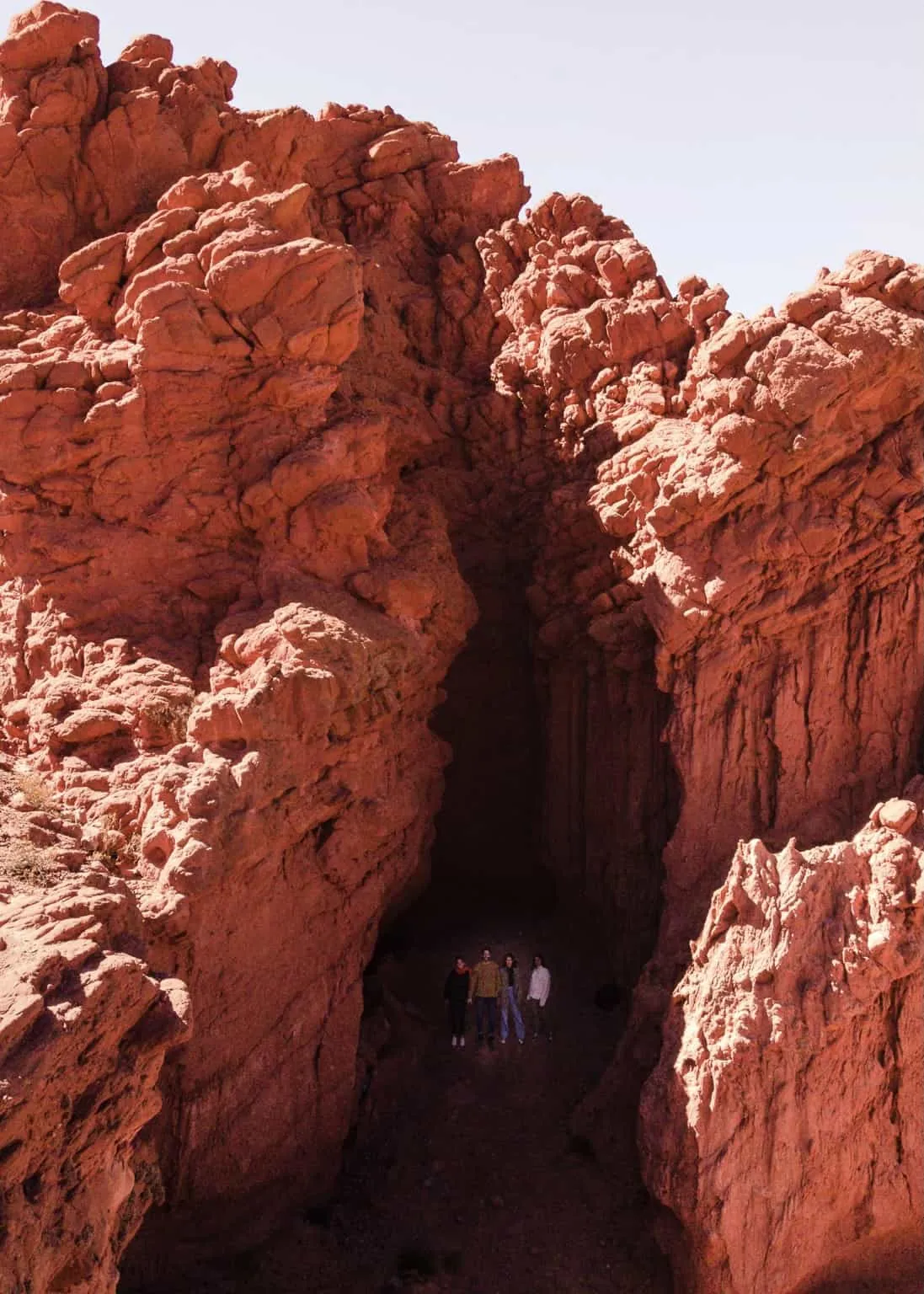
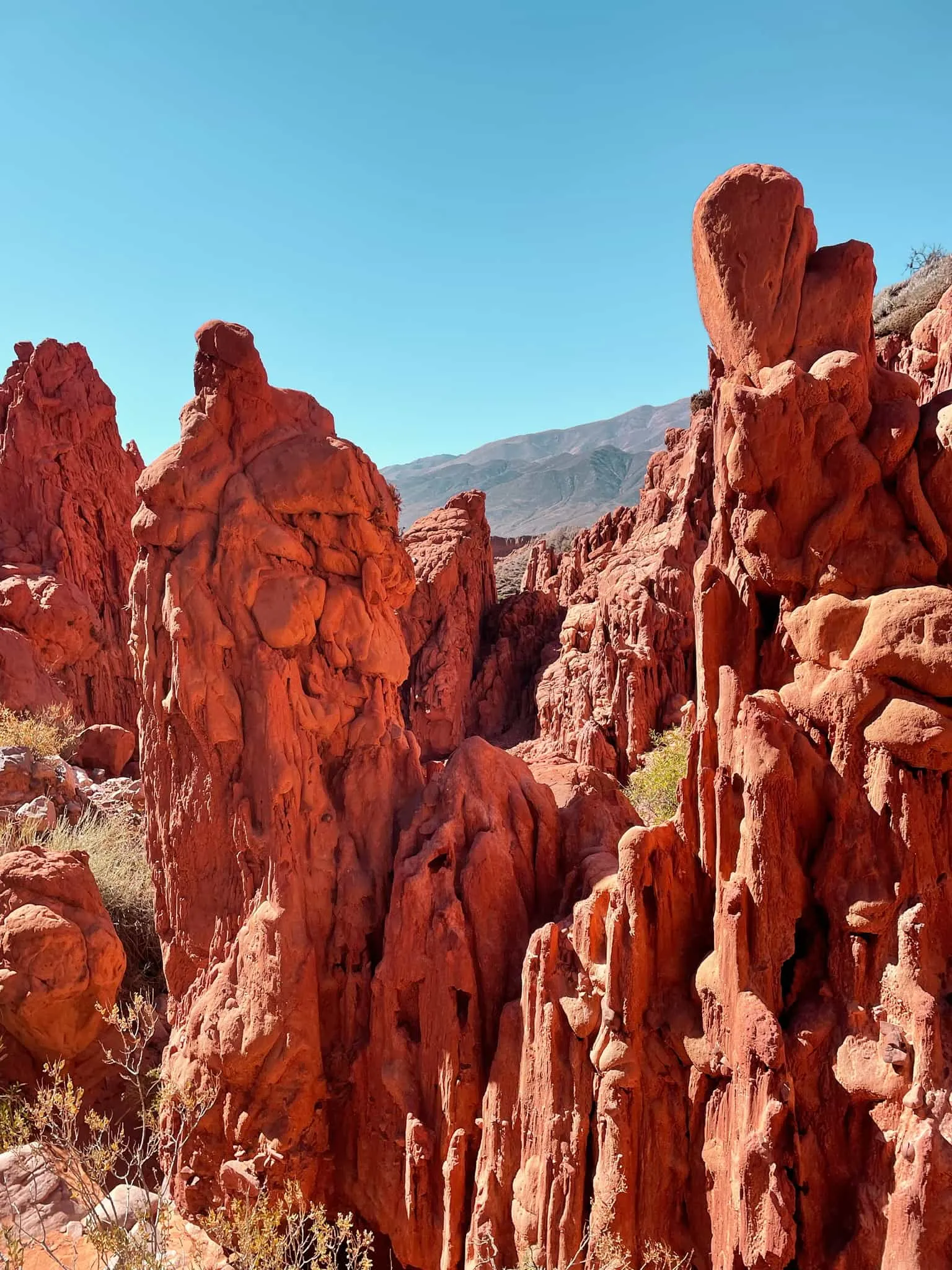
The star of the place is the Quebrada de las Señoritas, a mystical spot with rock formations in intense shades of red, plus caves and cracks carved by thousands of years of erosion. The landscape looks like something from another planet.
🌄 Local legend: According to tradition, a group of young women from the Inca Empire took refuge in this gorge with a treasure of gold, fleeing the Spanish invaders. After hiding it, they offered their lives to Pachamama (Mother Earth), which turned the place into a sacred space, full of energy.
📌 Tip: You can visit the gorge on foot from the town. The walk is short and very scenic, ideal for spectacular photos, especially at sunset.
4. Humahuaca
At 2,939 m (9,642 ft) above sea level, Humahuaca is one of the most emblematic destinations in northern Argentina and a key stop for touring the Quebrada de Humahuaca, declared a World Heritage Site by UNESCO.
What to do in Humahuaca
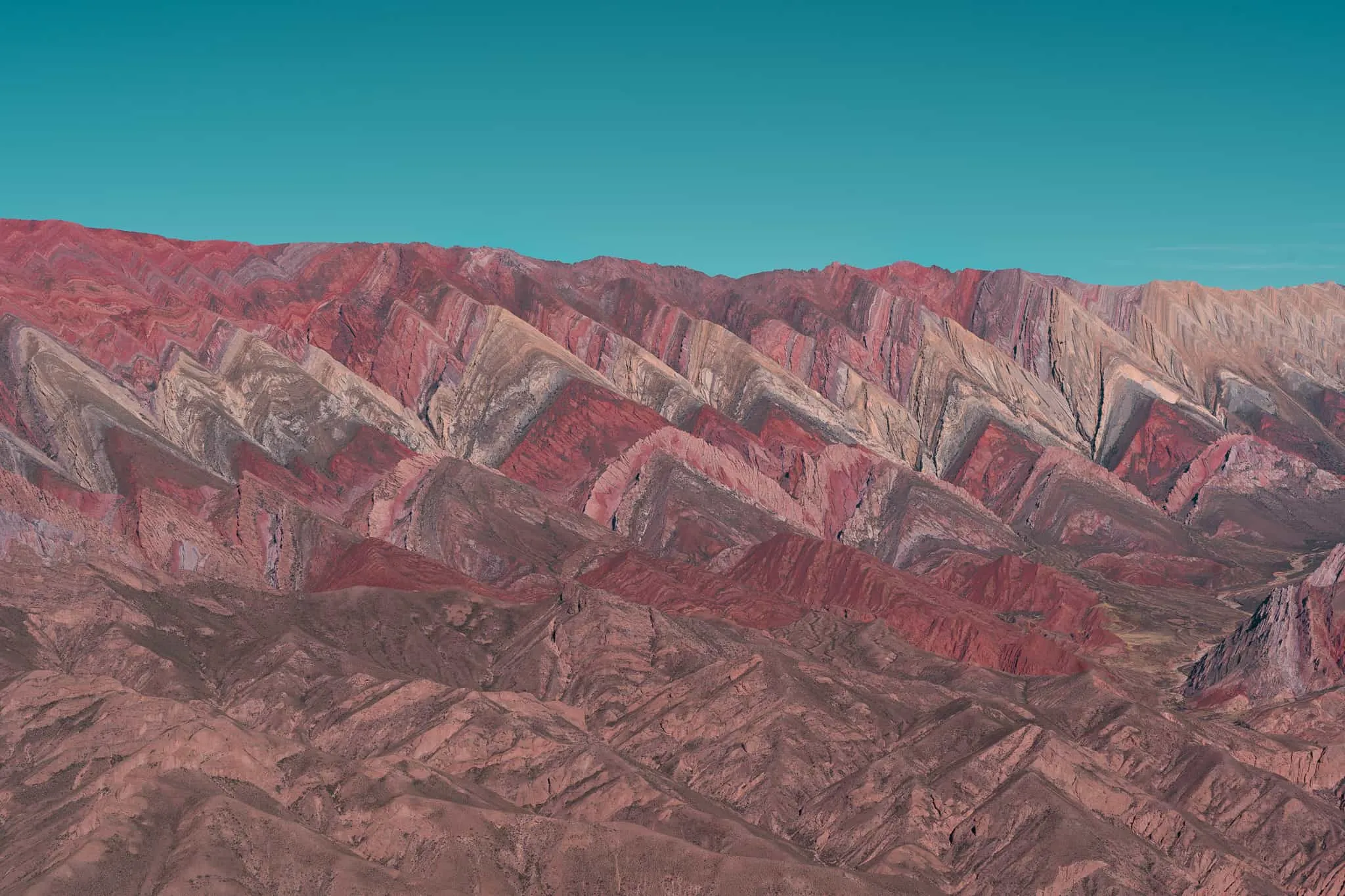
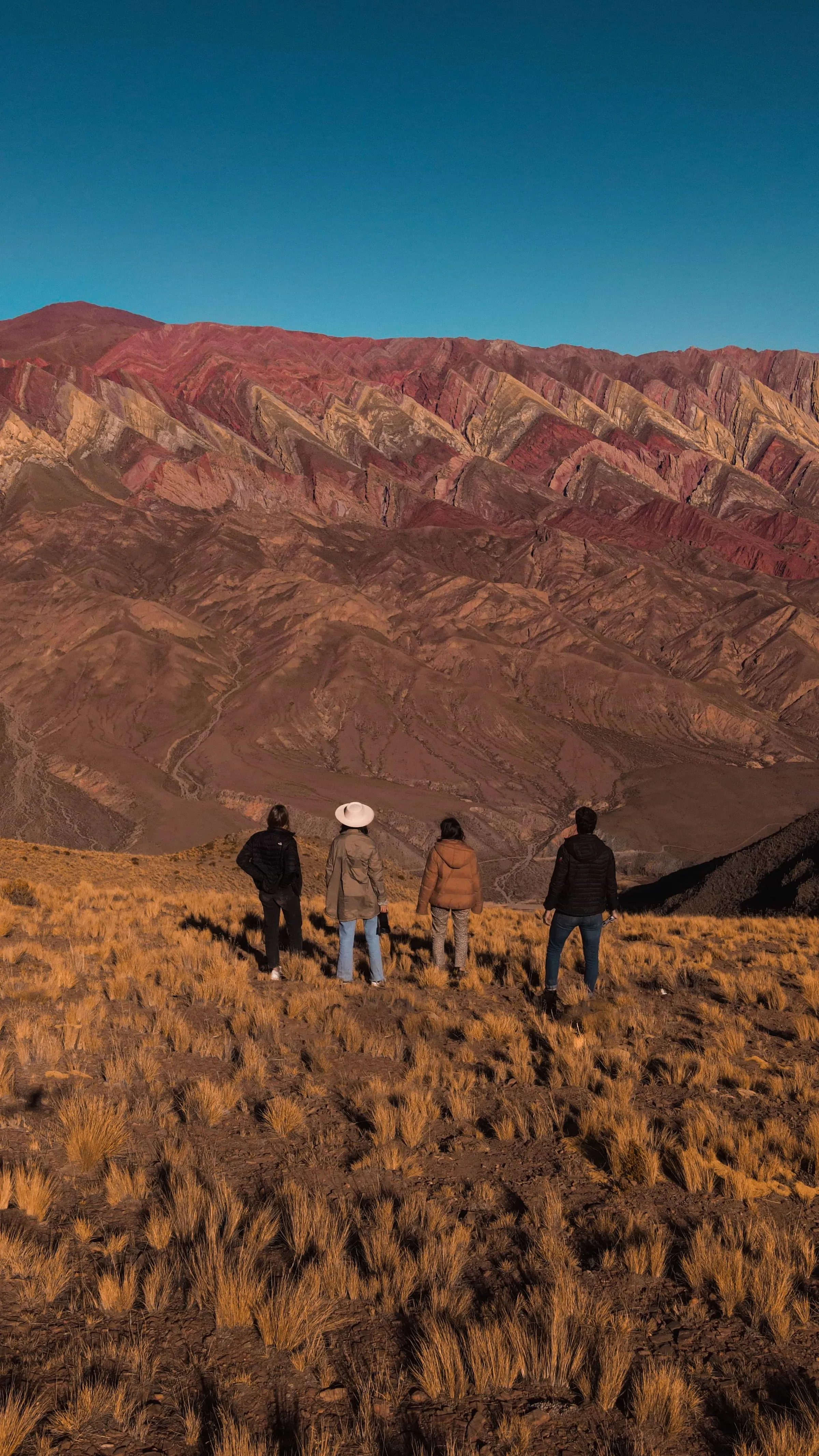
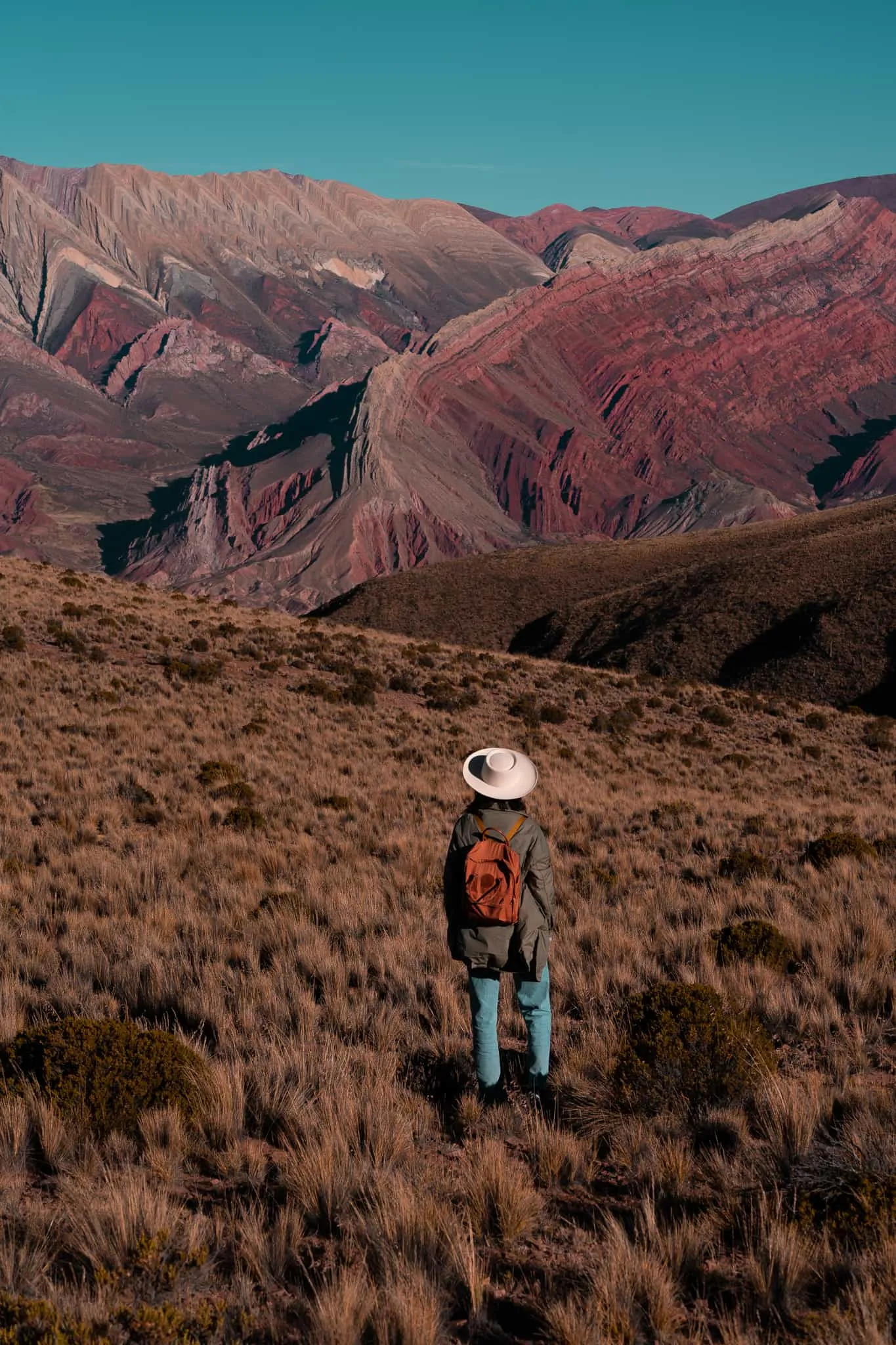
🗻 El Hornocal (Cerro de los 14 Colores, the Hill of 14 Colors): This natural spectacle is, without a doubt, one of the most striking landscapes of the whole trip. It's about 25 km from town, along a gravel road that takes between 45 minutes and 1 hour by car. The hill stands at 4,761 m (15,620 ft) above sea level, and the panoramic view is simply unforgettable.
Best time: Go in the afternoon, when the sunlight brings out the colors.
Important: The altitude is high (the viewpoint is at about 4,300 m, or 14,108 ft, above sea level), so it's key to move slowly, avoid exertion and stay well hydrated.
⛪ Iglesia de Nuestra Señora de la Candelaria: This colonial-style church has a lovely gilded Baroque altarpiece and is one of the town's historic buildings.
If you're not traveling by car, you can book a tour, like one of these options:
- Tour to Purmamarca, Tilcara and El Hornocal from San Salvador de Jujuy.
- Tour to Purmamarca, Tilcara, Uquía and El Hornocal from Salta city.
Where to stay in Humahuaca
We recommend staying in Tilcara or Purmamarca, since we find them more picturesque, but here are a few suggestions anyway.
- Hostería Felipe Pastor: In the center of Humahuaca.
- Ñusta Hostería y Café: A fairly new inn, very nicely done and well priced.
- Hotel Huacalera: It's not actually in Humahuaca, but it's a luxury option a few kilometers away.
5. Salinas Grandes
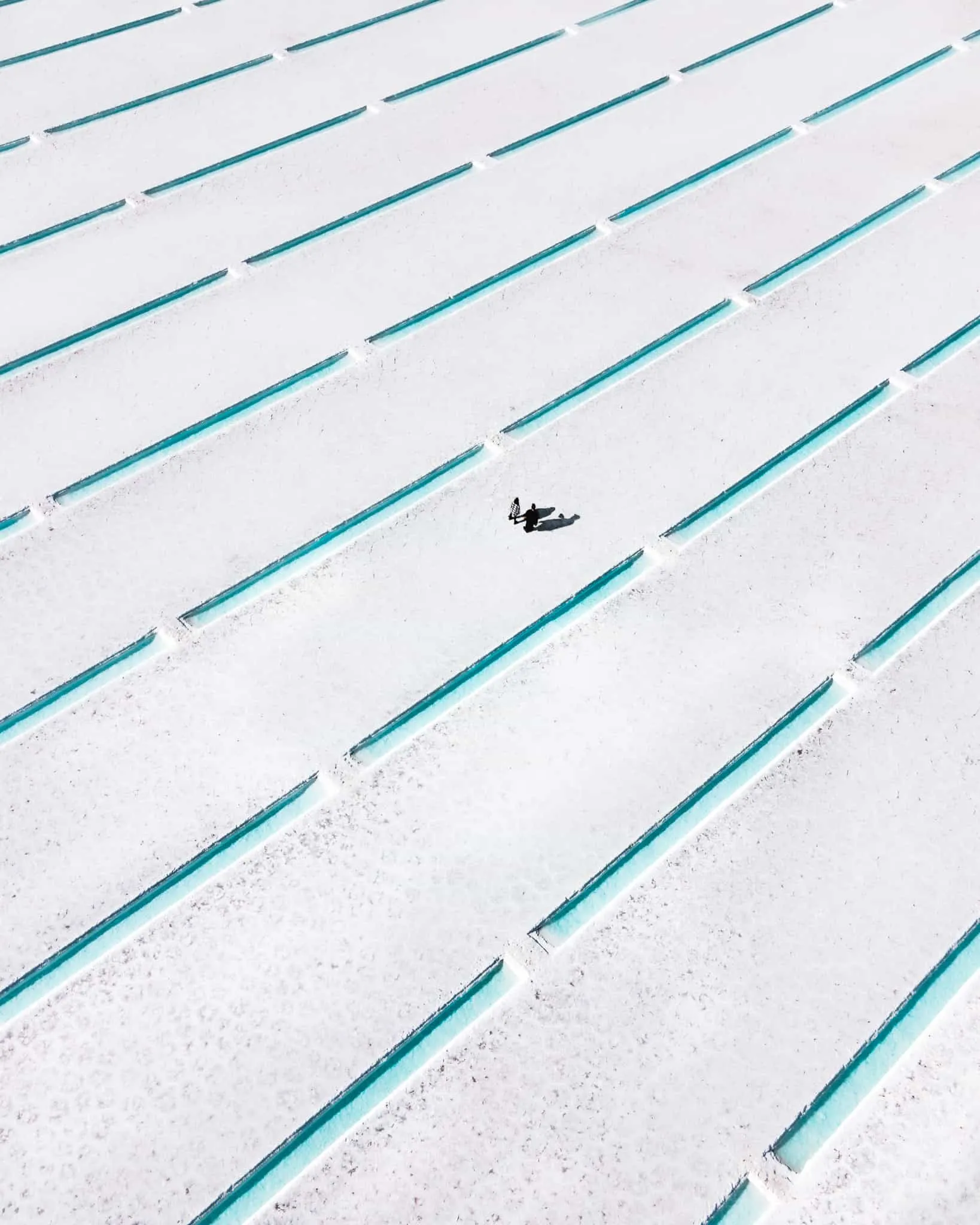
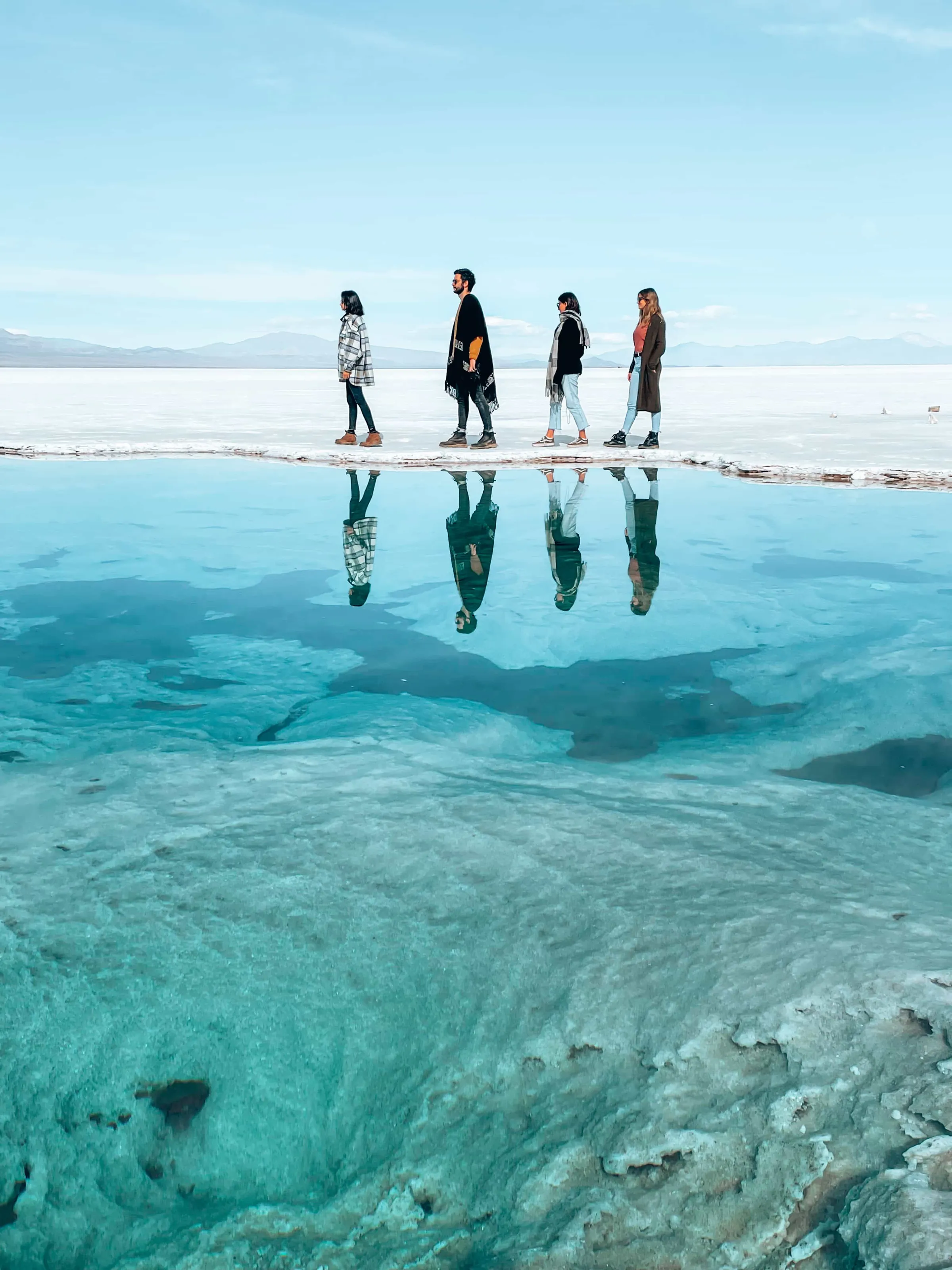
The Salinas Grandes of Jujuy are one of the most striking landscapes in northern Argentina. This salt desert covers 12,000 hectares and sits at 3,300 m (10,827 ft) above sea level.
From Purmamarca, getting there is easy: it takes about an hour by car, over the famous Cuesta de Lipán, a scenic road with incredible curves and spectacular views.
When you arrive, you can drive in with your own car and hire a local guide at the entrance. The guides ride along on a motorcycle, show you the crystallization pools and the "eyes" of the salt flat, and tell you all about the geological history of the place, which goes back more than 10 million years.
⚠️ Important: The salt flat is 30 cm thick on average and formed after the evaporation of volcanic waters that covered the area. It's essential to stick to the authorized trails and stay out of restricted areas, to preserve this unique ecosystem.
If you're not traveling by car, you can book one of these tours:
- Tour to Salinas Grandes from Purmamarca
- Tour to Purmamarca and Salinas Grandes from Salta city.
- Tour to Purmamarca and Salinas Grandes from San Salvador de Jujuy.
6. Iruya
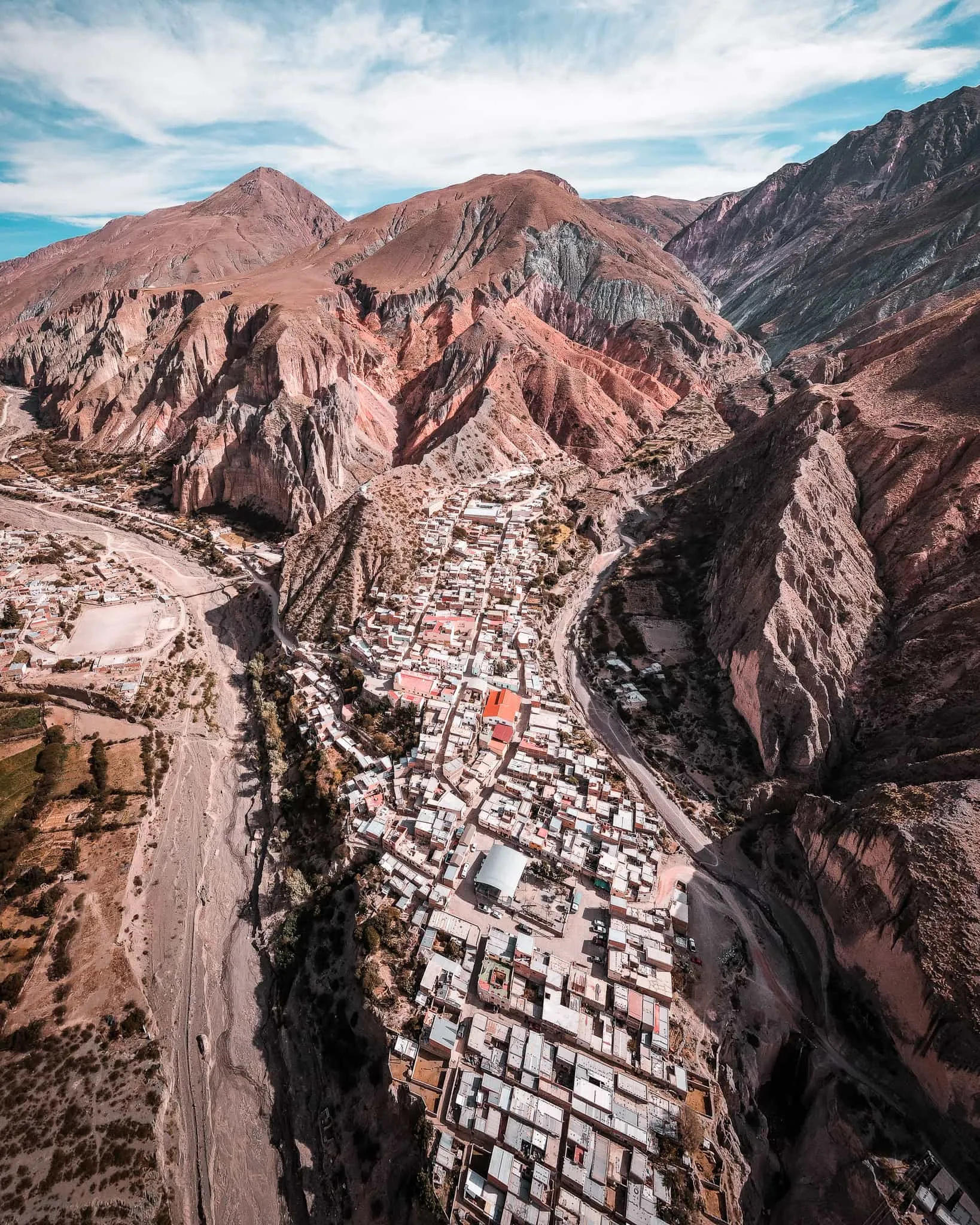
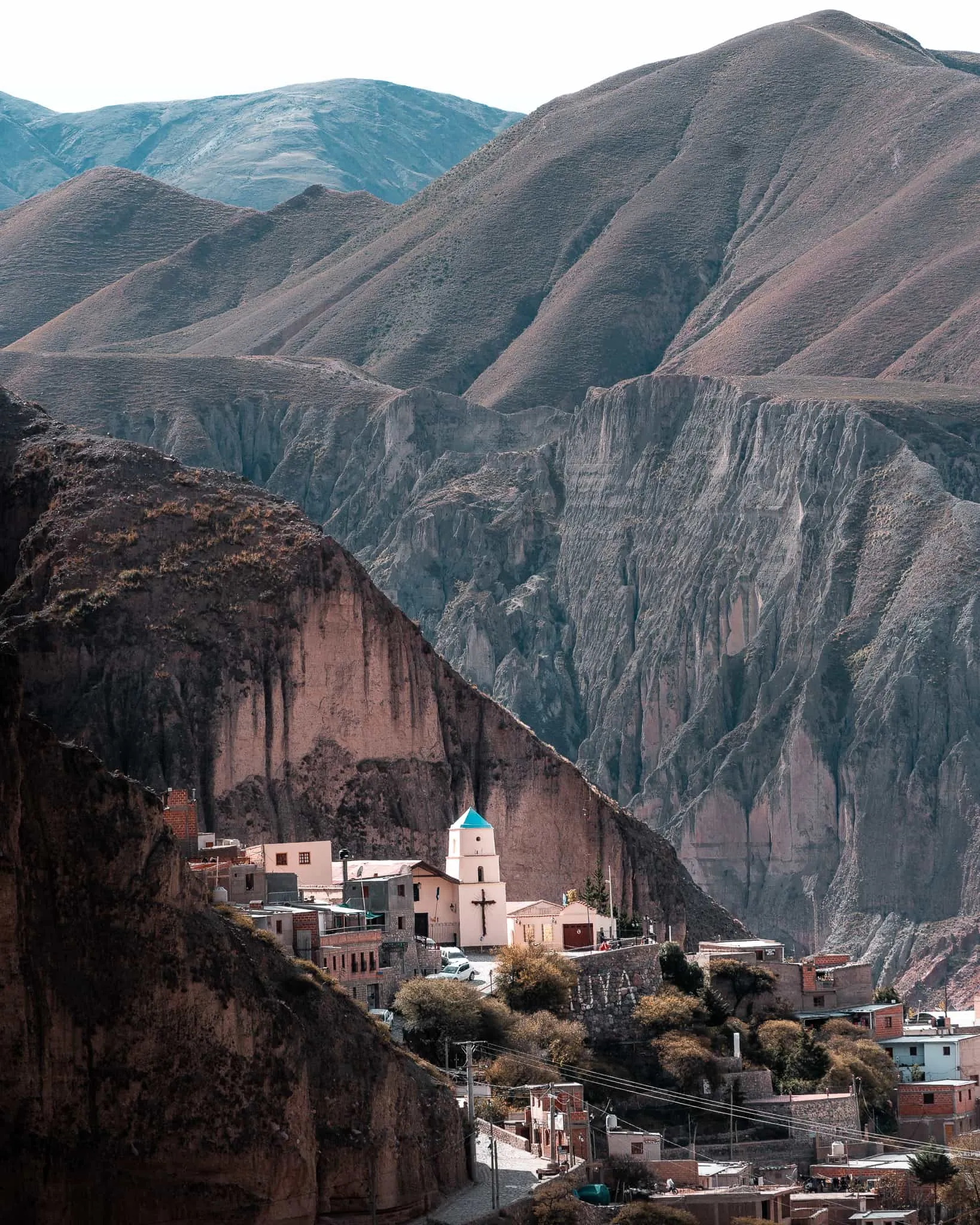
Although Iruya belongs to Salta province, many people include it in their Jujuy itinerary because you reach it from Humahuaca. This small mountain town, at 2,780 m (9,121 ft) above sea level, is one of those places that seem frozen in time, with cobblestone streets, adobe houses and a rare sense of calm.
How to get to Iruya
You get there on a gravel road that takes about 2.5 hours. It winds between mountains and crosses scenery straight out of a movie. It may seem long, but we promise it's worth it.
What to do in Iruya
- Walk around town: Enjoy its simple architecture, its beautiful church and the natural viewpoints.
- Mirador del Cóndor: A 2-hour walk from the center of town that takes you to a panoramic viewpoint.
- Mirador de la Cruz: Shorter and more accessible, with views of the Iruya River and the colorful hills.
- San Isidro de Iruya: A tiny village you can only reach on foot (about 6 km, or 3.7 miles) or by 4x4. We recommend going with a guide, since the trail isn't well marked. We ran out of time and didn't get to do it.
Don't have a car, or does the road give you vertigo?
You can go on an organized tour:
7. Valle de la Luna in Cusi Cusi
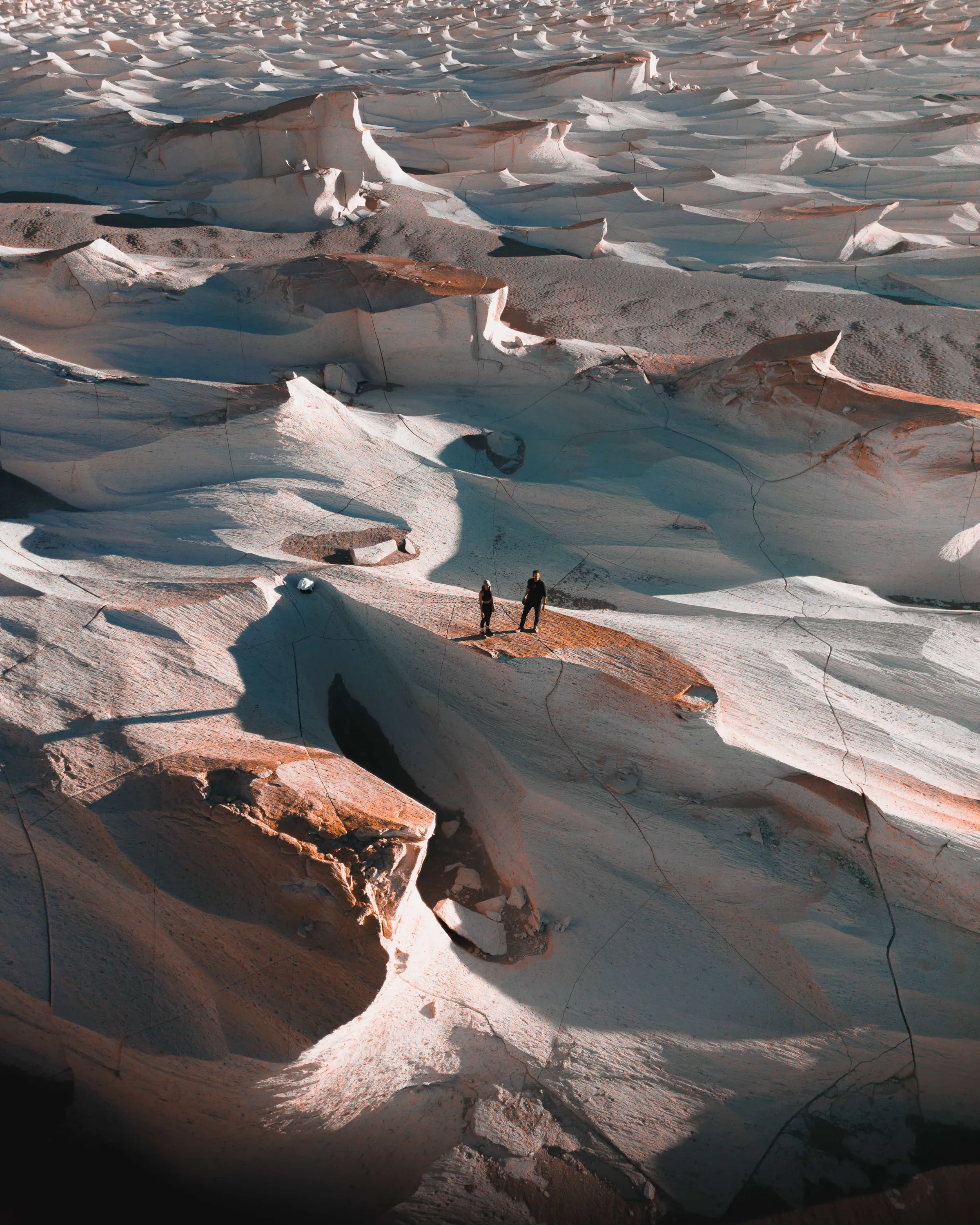
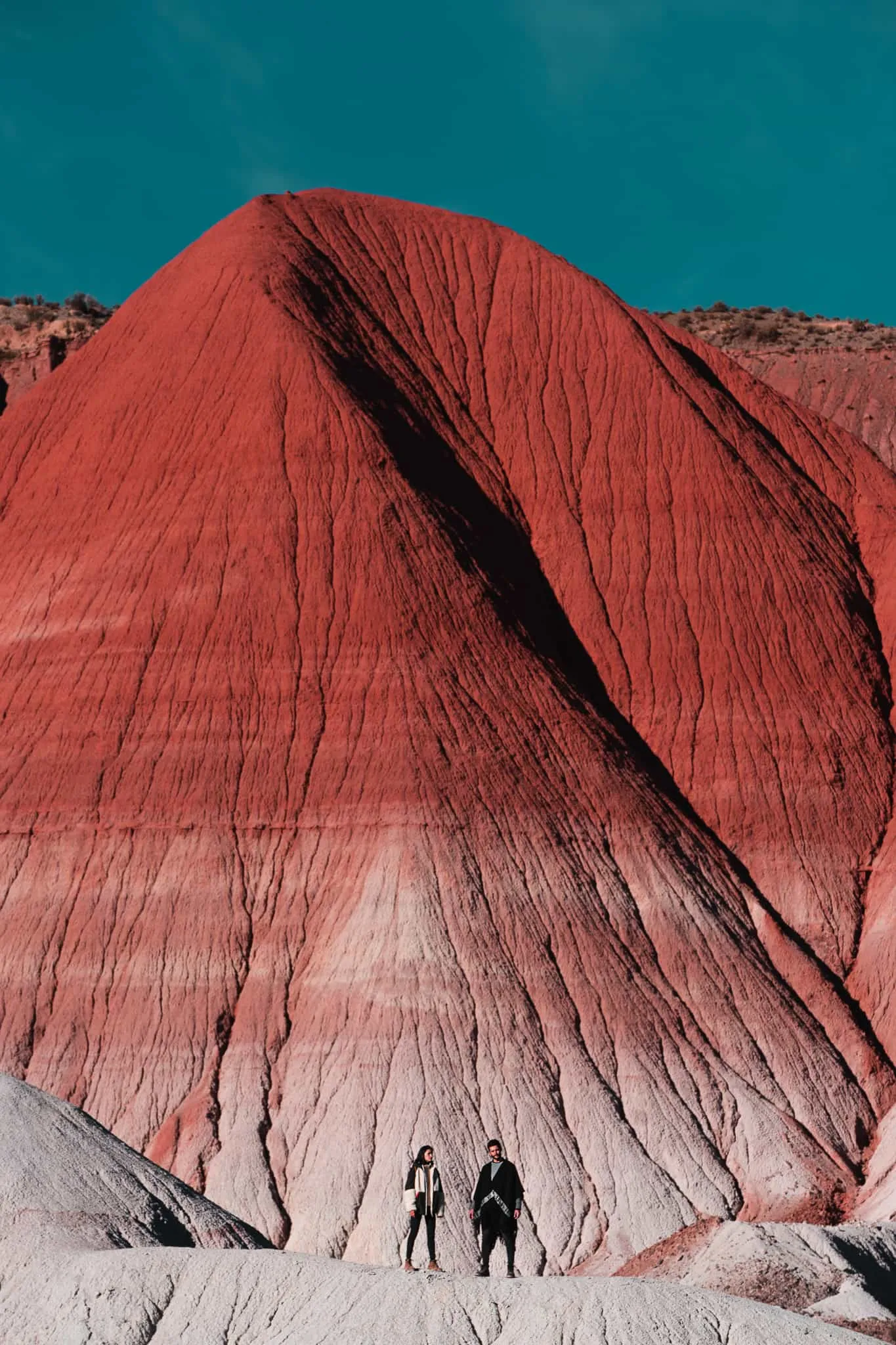
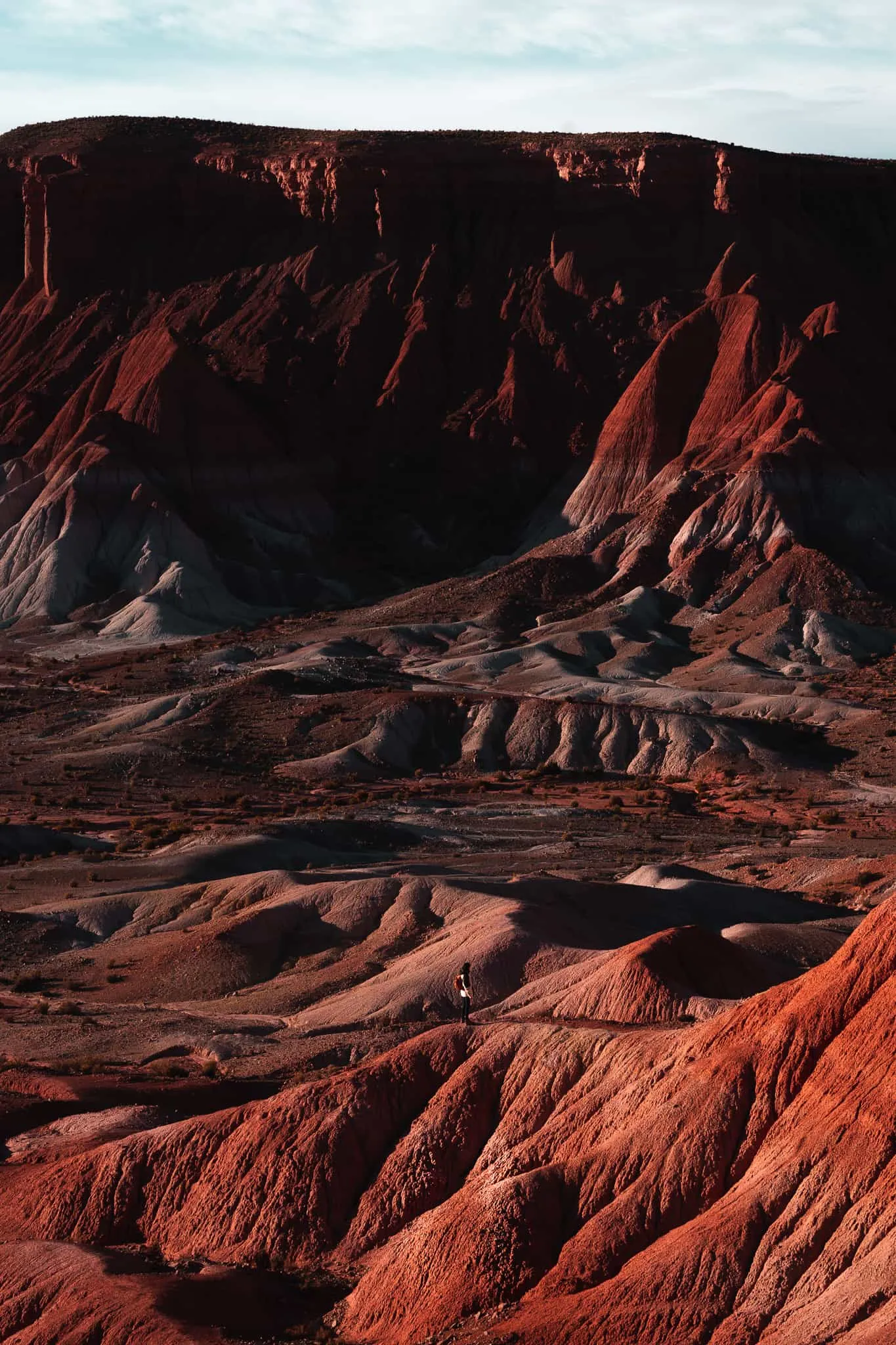
This is one of those places that make you feel like you're on another planet. At about 3,800 m (12,467 ft) above sea level, the Valle de la Luna of Cusi Cusi, in Jujuy province, is dotted with strange rock formations eroded by wind and water. Few people know it, and it deserves to be discovered.
Cusi Cusi is in the Cochinoca department, in northwestern Jujuy. We went from Tilcara. We took Route 9 to Abra Pampa (128 km of paved road), then crossed from Abra Pampa to Cusi Cusi on routes 7 and 70 and finally Route 40 (Ruta 40). That whole last stretch is 120 km of unpaved road, with no cell signal and no gas stations. It took us about 5 hours in a rented Renault Duster (not a 4x4). The gravel road was fairly well maintained by the mining companies in the area. We recommend filling up in Abra Pampa and carrying a spare tire. We also recommend spending a night in Cusi Cusi; we stayed at El Rincón de Cusi.
The Valle de la Luna in Cusi Cusi, at about 3,800 m (12,467 ft) above sea level, is one of the most surprising and least-known landscapes in Jujuy. Eroded by thousands of years of wind and water, this valley looks like something from another planet, with multicolored rock formations.
Where is Cusi Cusi?
Cusi Cusi is in the Cochinoca department, in northwestern Jujuy, very close to the Bolivian border and about 250 km from Tilcara. It's completely off the traditional tourist circuit, which makes it even more special.
How to get to the Valle de la Luna of Cusi Cusi
We made the trip from Tilcara:
- We took Route 9 to Abra Pampa (128 km, all paved).
- From Abra Pampa we continued on routes 7, 70 and 40 to Cusi Cusi (120 km of gravel).
💡 Important things to know about the road:
- The entire stretch after Abra Pampa is gravel.
- No cell signal and no gas stations.
- It took us about 5 hours in total from Tilcara, in a Renault Duster (not a 4x4).
- The road was in good condition, probably thanks to maintenance by the nearby mining companies.
- We recommend filling up in Abra Pampa, carrying a spare tire and leaving early.
Where to stay in Cusi Cusi
We recommend spending at least one night in the town so you can explore the area without rushing. We stayed at El Rincón de Cusi, a simple option.
Important advice: This area is very isolated. If you're not used to driving on gravel or don't want to take the risk, the best thing is to hire a local guide or go on an organized tour from Abra Pampa or La Quiaca.
8. Laguna de los Pozuelos
On the way to Cusi Cusi, it's well worth stopping at Laguna de los Pozuelos, a nature reserve at more than 3,600 m (11,811 ft) above sea level.
This huge body of water is home to many Andean birds, including three species of flamingo.
You reach it from Abra Pampa on Route 7 (Ruta Provincial 7), heading toward Rinconada. There are signs marking the turnoff to the lake. The road is gravel, but passable in a regular vehicle if the weather allows. In the rainy season it can get tricky. Ideal for a short stop to stretch your legs and enjoy the scenery.
Tour to Laguna de los Pozuelos.
9. The Yungas
The Yungas are a unique biogeographic region that stretches across Jujuy, Salta and Tucumán. They're known as “the mountain jungles” for their green, humid landscapes, full of vegetation, which contrast with the arid surroundings of the Quebrada de Humahuaca or the Puna.
What to do in the Yungas of Jujuy:
- Explore Calilegua National Park: Walks on trails like "Tateto" and "Mesada de las Colmenas."
- Horseback ride through the Yungas + Argentine asado (barbecue).
- A visit to San Francisco and Valle Grande: A small town surrounded by the vegetation of the Yungas, ideal for enjoying the quiet and exploring the rivers and waterfalls nearby.
- Termas del Jordán: These natural hot springs are tucked away in the heart of the Yungas. It's best to go with a guide, and we recommend this tour, which leaves from San Salvador de Jujuy.
- Potrero de Yala Provincial Park: It has plenty of trails to explore. Don't miss the Paredones de Yala, the Termas de Reyes and the Lagunas de Yala.
10. Santa Ana
Santa Ana sits at 4,376 m (14,357 ft) above sea level and is one of the highest, most remote towns in Jujuy. Getting there is quite an adventure, but the scenery makes it completely worth it.
It's part of the Qhapaq Ñan, the ancient Inca Road, declared a World Heritage Site by UNESCO. Many sections can still be walked, which ties this experience to the history and ancestral culture of the region. From spots like Abra del Zenta you can watch incredible sunrises above the clouds.
How to get to Santa Ana
There are two main routes:
- On Route 34 (Ruta Nacional 34) + Route 83 (Ruta Provincial 83)
From San Salvador de Jujuy, take Route 34 north and then connect with Route 83. It's a long trip, about 6 and a half hours by car, through very varied landscapes. - On Route 73 (Ruta Provincial 73) from Abra del Zenta
A more scenic option is to come down from Abra del Zenta on Route 73. This road has mind-blowing views, especially if you're coming from the Hornocal viewpoint.
The town is very small and has few places to stay. We recommend looking for options on Google Maps and calling ahead to book. You can also go on an organized tour, especially if you don't have your own transport or want to avoid driving on mountain roads.

Find all the places to stay in Jujuy
Book your stay on Booking (opens in a new tab)
This is an affiliate link: if you book or buy through it, we earn a commission at no extra cost to you.
- Did a price or a detail change? Tell us at hello@charoandmarcos.com
- Still have a question? Ask us on Instagram (opens in a new tab)

Your next step
Northwest Argentina ebook
A PDF that works offline, with itineraries and maps of Salta, Jujuy, Catamarca and La Rioja.