Train travel in India: complete guide, tips and how to book
We wrote this guide in Spanish and translated it with the help of AI. Leer en castellano
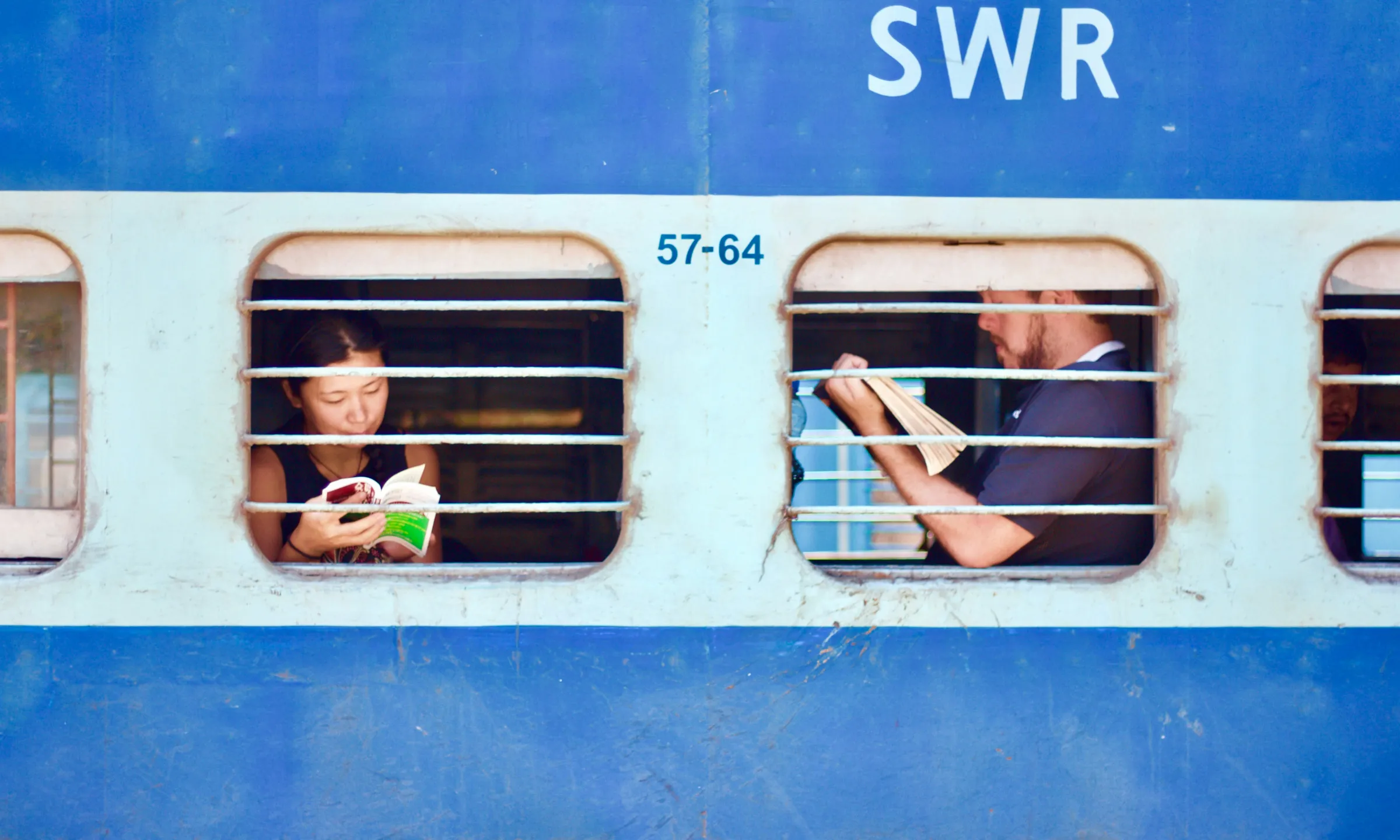
Traveling by train is one of the cheapest and fastest ways to get between cities in India. It's an authentic, very local experience that we definitely recommend, but it can get frustrating if you don't go in well informed. That's why we put together this complete guide, so you understand EVERYTHING: the types of trains, how to get your tickets and all the information you need to travel around India by train. Fair warning: it's not as simple as you'd like 😅
This article has affiliate links: if you book or buy through them, we earn a commission at no extra cost to you.
India's rail network
India's rail network has more than 67,000 kilometers of track and reaches practically every corner of the country, from big metropolitan cities to remote towns. Trains give you the chance to experience local life, see all kinds of landscapes and get a sense of the country's social diversity. But they can also be very crowded, delays are common and the cleanliness sometimes leaves something to be desired. An estimated 20 million-plus people use the rail system every day 🤯
Traveling by train in India is safe, efficient and comfortable (depending on the class you choose; more on that below!). It was our main way of getting around the country.

Travel with peace of mind with Heymondo travel insurance
Get your travel insurance on Heymondo (opens in a new tab)
This is an affiliate link: if you book or buy through it, we earn a commission at no extra cost to you.
How to plan a train trip through India
The first step in planning your trip to India is to sketch out a rough itinerary.
That doesn't mean booking all your hotels and so on, just having an idea of the places you want to visit and how long you'd like to spend in each one. It'll help you work out the dates you need train tickets for, so you can start looking into specific trains.
You may then have to rearrange your itinerary around train availability or the connections between places (for example, Jaipur and Udaipur are well connected by train, but there's no train from Udaipur to Jodhpur, or the other way around).
The most important point: book your trains as early as you can. They go on sale 120 days ahead, and ideally you should book them 3 or 4 months before your trip (especially if you're traveling over a holiday). We bought ours 2 months before and, because there wasn't enough space, the 5 of us couldn't all travel in the same class.
How do you buy train tickets in India?
There are several ways to book your train tickets in India. We'll go from the simplest to the hardest. We chose the last option because we wanted to do it ourselves, with no middlemen (it isn't that hard anyway, and this guide makes it a lot simpler 😉)
1. Use a local travel agency
This is probably the most expensive option but also the simplest: you contact a travel agency in India and they buy the tickets for you.
2. Buy on 12Go
12Go is one of the main platforms for booking transport in Asia, and one of the few international websites that offers Indian train bookings without making you register for an IRCTC account first (IRCTC is the official train website). That makes it the easiest and fastest option for booking trains in India. The only downside is that the site doesn't have every route and schedule. Here's how it works: once you buy your ticket on their site, they go to the IRCTC site and buy it for you. What can happen at that point is that when they try to buy it on IRCTC, that ticket is no longer available (if so, they refund your money).
How to use 12Go to book trains:
Go to the 12Go site and search for your route and date. When you book, you can request your preferred class and an upper or lower berth. Then enter your details and pay with an international credit card. Bookings are made on request, so they aren't confirmed until you get the confirmation email from 12Go, which can take more than 24 hours. There's an option to tell them if you're flexible about traveling a day earlier or later.
3. The official train website: IRCTC
IRCTC (Indian Railway Catering and Tourism Corporation) is a state-owned company that handles all the management of trains and stations for Indian Railways. On its official site you can book tickets, check schedules and even find tour packages, among other things.
This is the option we chose, but it isn't so simple for foreigners, and here's why:
To buy tickets with them you have to create an account, and to activate it they ask you to complete an OTP (verification). The OTP comes by email and by text message (you need to validate both to activate the account), and what happened to us is that the text message code never arrived. We tried many times, and even used phone numbers from other countries that work for OTPs, but it never came. Luckily, Charo had a coworker from India who offered us his IRCTC account so we could buy our tickets.
And authentication isn't all… When we tried to pay with our Argentine credit cards, it wouldn't let us do that either. Fortunately we have access to a card issued in Europe, and that one did go through.
Still, we think these are things that will get sorted out over time.
So, assuming you managed to validate your account and log in with your username, you can start searching for the route you need on the dates you want to travel.
The results will look like this:

Here's a quick translation:
The first line is the name of the train: SWTANTRTA EXP. Below it you have the train's departure time, city and date and, on the same line to the right, the arrival time, destination and arrival date.
Sleeper, AC3, AC 3 tier, AC 2 and AC are the classes (we explain them in detail further down), and the availability you see depends on which one you select.
Now, the tickets you can buy can have 3 different statuses. That's what shows up below the date, in green, red or orange depending on the status.
- Available: There's space available, and once you buy, your place is guaranteed. The 0005 in green next to the word available in the photo we showed you means there are 5 places left in that class for that date and time.
- WL (Waiting List): This means your train is officially closed for guaranteed bookings. They'll still let you buy a ticket and put you on the waiting list, though. In the photo, it's the ticket that says WL5 (the 5 means you're fifth on the waiting list). If a passenger with a confirmed booking cancels, that ticket goes to the person on the WL. On the website you can see the statistical chance you have of getting off the WL. The problem with the waiting list is that they may not let you know until just 40 minutes before the train leaves… You can keep track of it in your IRCTC profile.
- RAC (Reservation Against Cancellation): The assumption is that not everyone will show up for their train, so they do what they can to make sure it runs full, "overselling" it with RAC tickets (similar to what airlines do). With an RAC ticket you can board the train, but you're not guaranteed a seat or berth number when you book, and you may have to share a berth if everyone shows up. Usually, as ticket quotas are released a day before or up to 4 hours before the train leaves, you'll be assigned a place. As with the WL, the number tells you how many people already have RAC tickets: RAC 23, for example, means there are 23 people with RAC tickets ahead of you.
4. Buy your ticket at a train station
Once you're in India, you can go to any train station in the country and buy your ticket in person (cash only).
Most train stations have English-speaking staff, and the bigger ones have ticket windows just for train bookings by foreigners. There's also a quota for foreigners that's only available in person. The only problem with this option is that there may be no tickets left for the train you want to take.
Classes on Indian trains
There are different types of trains and different classes. Some trains have classes with sleeping options and others don't.
Trains with sleeping options:
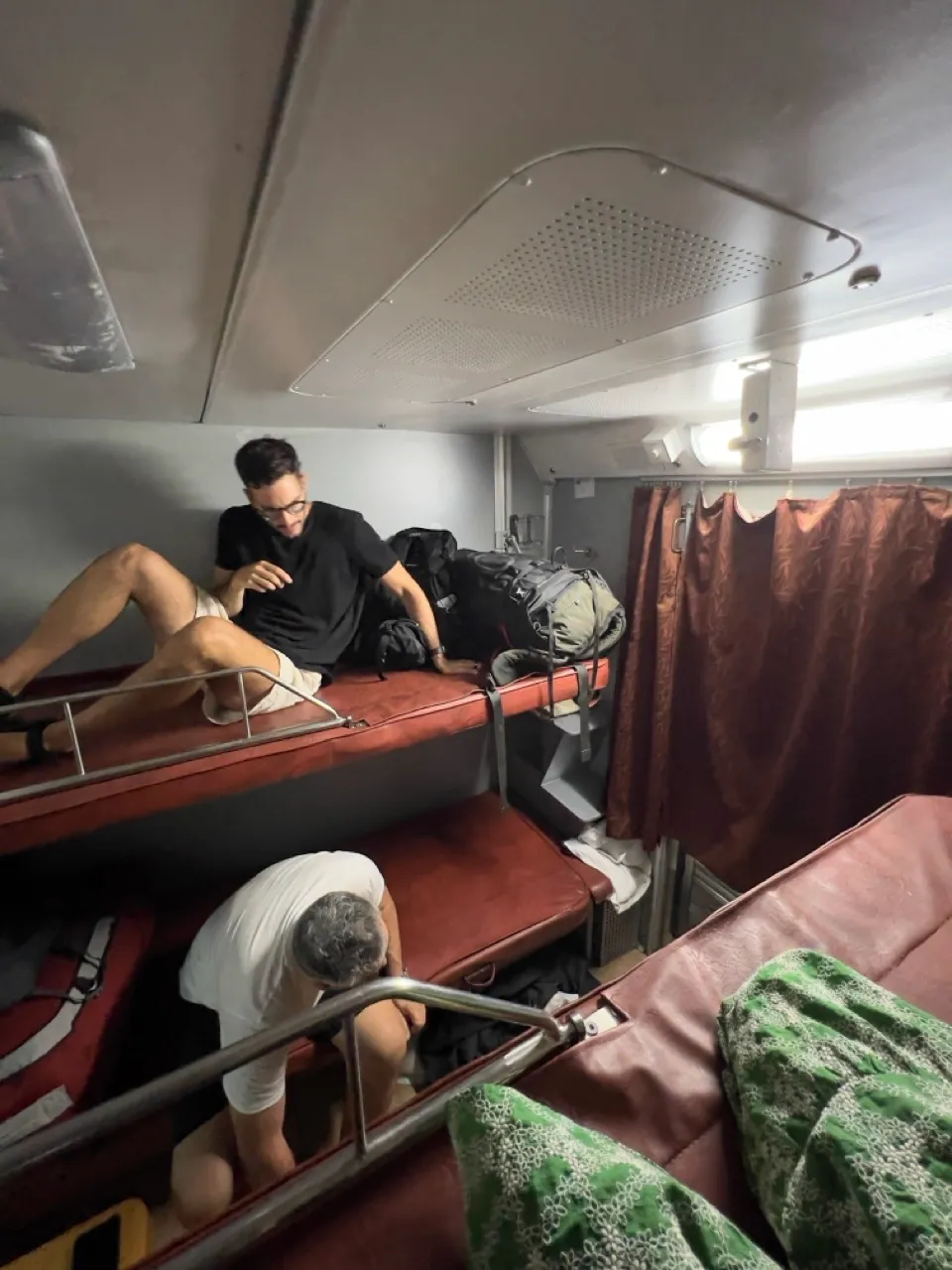
- AC First Class (1A): This is the most expensive and "luxurious" option on offer. A compartment usually has just 1 or 2 berths, doors that lock and carpeted floors, and it may have a washbasin. Depending on the train, first class also has somewhere to charge your phone. There's a bathroom too (not very clean, but useful in an emergency). When you board, someone comes by to give you clean sheets, pillows and blankets. If you get on partway along the route, your berth may still have used sheets on it; don't worry, a few minutes after the train pulls out the staff come by to take them away and give you new ones. We always traveled in this class. A ticket in this class for a 6-hour trip costs about US$14.
- AC 2 Tier (2A): This one falls between 3A and First Class, and it's a good trade-off between comfort and cost. It generally has 6 berths (2 along the aisle and 4 in the compartment), but the compartment doesn't have doors that lock. As in 1A First Class, pillows, sheets and blankets are free. The bathrooms are worse than in 1A, but still pretty decent. A 2A ticket costs about US$8.50.
- AC 3 Tier (3A): This is the class most middle-class Indian passengers prefer. Like the ones above, it has air conditioning, but the fares are much more affordable. There are 8 berths (2 along the aisle and 6 in the compartment). A 3A ticket can cost US$6.
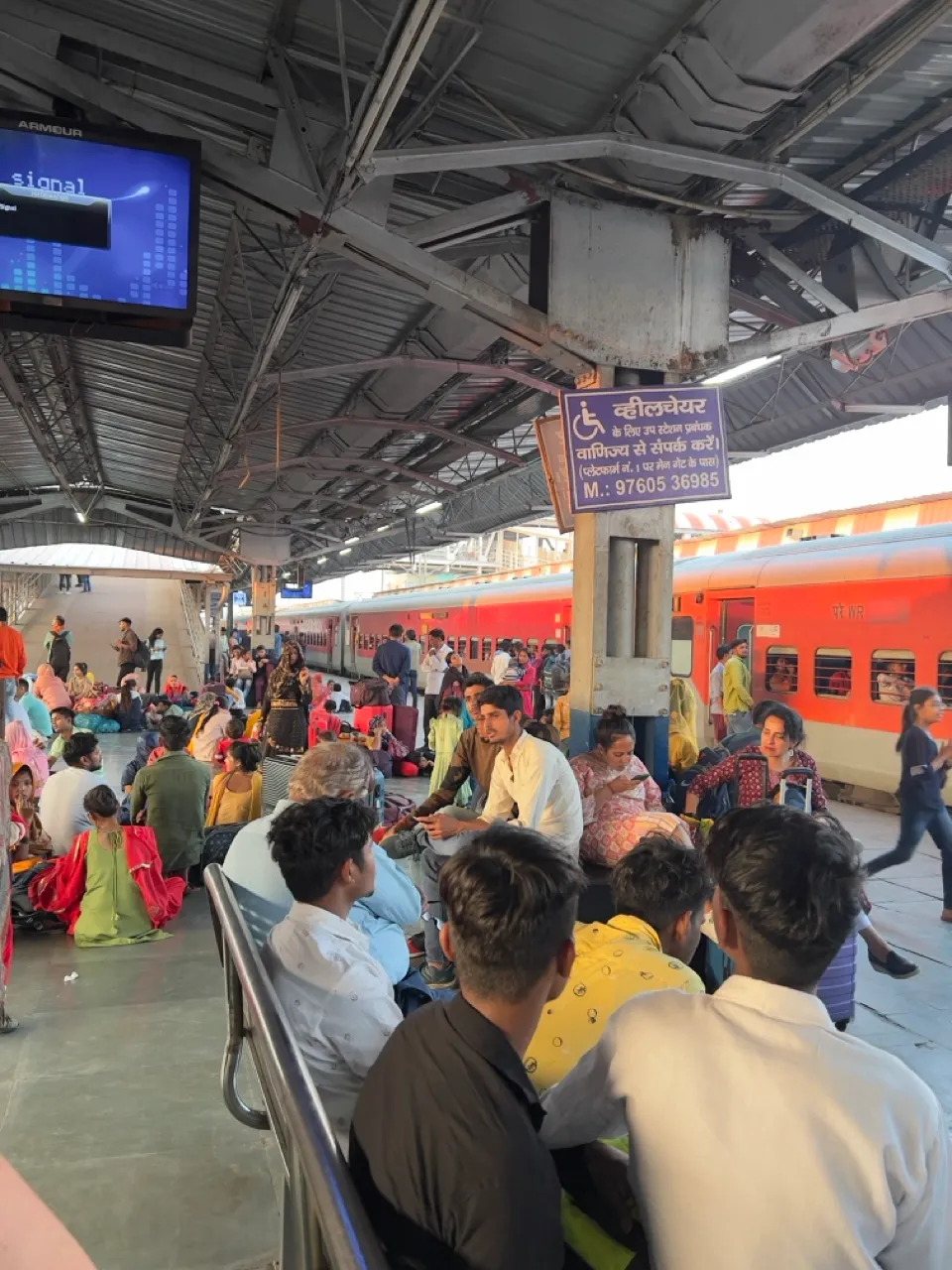
- Sleepers (SL): This class has no air conditioning and is the cheapest option available on most trains. The windows are usually open to let air through, but with the air come dust and, when it rains, water. No bedding is provided. It gets pretty crowded, people tend to talk at a shout and there are lots of hawkers. A Sleeper ticket costs about US$2.50.
Trains without sleeping options:
- Executive Class (EC): Priced similarly to 1A First Class. It has air conditioning and comfortable seats.
- First Class (FC): No air conditioning, and fitted with seats.
- AC Chair Car (CC): Air-conditioned, with seats in rows of 2+3. It's often available on short-distance trains and is usually cheaper than a 3A ticket.
- Second Seating (2S): The cheapest carriages you'll find in India. It can be reserved or unreserved, and it's available on most daytime intercity trains. The unreserved seats are wooden benches shared by 3 passengers.
Here's a link where you can see photos and more information about the different classes.

Book your places to stay in India
Book your stay on Booking (opens in a new tab)
This is an affiliate link: if you book or buy through it, we earn a commission at no extra cost to you.
A few tips for a better trip
Book in advance: Train tickets sell out every day, so make sure you plan your trips ahead of time. If the trains are sold out you can always take a bus, but it's much better to book if you already know your travel dates.
Get to the station at least 30 minutes before departure: Some train stations in India are chaotic, and it can take a while to figure out where to go to find your train. Get to the station early and you'll avoid any trouble.
Download the IXIGO app: It lets you track your train tickets, predicts delays and cancellations, shows your bookings and even helps you find the right carriage and platform. The app may not be available in your current region, but you can easily download it once you get to India.
Make sure you wake up for your stop: Don't expect anyone to come and wake you. Set an alarm, because railway staff don't wake people up, and you need to be at the door waiting for your stop if it's a station where the train only stops for a couple of minutes.

Stay connected with a Holafly eSIM
Get an eSIM on Holafly (opens in a new tab)
This is an affiliate link: if you book or buy through it, we earn a commission at no extra cost to you.
- Did a price or a detail change? Tell us at hello@charoandmarcos.com
- Still have a question? Ask us on Instagram (opens in a new tab)

Your next step
India in 3 weeks: what to see and do, with our complete itinerary
India is a huge country, so there are plenty of ways to plan a 3-week itinerary. We focused on exploring the Golden Triangle (Delhi, Agra…