Australia road trip guide: everything you need to know
We wrote this guide in Spanish and translated it with the help of AI. Leer en castellano
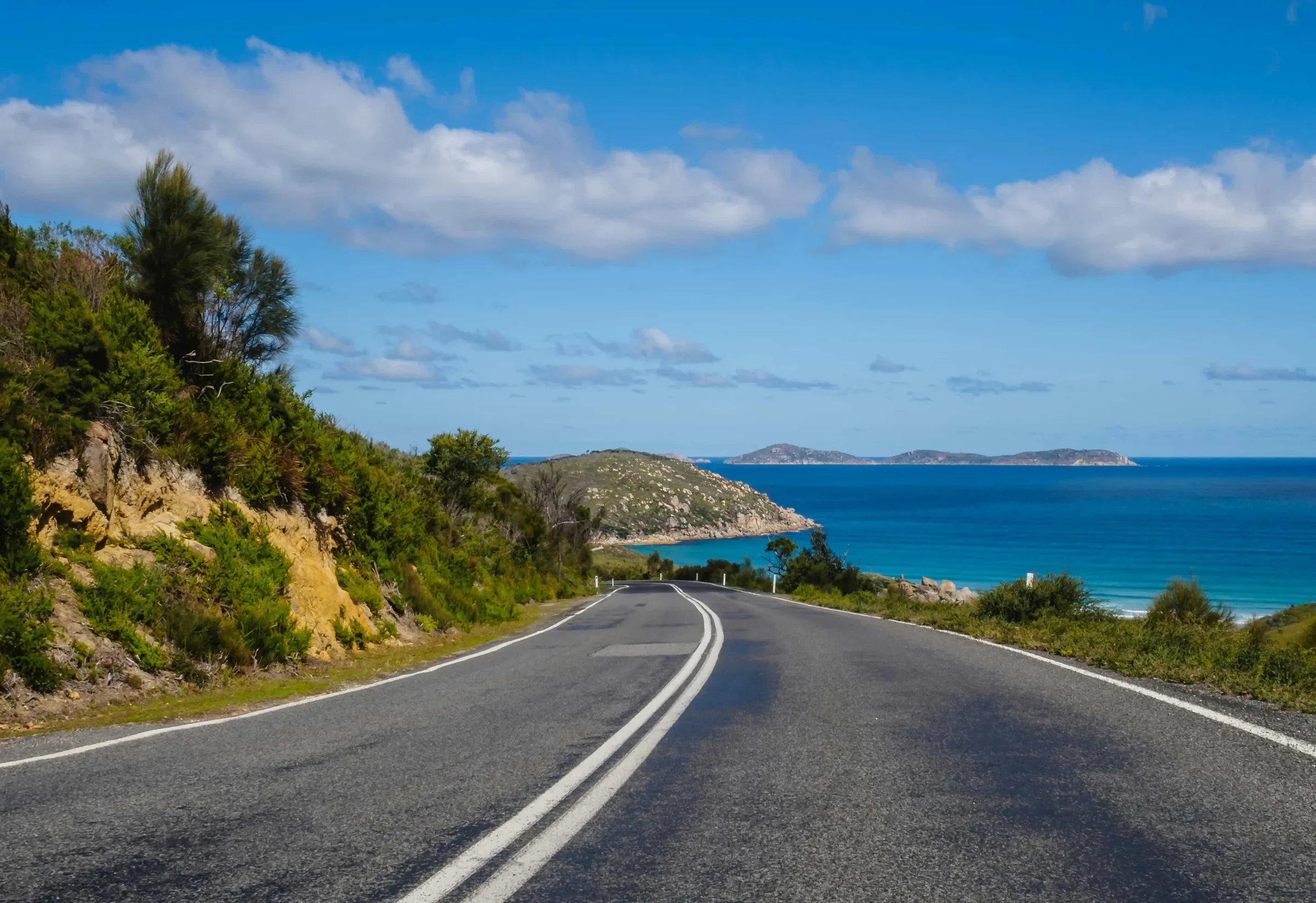
If you're planning a trip around Australia, the best way to enjoy it is on wheels, whether in a van, campervan, motorhome or car. The roads are in perfect condition and the scenery along the way is spectacular. The country is also set up for this kind of trip, with free and paid campsites all over. Keep in mind that Australia is huge and the distances are long, so driving is the best way to get around. Every day our backyard changed, and we woke up to spectacular views.
This article has affiliate links: if you book or buy through them, we earn a commission at no extra cost to you.
Buying or renting: which is the better option?
If your trip is longer than 20 days and you're not in a hurry, the best option is to BUY a car or van and fit it out for sleeping, or buy one that's already fitted out. That way you'll save quite a few dollars. Vehicles like these are very easy to sell in Australia, since road trips are very common and there are always backpackers looking for one.
Another way to save money is the famous "relocations". This is when a car rental company needs someone to move a vehicle from one place to another within a set number of days. The company gives you the car for just A$10 a day, or sometimes even for free, and you only have to pay for fuel. You do have to stick to the number of days the company sets, though.
You can search for relocations on this site: imoova.com
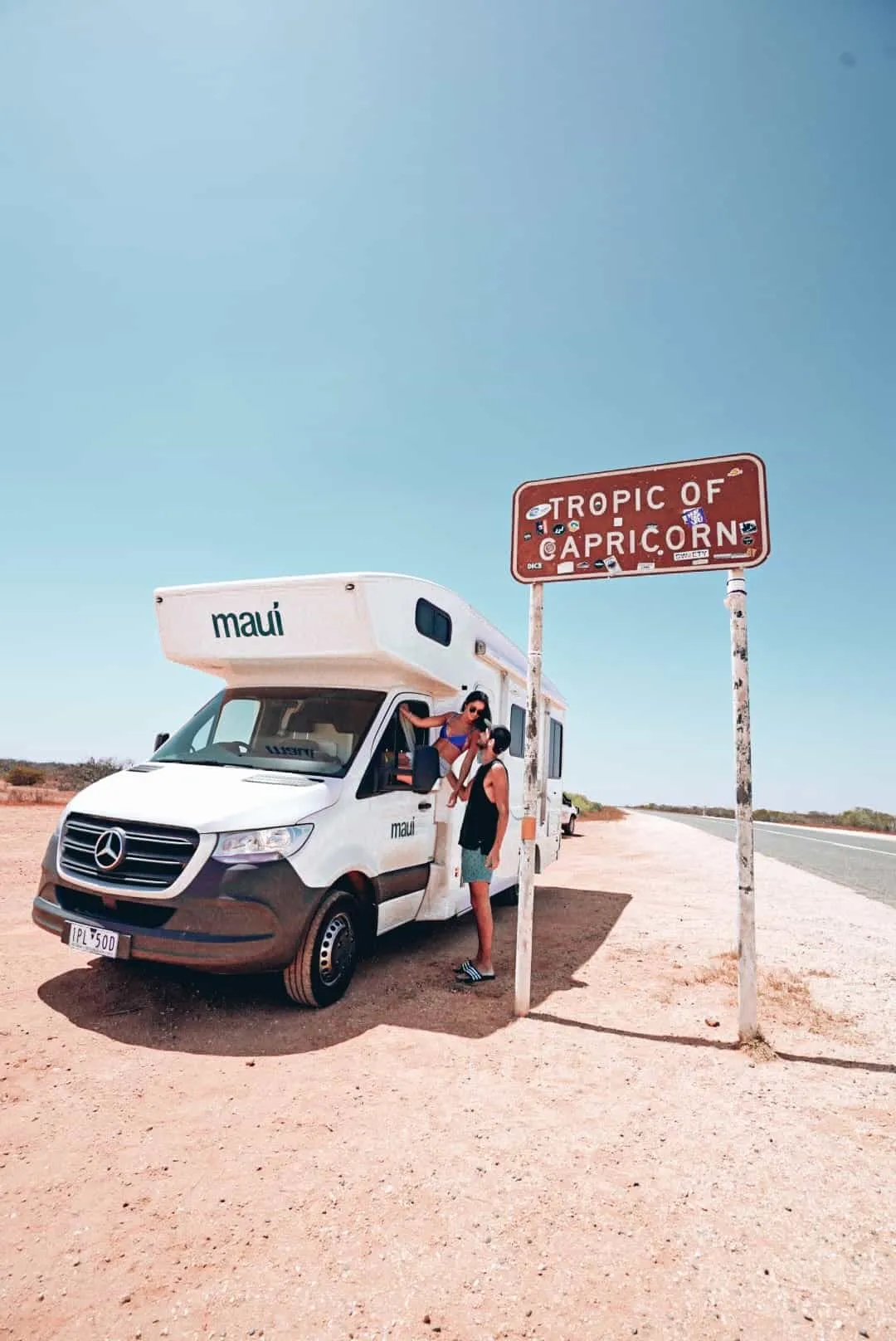
If you don't have many days, the best option is to RENT. There are several sizes and companies to choose from, and it all depends on your budget and how many people are traveling. The best brands are Apollo, Britz, Maui and Travellers. We rented a Maui motorhome through this site: motorhomerepublic.com
Tip: If you're going to rent a car or campervan, make sure you ask what the rental includes, since a lot of camping gear may not be included in the price. If anything's missing, your best bet is to buy it at Kmart, BIG W or Target, which sell these items at very low prices and have stores all over the country.

Travel with peace of mind with Heymondo travel insurance
Get your travel insurance on Heymondo (opens in a new tab)
This is an affiliate link: if you book or buy through it, we earn a commission at no extra cost to you.
How do you find a campsite or a place to sleep?
Australia is full of campsites, both free and paid. There are several apps you can download to your phone that will help you find them:
Another way we searched was Google Maps. We'd type CAMPSITE into the search bar and all the nearby ones would come up. We suggest reading the reviews or calling before you go, to check that it's still open and see what amenities it has.
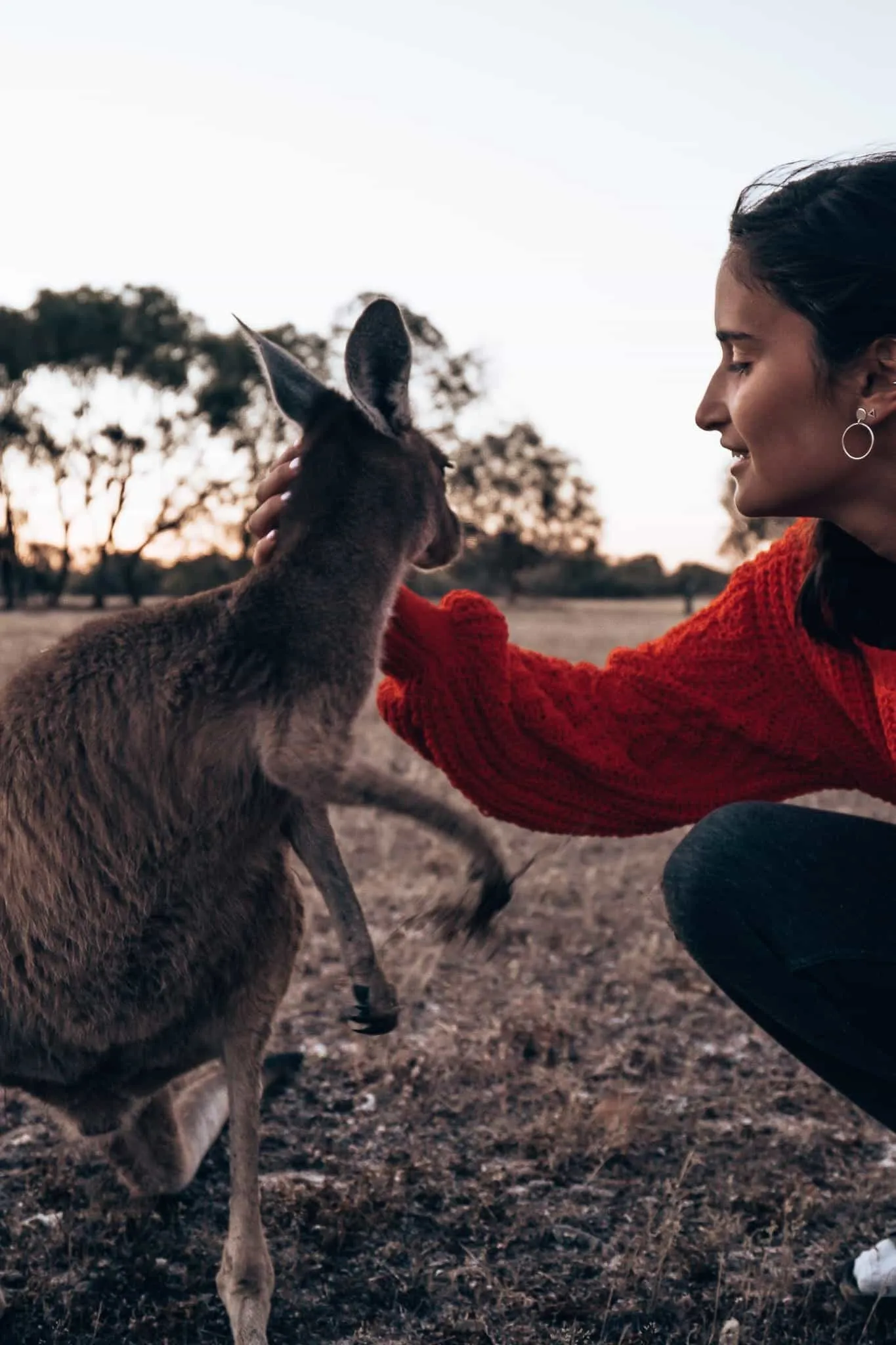
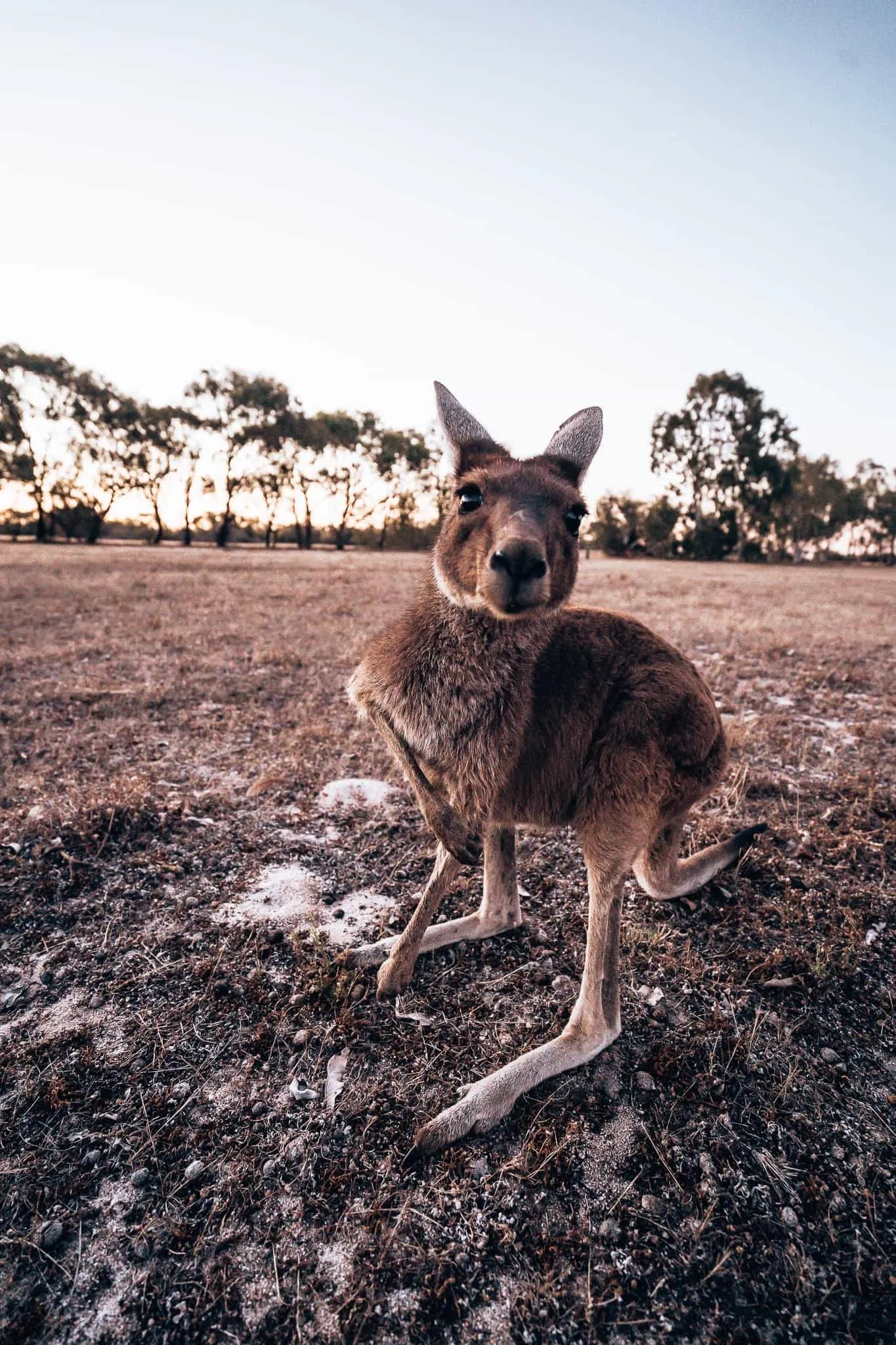
That's how we found a campsite full of kangaroos!
Free campsites vs. paid campsites
One of the best ways to keep your budget low on a road trip around Australia is to stay at free campsites. These usually have just a toilet, with no showers or sinks, and some don't even have a toilet!
So if you plan to stay at this kind of campsite, it's best to go well prepared, with a well-equipped kitchen and a flashlight. As for bathrooms, public restrooms are very common in Australia and most have showers, and you can also use the ones at gas stations.
Paid campsites have bathrooms, showers, a shared kitchen area, sometimes laundry, and other amenities.
When you book a spot at a campsite, you can choose between a site with electricity or without electricity, and prices vary accordingly. Several things in a van need a power connection to work (microwave, air conditioning, 220V outlets), which is why there are sites with electricity.
A site with electricity costs around A$30 per van for 2 adults, and each extra person costs A$10 to A$15.
A site without electricity costs around A$20 per van, including 2 people.
There are also campsites in national parks, which you have to book in advance on the website. These usually charge a fee and generally don't have many amenities. You can see prices and book on each state's national parks website.
WA (Western Australia): www.parks.dpaw.wa.gov.au
VIC (Victoria): www.parks.vic.gov.au
NSW (New South Wales): www.nationalparks.nsw.gov.au
QLD (Queensland): www.parks.des.qld.gov.au
SA (South Australia): www.parks.sa.gov.au
TIP: As soon as the day starts, try to plan your route and decide where you're going to sleep, so you can look it up online and, if it's a paid campsite, book it, since the offices often close at sunset.
Dump points and gray water disposal
This isn't the nicest part of a road trip, but you do have to pay attention to it. If your vehicle has a toilet and a shower/sink, you need to keep track of the places where you can dispose of this waste.
Most of these toilets empty into a “box”, a kind of septic tank, that you have to clean every 2-3 days. This box has to be emptied at special dump points, which you'll find at most campsites. Because of the chemicals used in this type of toilet, the waste has to go into a designated dump point.
The waste water from the shower and sink in a motorhome or campervan is kept separate from the toilet waste. It's called gray water, and you dispose of it differently. For that you need a gray water disposal point. You can also find these at campsites or through the apps we recommended at the start.
The clean water for the shower and sink also needs topping up every few days. You can refill it at some paid campsites or at gas stations.
Fuel
A liter of gasoline in Australia costs around A$1.30, and the price can go up a little in areas farther from the cities.
On the first day, try to work out how much fuel your vehicle uses, so you can figure out roughly how much you need per km.
On the road you'll see signs announcing the next gas station, store or hotel. Don't pass any of them by. There's no shortage of stories, urban legend or not, of backpackers stranded in the middle of the Outback with no fuel, no phone signal, 40°C in the shade and little water or food.
Once you're well prepared, it's time to drive and enjoy the road. Always do it during the day. First, because there are incredible places you won't be able to see at night, and second, because at night the road belongs to the animals. It's shocking how many dead kangaroos you see along the roadside!

Stay connected with a Holafly eSIM
Get an eSIM on Holafly (opens in a new tab)
This is an affiliate link: if you book or buy through it, we earn a commission at no extra cost to you.
Food
The best thing about traveling in a vehicle with a kitchen is that you can save a lot, since you don't need to eat at restaurants. Your dining room also changes every day, always with spectacular views.
Australia is known as an expensive destination, and one of the best ways to stay on budget is to cook and avoid eating out.
Try to buy your supplies in cities or big towns, since prices tend to be higher in smaller places.
Stay connected
On a road trip it's best to always be connected, since if anything comes up you can call for help and have a map handy.
- Did a price or a detail change? Tell us at hello@charoandmarcos.com
- Still have a question? Ask us on Instagram (opens in a new tab)

Your next step
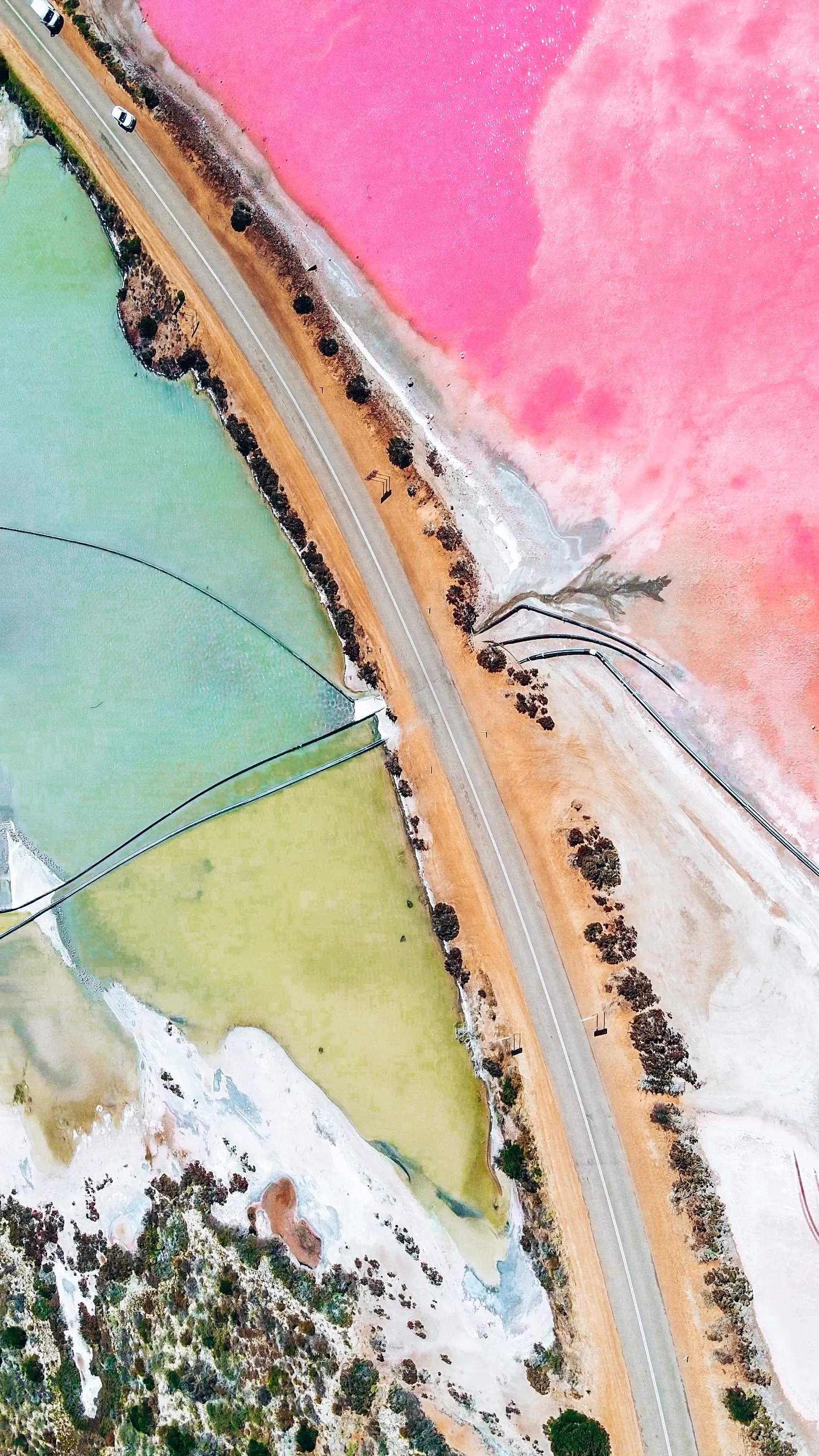
Perth to Exmouth road trip: our guide and itinerary
In 18 days we did a road trip along Australia's west coast, a perfect combination of the famous Coral Coast and the south of WA (Western…