How to Visit Mount Bromo and Kawah Ijen: Java's Volcano Route
We wrote this guide in Spanish and translated it with the help of AI. Leer en castellano
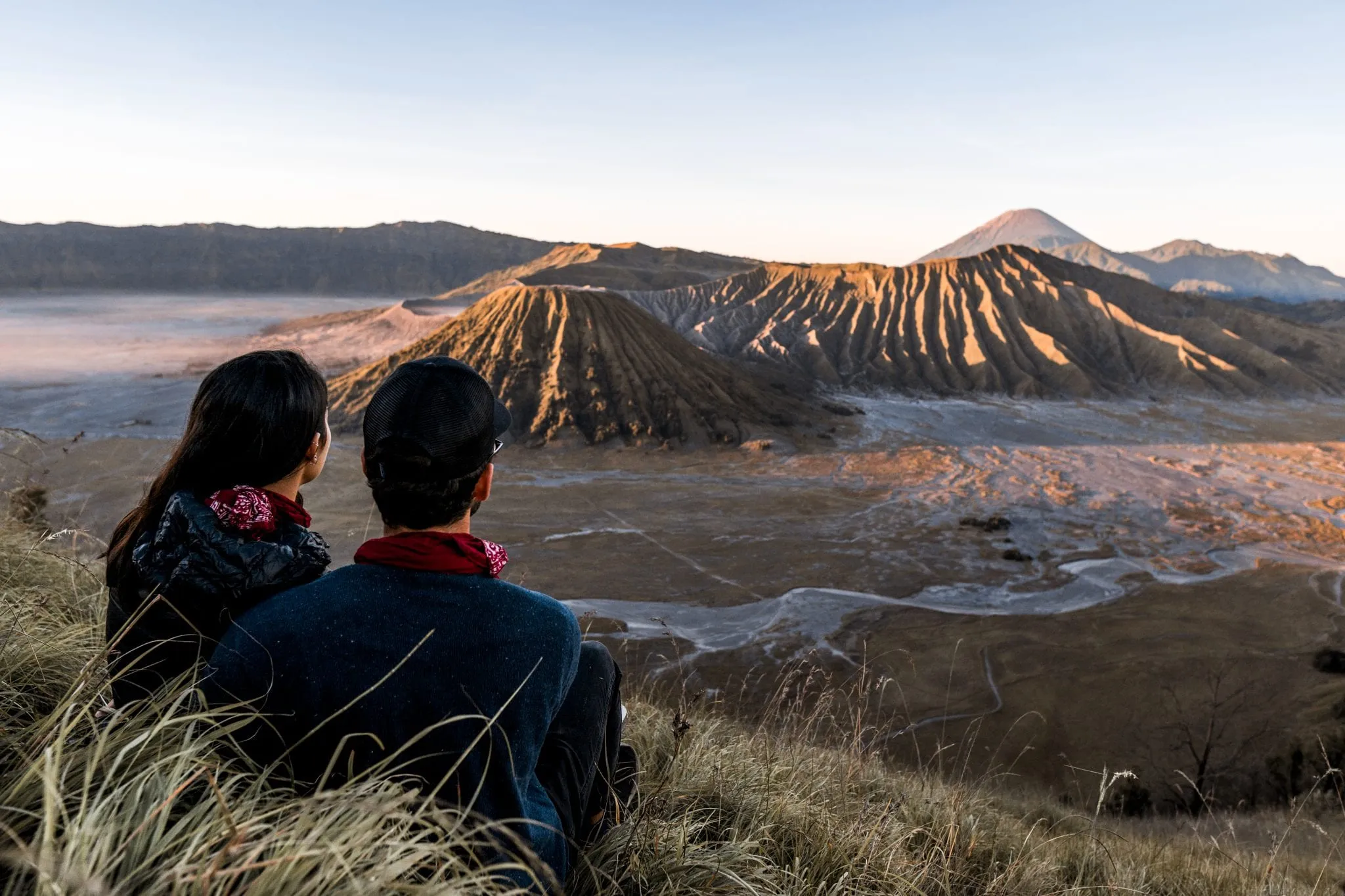
The volcano trip in Java is one we'll never forget as long as we live. We never imagined we'd end up walking around the crater of an active volcano. It's definitely one of the best things to do in Indonesia.
This article has affiliate links: if you book or buy through them, we earn a commission at no extra cost to you.
2-Day, 1-Night Tour (Bromo and Ijen)
There are several ways to get to the Bromo and Ijen volcanoes, and depending on which one you choose, you may need to set aside more time. Keep in mind, too, that the 2 volcanoes are about 5 hours apart.
We decided to book a 2-day, 1-night tour online, and we were super happy with it!
Our tour started in Surabaya, a city in northeastern Java. The base most tours actually leave from, though, is the city of Malang. Since you have to get to Malang from Surabaya, we preferred to spare ourselves the hassle of working out how to get there and have the tour pick us up at Surabaya station. (To see how to get from Yogyakarta to Surabaya by train, click here.)
This option also saved us a hotel night and a day of the trip.
At 12 midnight our driver picked us up at the train station in Surabaya and we went straight to Bromo volcano for the sunrise (almost 4 hours on the road). Yes, we were exhausted by the time we arrived, but we were so excited about the volcano that we barely felt it.
After watching the sunrise, climbing to the crater and having breakfast, we set off on the 5-hour drive to a hotel in Bondowoso, the town people use as a base for Ijen volcano.
At 12 midnight, once again, our driver picked us up and we hit the road to Kawah Ijen (1.5 hours away). Once there, we climbed the volcano and went down into the crater, an incredible experience!
Then we went back to the base for breakfast and got in the car one last time. Our next stop was the port of Ketapang, where we'd catch the ferry to Bali.
What the tour included:
- Entrance fees for the volcanoes
- Private driver (from Surabaya to the port of Ketapang)
- Jeep for Bromo
- Local guide at each volcano
- A hotel night with breakfast
Price: US$175 per person.
We booked it with a local company we found online, and we always dealt with them by email. They're 100% reliable. Here's their website in case you're interested: Java Travelline
We do want to make clear, though, that there are several tours and you can book them from Yogyakarta, Surabaya or Malang. This was the one that best fit our budget and what we were looking for.

Travel with peace of mind with Heymondo travel insurance
Get your travel insurance on Heymondo (opens in a new tab)
This is an affiliate link: if you book or buy through it, we earn a commission at no extra cost to you.
Mount Bromo
Sunrise
You go up to the sunrise spot, and along the road to the volcano, by jeep. So at 3 in the morning we reached the point on the road where we had to switch vehicles. We got into the jeep and started up alongside hundreds of other jeeps. When we were nearly there, the jeep traffic was so heavy that our guide offered to let us get out and finish the climb on foot! So that's what we did, and it let us find a good spot for the sunrise.
We waited for an hour in the dark until the sun began to appear from behind the mountains. As the minutes passed we started to make out what was around us: mountains, volcanoes and a lot of people! The guide showed us which of all the volcanoes in view was Bromo, and we watched it take on the colors of the sunrise. It was truly beautiful.
Climbing Bromo volcano
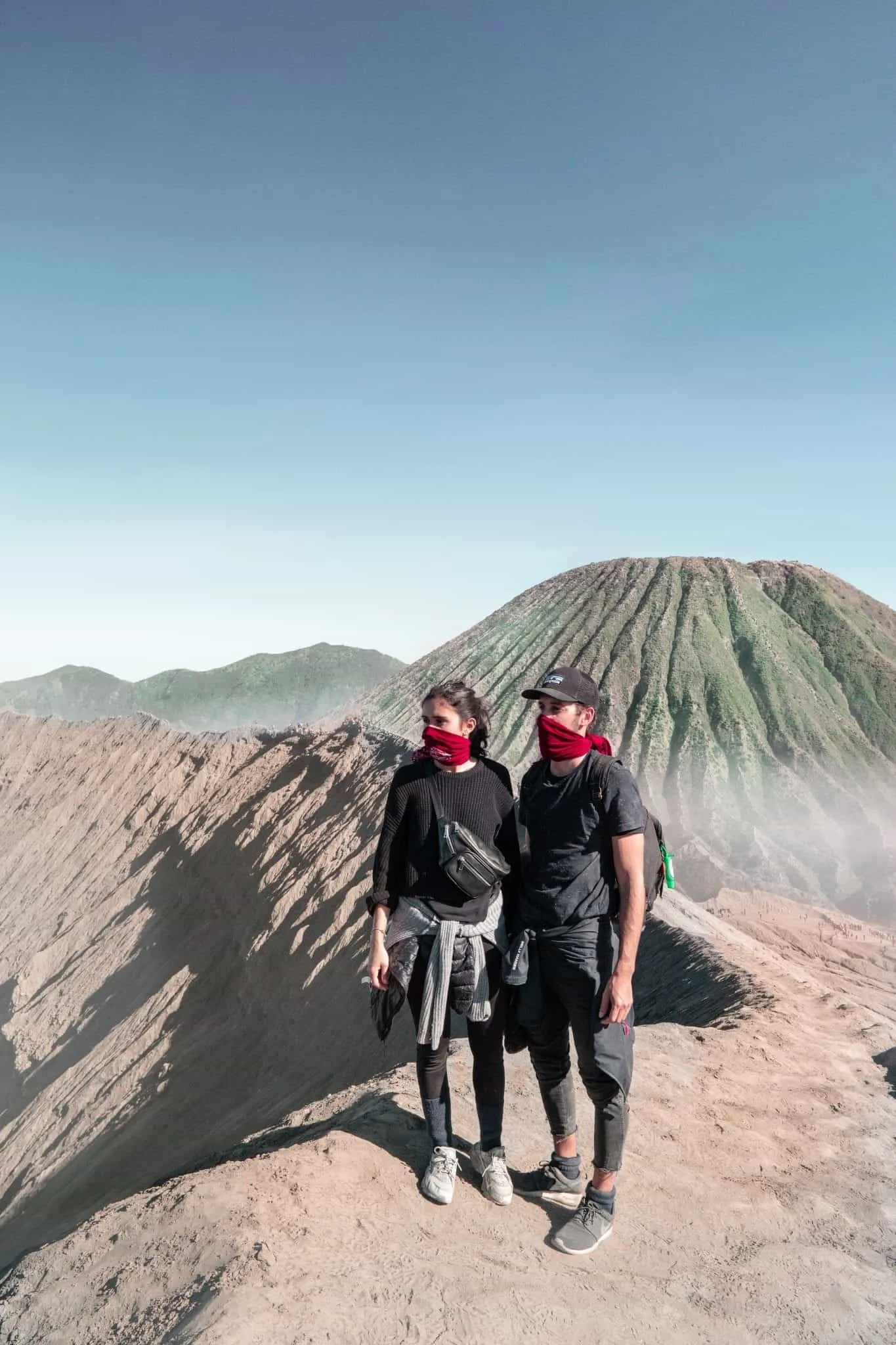
Once it was light, we went back to the jeep. The road now went downhill, toward the foot of Bromo. When you get out of the jeep you feel like you're on an uninhabited planet, because everything is covered in volcanic sand and the terrain is extremely arid.
Now you start to smell the sulfur coming from the volcano, and the climb to the crater is next! You 100% need a face mask, and they sell them everywhere for a few US cents. A scarf works too, but make sure it's not too thin, or it won't cover you well.
To reach the crater you have to walk about 20 to 30 minutes across volcanic sand. Some people may find it a bit harder because of the altitude, the blowing volcanic sand, the sulfur you're starting to notice or the sun starting to heat up. They'll offer you a ride up on horseback, but we are NOT in FAVOR of using the horses: they're very thin, mistreated and in contact with volcanic gases every day. Let's not encourage animal abuse. Walking it is far from impossible, and it may only take you a few more minutes.
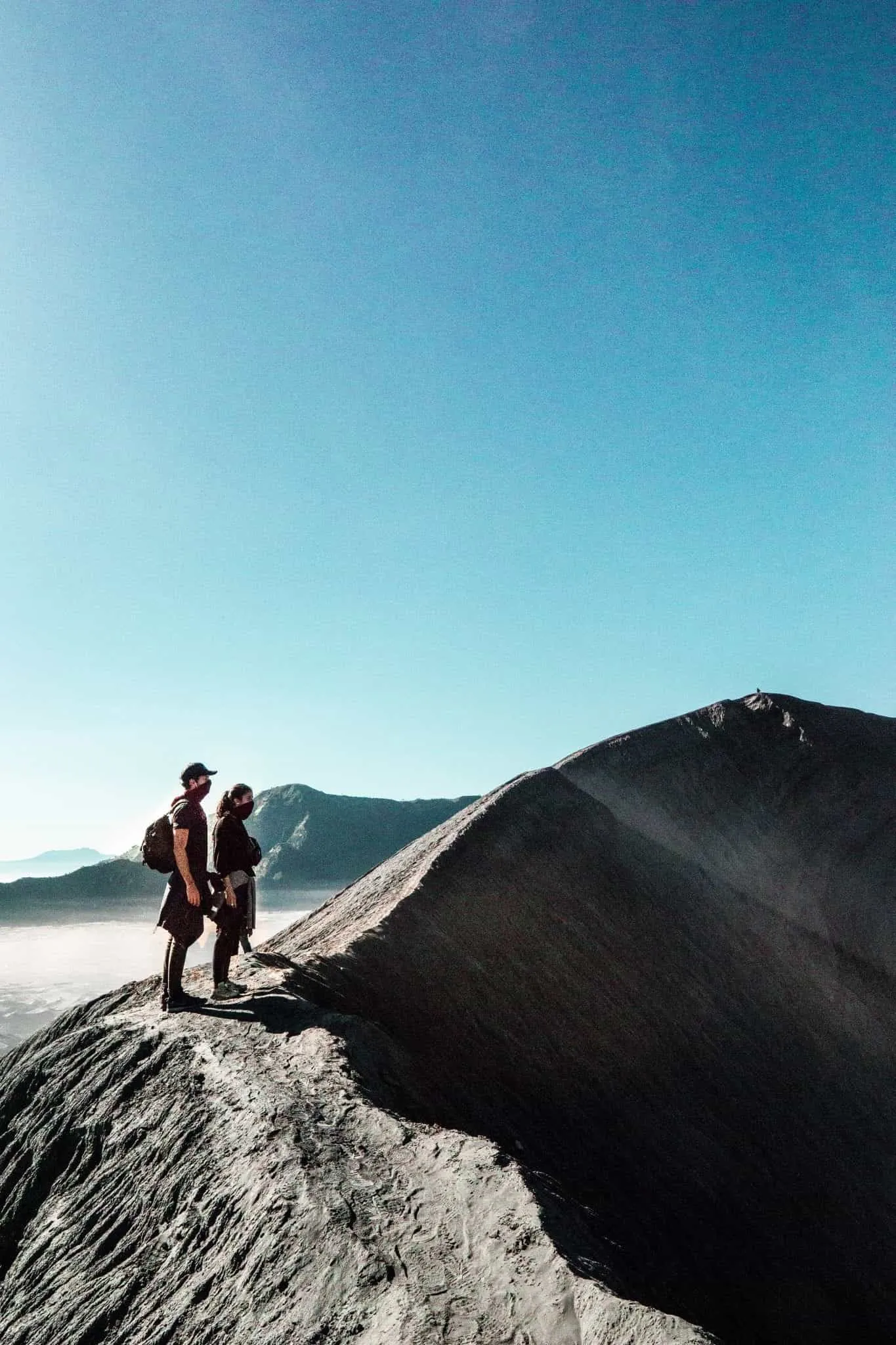
When you reach the foot of the volcano, you have to climb the 253 steps built into its slope, which take you straight to the crater.
Up at the crater you'll be left speechless. For us it was one of the best experiences we've had traveling: walking along the rim of an active volcano, watching the gases rise from its center, being able to sit down and fully take in this world we live in.
Kawah Ijen Volcano
The Ijen trip also starts very early, because you have to go down into the crater at night to see the blue fires. So at 12 midnight our driver picked us up at the hotel in Bondowoso, and we had a 1.5-hour drive to the volcano's entrance.
There we met our guide, who gave us the wonderful news that volcanic activity wasn't very high, which meant we could go down into the crater and see the blue fires!
Ijen volcano stands at 2,800 m (9,190 ft), which means a hike of almost 2.5 hours, entirely UPHILL! It's tough, but completely worth it.
Going down into the crater
To go down into the crater you have to rent an oxygen mask. They offer them all along the way to the volcano, for 50,000 rupiah (US$4).
At the top, following our guide, we started the 300 m (980 ft) descent to the volcano's crater. The path is very narrow and only fits one person at a time, so all of us tourists walk in single file behind our guides, lighting the way with flashlights and paying close attention, because it's very easy to slip. Every so often you also have to step aside to let the miners through.
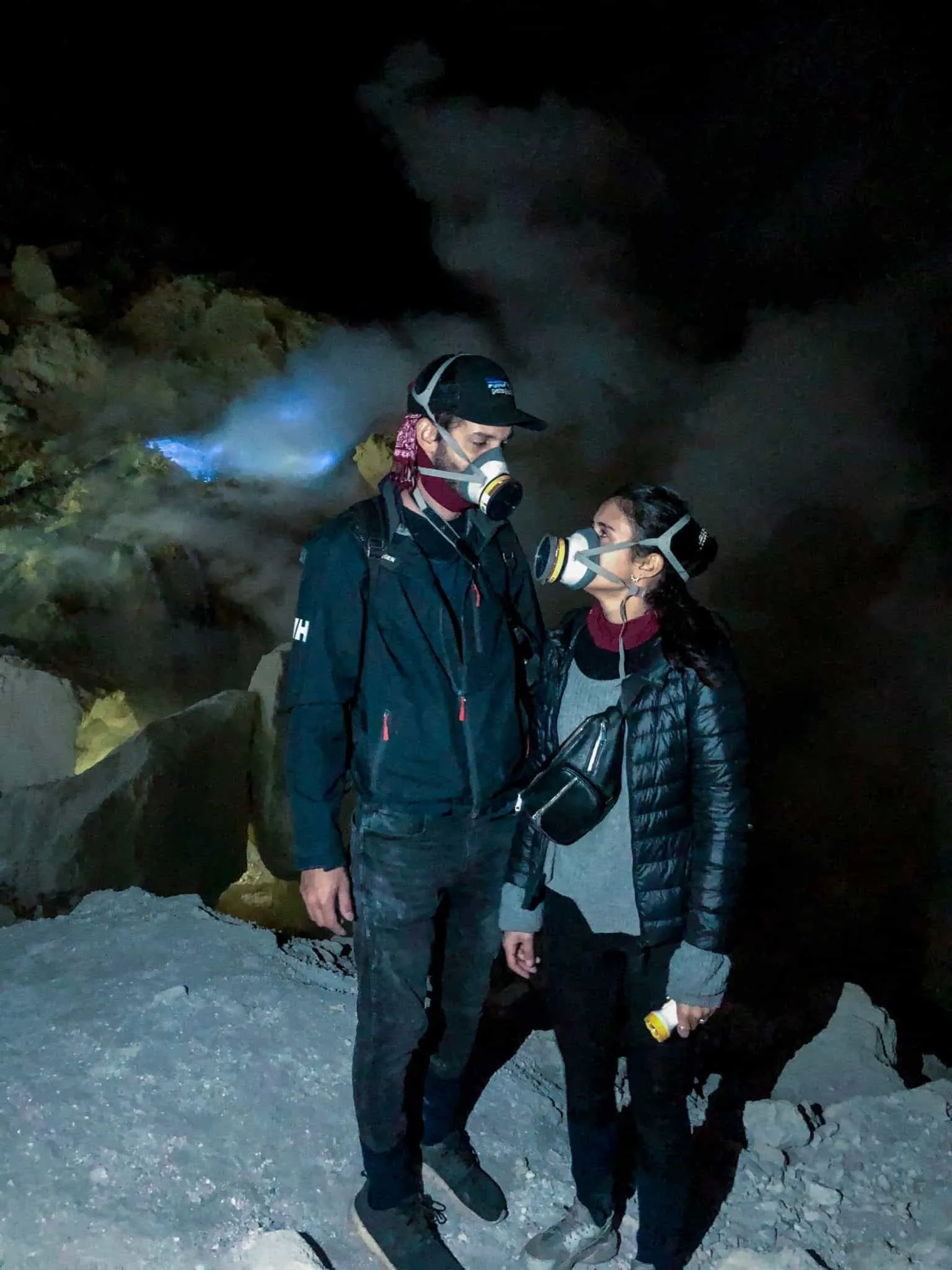
As you get closer to the crater you start to notice the sulfur, and you have to put on your mask. It was absolutely wild to be in the crater of a volcano, down there watching the sulfur come out as a liquid at extremely high temperatures and the volcano giving off its gases.
Every so often the wind blows a cloud of sulfur smoke at you and it's almost impossible to breathe. Our guide, a former miner, took us quite close to where the sulfur comes out to show us up close how the miners chip at the rock to get the mineral out. Our eyes burned and watered from the gases, and it was almost impossible to breathe that close. And to think the miners don't wear masks, just a scarf over their mouths. It's inhuman work.
And it's not only the contact with the volcano's gases: after extracting the sulfur, they load it into some flimsy baskets and carry it on their backs up out of the crater. They have to climb those 300 m (980 ft) with more than 70 kg of sulfur on their shoulders, and then walk the 3 km (1.9 miles) down the mountain to have it weighed. They can only make 2 trips a day, and what they're paid per kilo of sulfur is tiny.
The blue fires
It's a phenomenon found almost nowhere else in the world, and you can see it at night. The blue fires happen when sulfuric gas rising from the cracks in the crater, under pressure and at 600°C, ignites on contact with the air. It's an incredible thing to see.
The most acidic lake in the world
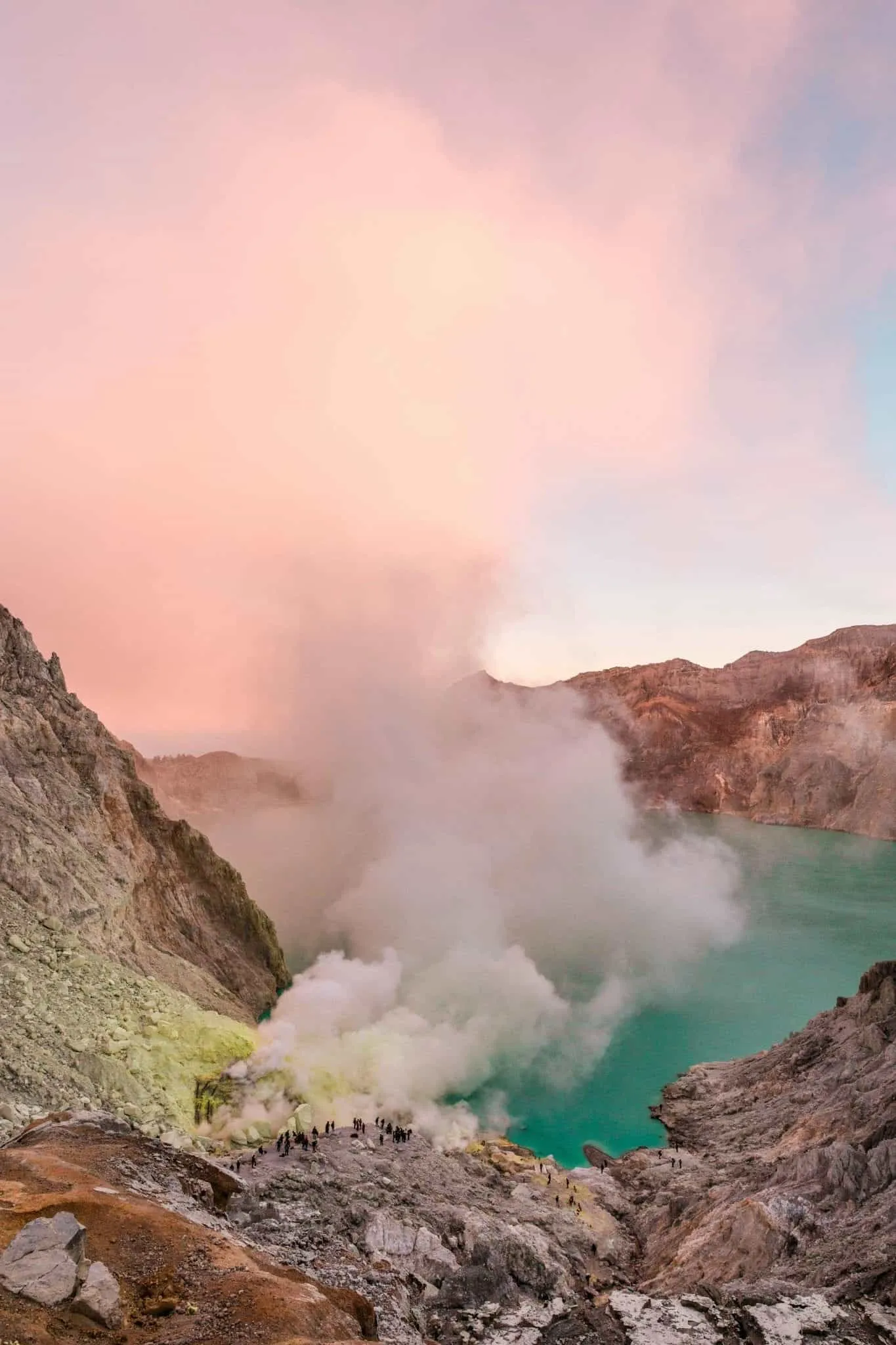
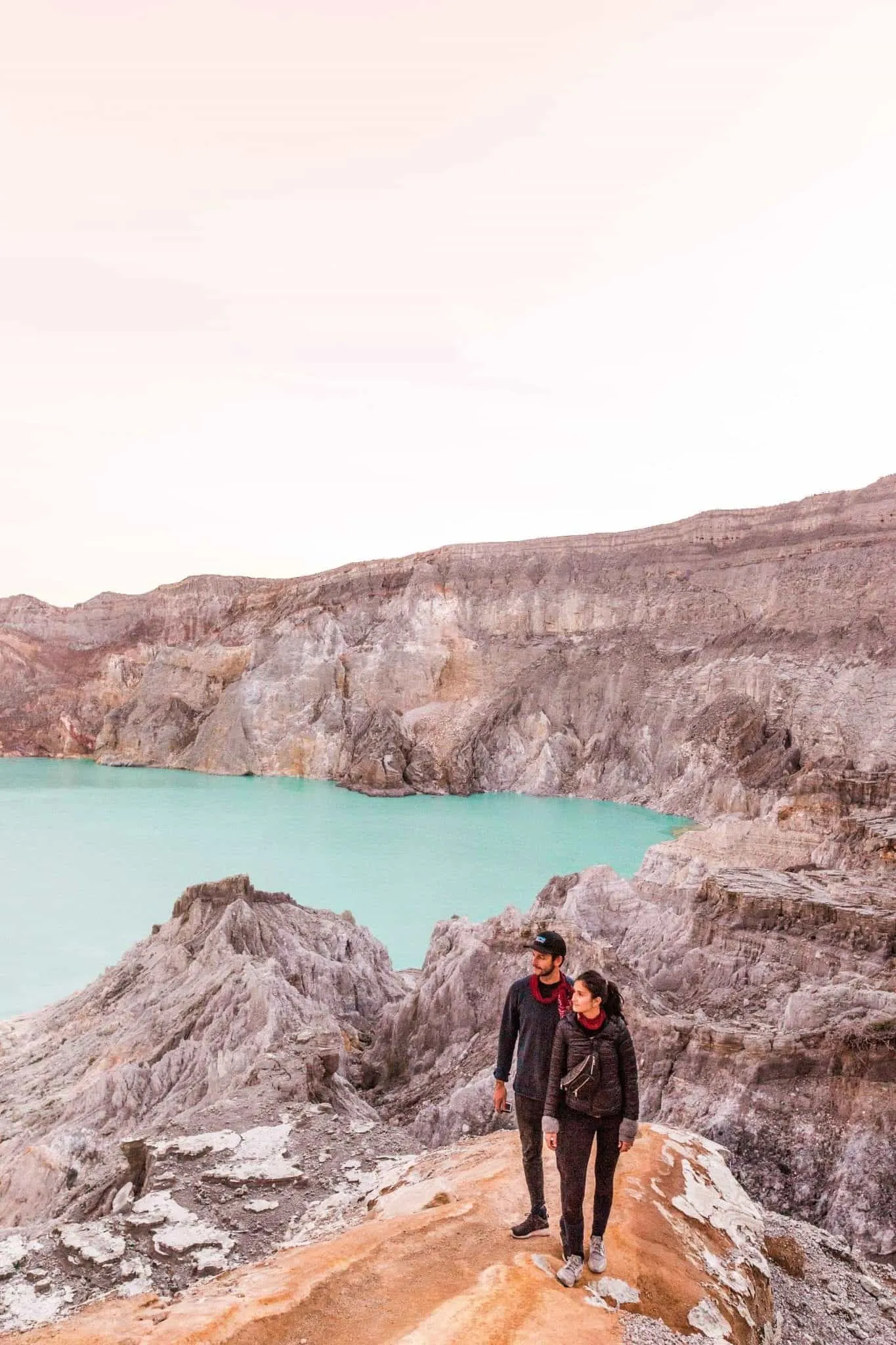
After taking in the blue fires we started back up, but stopped halfway. Our guide had us sit and wait for a little while as dawn broke. And as the sun lit up everything around us, we saw a huge turquoise lake stretching out in front of us.
It's the largest lake in Java and the most acidic in the world, because of its high concentration of sulfuric and hydrochloric acid. Its temperature is also 40°C.

Book your tour to Mount Bromo and Ijen volcano
See tours on Civitatis (opens in a new tab)
This is an affiliate link: if you book or buy through it, we earn a commission at no extra cost to you.
Other opinions
What we've told you about Kawah Ijen is based on our experience. We read a great many others and were surprised by how many people had bad experiences. It can come down to various factors: the weather (if it's very windy, the volcano's gases blow right at you), volcanic activity (if there's a lot of activity you probably won't be able to go down into the crater or see the blue fires) and the season you go (the weather is better in the dry season).
So we'd advise you to read more accounts before planning your visit to Ijen, not just ours. In the days before you go, also check the level of volcanic activity and whether you'll be able to go down into the crater.
For us it was an incredible experience, and we hope everyone who visits Java gets the chance to go to Ijen and have one like ours.
Practical tips
- Bring warm clothes, because it usually gets quite cold before dawn, around 9°C. We suggest a sweatshirt and a jacket. You don't need hiking boots: sneakers are perfectly fine. Leggings are the most comfortable thing for this kind of trip, and besides being warm they take up very little room in your suitcase. Try to wear clothes you don't expect to wear again on the trip, because they end up smelling strongly of sulfur, and it won't come out without multiple washes!
- For Ijen, we 100% recommend going with a guide.
- If you're short on time, book a tour. Doing it on your own will surely take you longer.
- There are generally 2 types of tour covering both volcanoes: 2 days and 1 night, or 3 days and 2 nights. The difference is that on the 3-day tour you sleep a night near Mount Bromo and get up very early the next day for the sunrise, while on the 2-day tour they pick you up at the train station at midnight and take you straight to Bromo. At first we wanted to do the 3-day, 2-night one, but since it cost more we went with the 2-day, 1-night one, and we think it was the best decision. We didn't need more days.

Stay connected with a Holafly eSIM
Get an eSIM on Holafly (opens in a new tab)
This is an affiliate link: if you book or buy through it, we earn a commission at no extra cost to you.
- Did a price or a detail change? Tell us at hello@charoandmarcos.com
- Still have a question? Ask us on Instagram (opens in a new tab)

Your next step
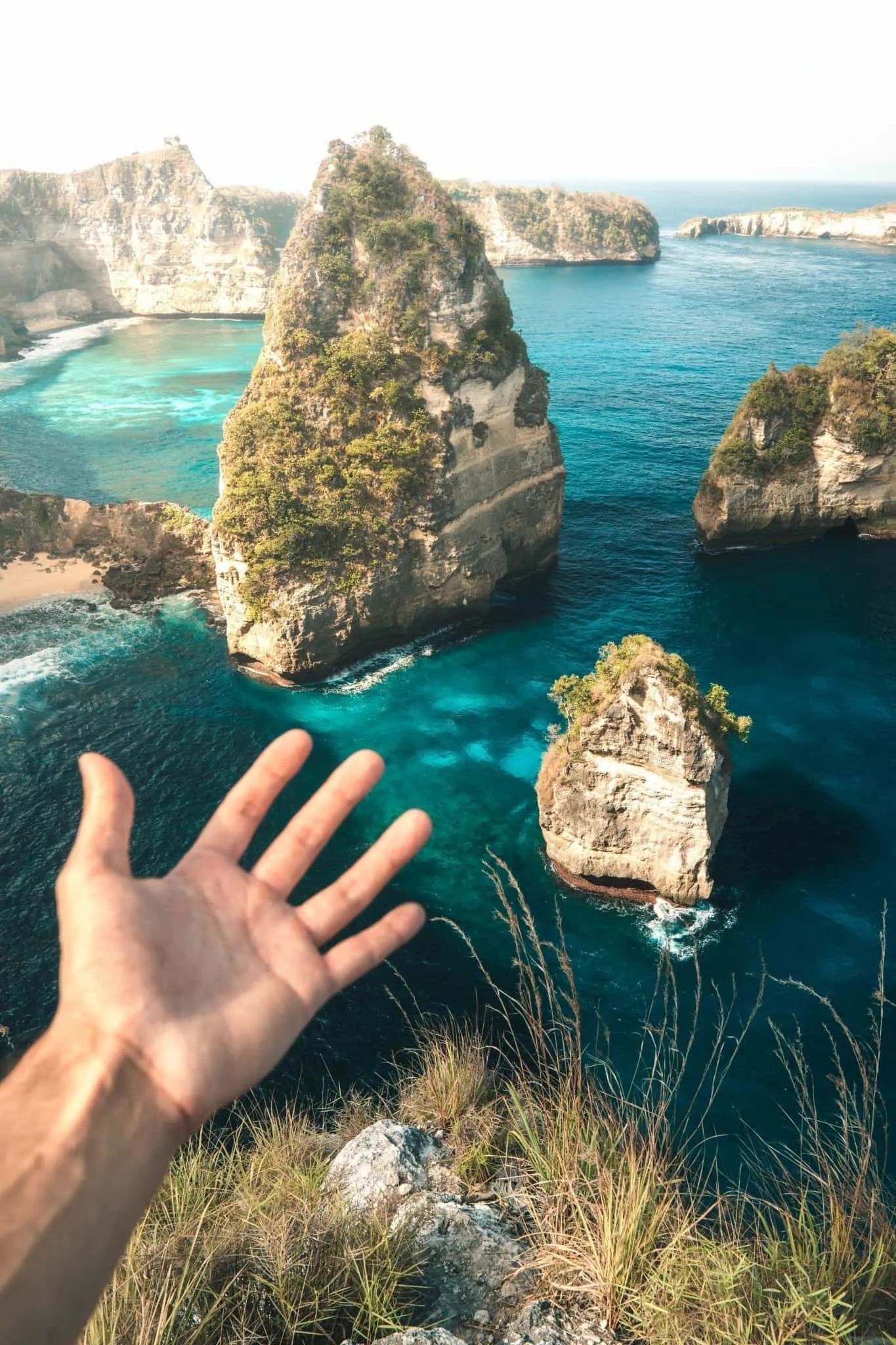
Things to Do in Indonesia: A 3-Week Itinerary
Indonesia is one of the largest countries in Southeast Asia, with more than 17,000 islands and plenty of places worth a visit. So when…