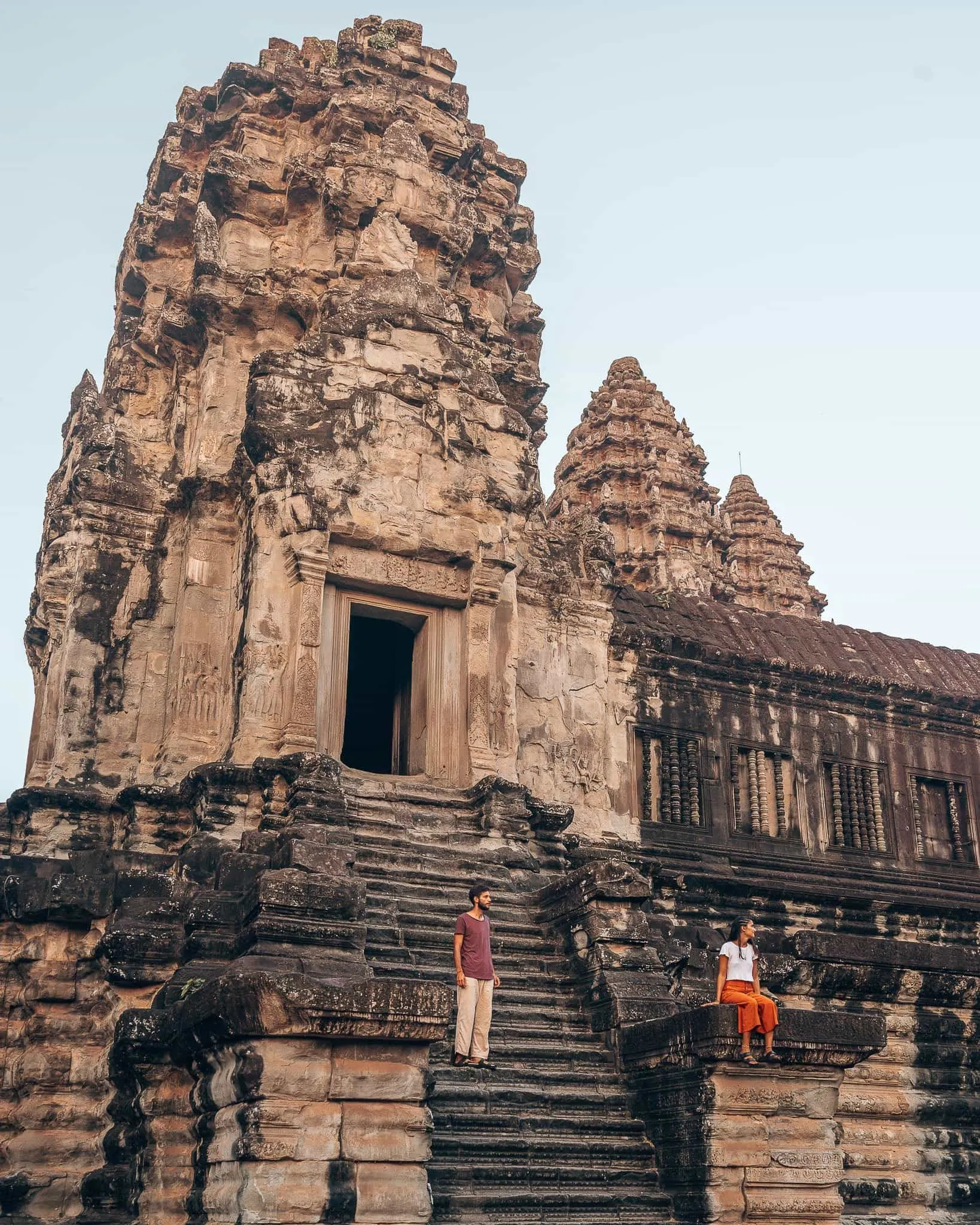
How to Visit the Temples of Angkor in Cambodia: Complete Guide
We wrote this guide in Spanish and translated it with the help of AI. Leer en castellano
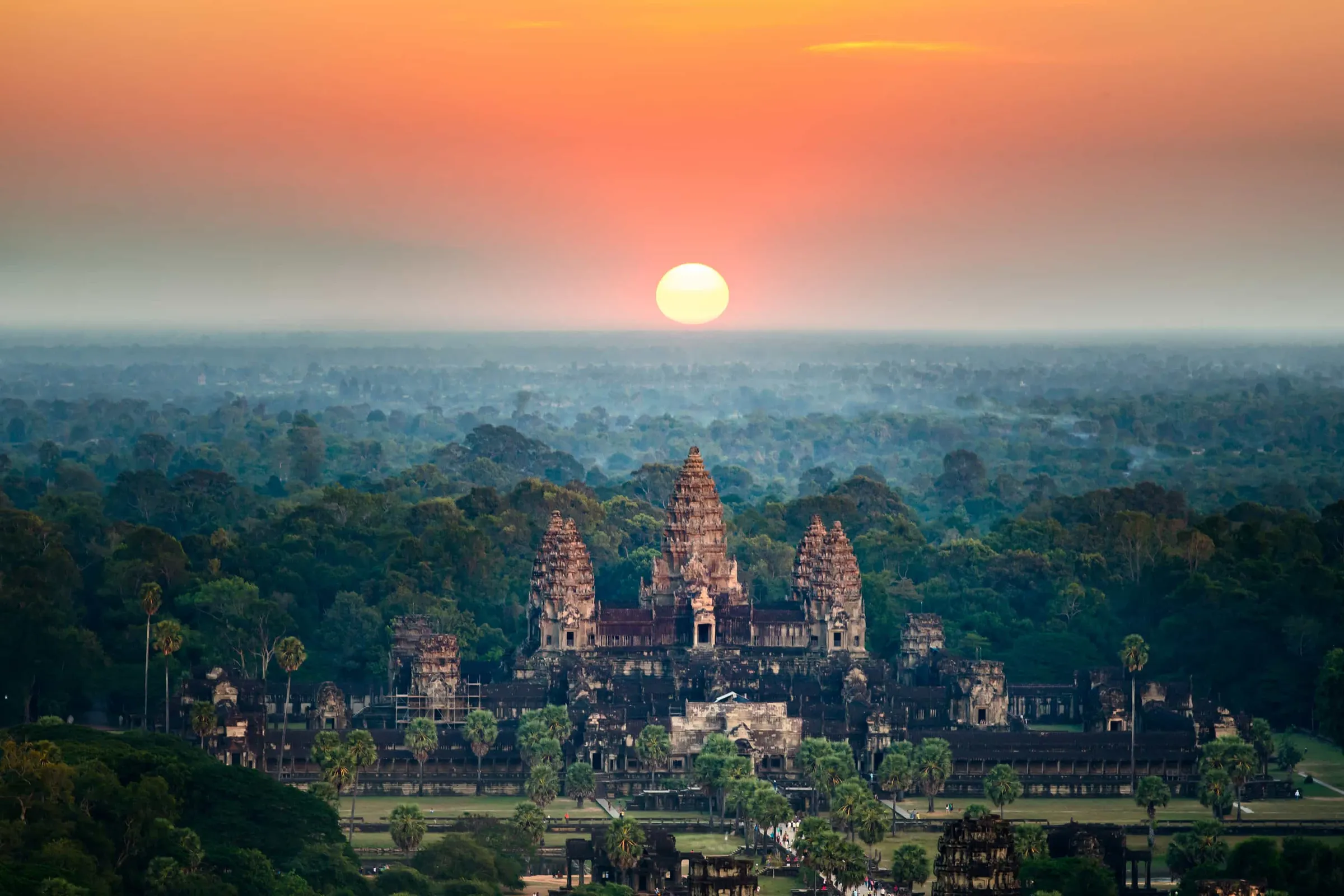
Angkor could be called the eighth wonder of the world: it's one of humanity's greatest archaeological treasures. Constructed between the 9th and 13th centuries, it's considered the largest religious structure ever built. In 1992, the more than 900 temples that make up Angkor were declared a UNESCO World Heritage Site.
This article has affiliate links: if you book or buy through them, we earn a commission at no extra cost to you.
The temples of Angkor
Its history goes back to the 2nd century, but its golden age began in 802 AD with the Khmer Empire and its founder, King Jayavarman II, who started the worship of Hindu deities and created a single kingdom, declaring himself God-King. To subdue the tribes and reinforce his supposed divine ancestry, he began building great temples. This empire dominated Southeast Asia from the 9th to the 15th century.
In 1295, King Jayavarman VII abandoned Hinduism and converted to Buddhism, going on to build Angkor Thom and temples such as Bayon. However, in the 13th century his son, King Jayavarman VIII, returned to Hinduism and destroyed many of the Buddhist temples.
At the start of the 13th century, the Khmer Empire began to decline just as the Thai Empire was rising. Finally, in the 16th century, the Khmer Empire was conquered by the Thai Empire, which meant Angkor was abandoned and the jungle took over many of its temples.
Angkor Wat was one of the temples that was never completely abandoned: even though it was dedicated to the god Vishnu, Buddhist monks went on living in it and looking after it.

Travel with peace of mind with Heymondo travel insurance
Get your travel insurance on Heymondo (opens in a new tab)
This is an affiliate link: if you book or buy through it, we earn a commission at no extra cost to you.
Tickets to the temples of Angkor
You buy tickets at a building near the temples, open from 5AM to 5:30PM. If you're planning to see the sunrise at Angkor, we recommend buying your tickets in advance, since the lines at that hour tend to be very long. The ticket office is usually empty in the afternoon, so the best time to go is around 5PM.
There are 3 different tickets, depending on how many days you want to spend visiting the temples
1-day pass: US$37 – Valid on the day you buy it, and it gets you into the temples for just 1 day. If you buy the pass after 5PM, it's valid for the next day.
3-day pass: US$62 – Valid for 10 days from the time of purchase, and it gets you into the temples on 3 days.
7-day pass: US$72 – Valid for one month from the day of purchase, and it gets you into the temples on 7 days.
It's true that tickets to the temples of Angkor aren't cheap, but our advice is that one day isn't enough to take in how amazing this place is. Besides, if you try to see everything in a rush, you'll very likely get tired and all the temples will start to look the same. We recommend paying a little more for the 3-day pass and taking a day off in the middle to do something other than temples.
TIP: If you enter the temples after 17:00, the visit won't count as a day on your ticket. You have to show your ticket, but you can watch the sunset at the temples “for free”.
Dress code
Since it's a sacred place, you must keep your shoulders and knees covered.

Book a tour to visit Siem Reap
See tours on Civitatis (opens in a new tab)
This is an affiliate link: if you book or buy through it, we earn a commission at no extra cost to you.
How do you get around the temples of Angkor?
By bicycle
The roads around the temples are flat, which makes them very easy to ride by bicycle, but keep in mind that it's usually extremely hot for most of the day.
By motorbike
In Siem Reap it's forbidden to rent motorbikes to tourists, so this usually isn't an option for getting around the temples. That's because the area gets a huge amount of tourism, and renting motorbikes to tourists caused many accidents in the past, so locals no longer rent them out. Even so, we were told there are two places that do rent to foreigners, but unless you have a lot of experience we don't recommend it, since the traffic tends to be chaotic.
By tuk-tuk
This is the most common way to get around the temples, since it's the best value for money.
A tuk-tuk holds 4 people, and hotels usually arrange things the day before to put you in a shared one. The price varies depending on what the hostel wants to charge you and how well you negotiate, but it's around US$8-12 per person, depending on the circuit.
Since there were two of us and we wanted to go at our own pace, we decided to book a tuk-tuk just for ourselves. At the hostel we managed to negotiate it down to US$20 for the Grand Circuit and US$15 for the Small Circuit. On the third day we decided to go later and caught a tuk-tuk on the street, which charged us US$12 to take us to just 4 temples.
By car
If you want to avoid the heat and travel more comfortably, you can book a tour by car or hire a car with a driver to take you around the temples. Expect to pay around US$30 per person.
Which temples should you see at Angkor?
The famous circuits for visiting the temples:
Small Circuit – It includes the big temples and is 18 km long
- Angkor Wat
- Ta Prohm
- Ta Keo Temple
- Victory Gate
- Baphuon Temple
- Terrace of the Elephants
- Terrace of the Leper King
- Bayon
Grand Circuit – It includes the temples farther out and is 26 km long
- Ta Som
- East Mebon
- Pre Rup
- Preah Khan
- Preah Neak Pean
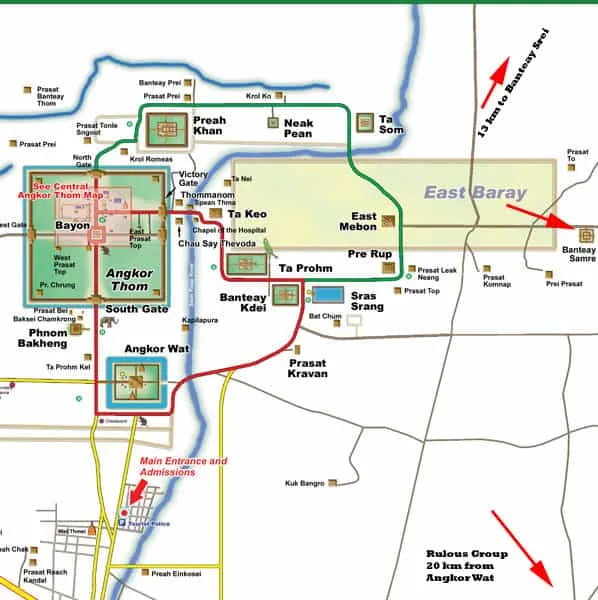
Small Circuit
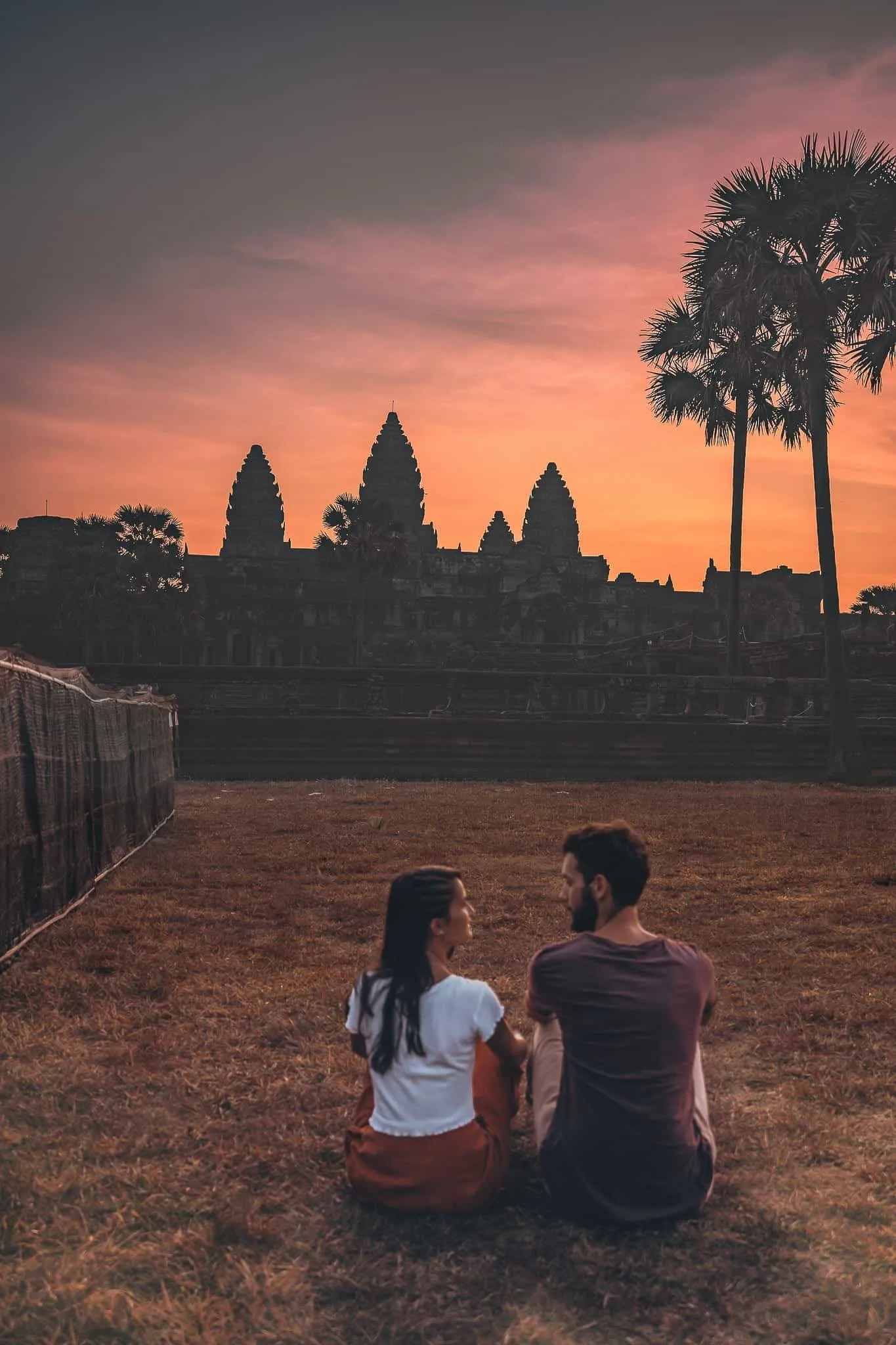
This circuit starts before dawn (5am) so you can see the sunrise at Angkor Wat. It's the most famous temple for sunrise because the sun comes up right behind its towers. We recommend getting there as early as you can (it opens at 5 AM) to find a good spot among all the tourists. Watching the sunrise here is magical. Once the sun is up, we recommend going inside right away while the other tourists take photos of the outside, so you'll have it almost to yourself. Another option is to head to a different temple and come back later to see the inside, so you'll be almost alone in both places.
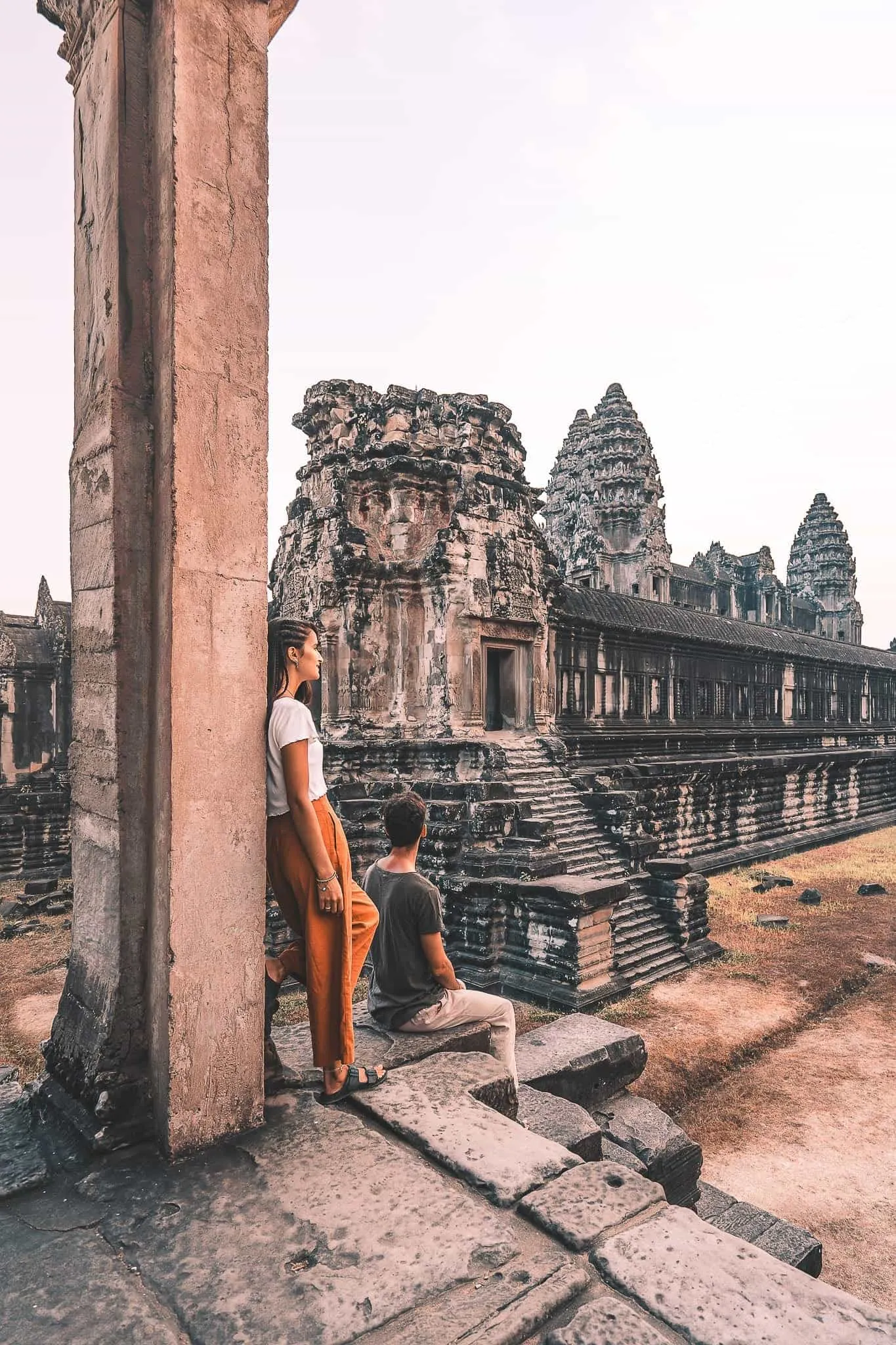
Angkor Wat is the largest and best-preserved temple in all of Angkor, and also the largest Hindu temple in the world.
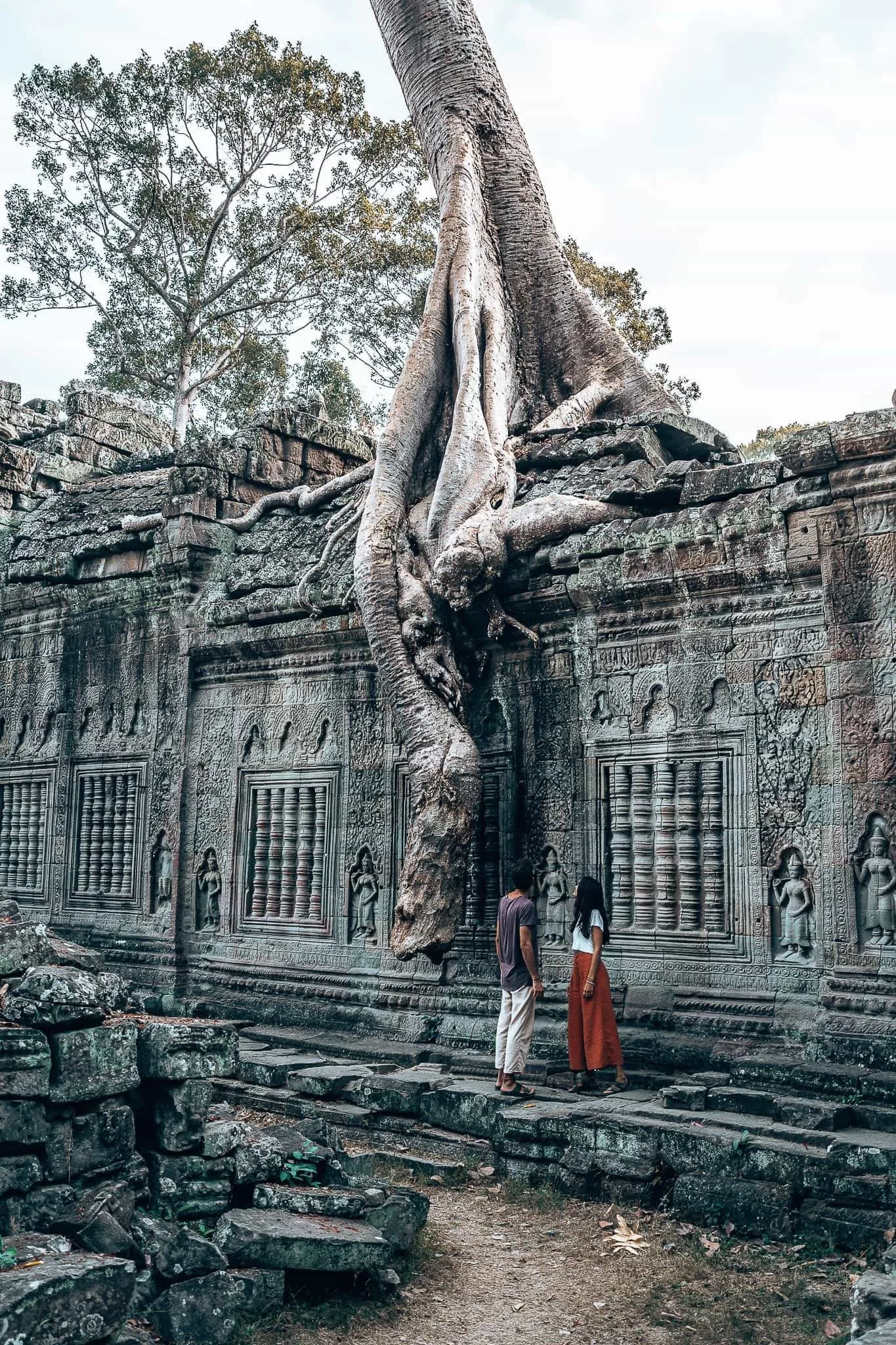
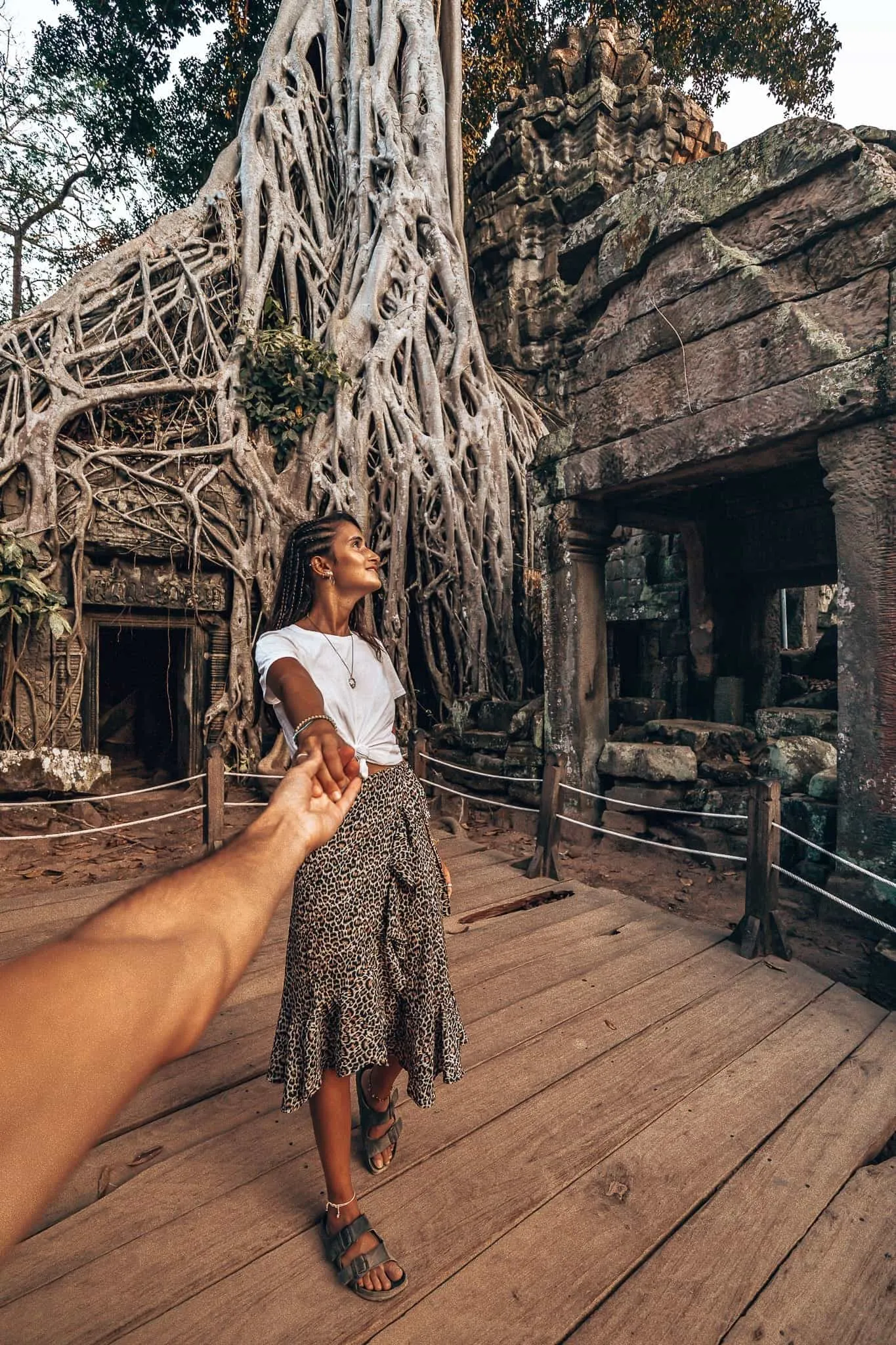
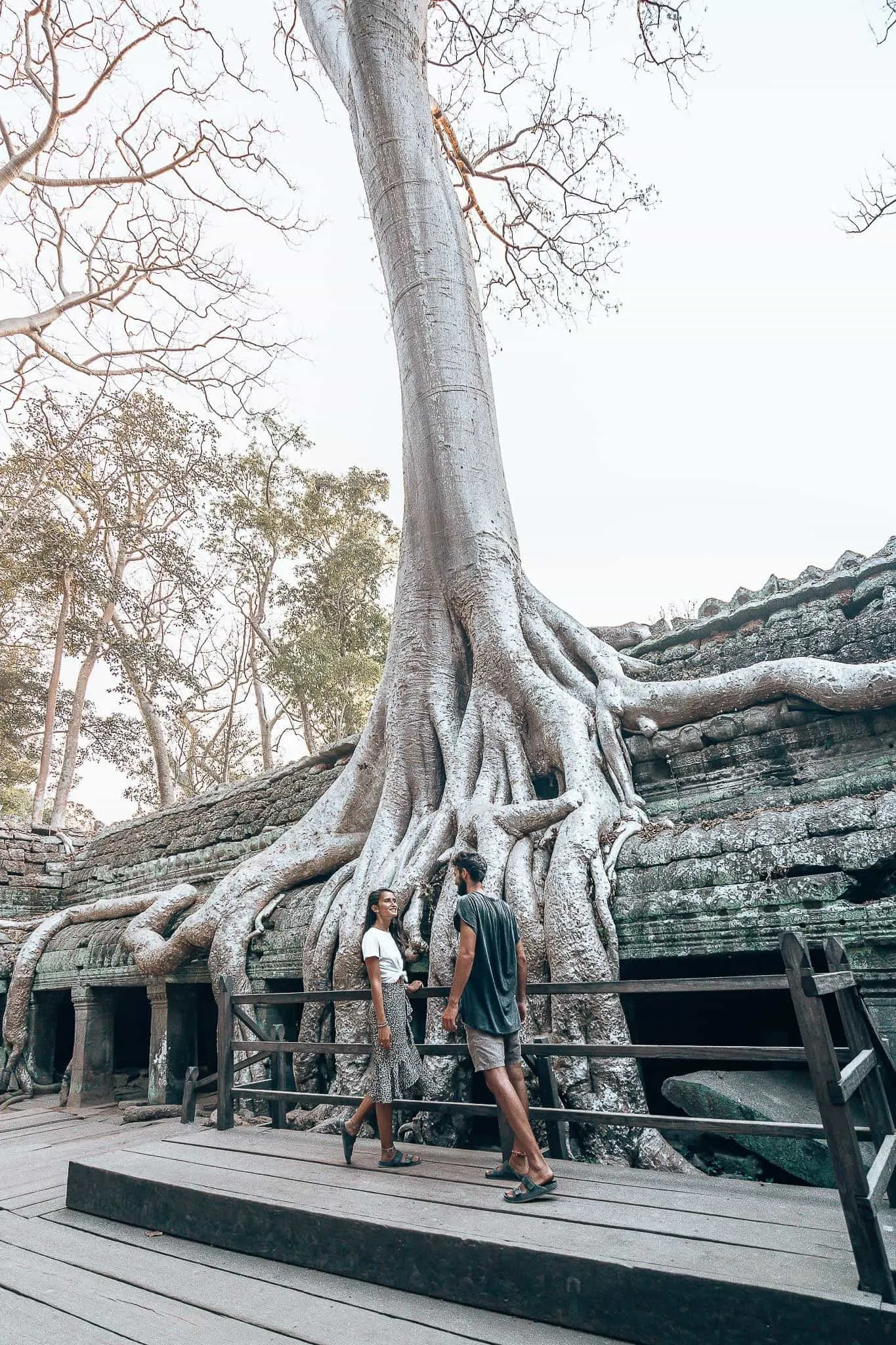
The second stop on the route is Ta Prohm, the famous Tomb Raider temple (the movie with Angelina Jolie, have you seen it?). The most striking and beautiful thing about this temple is the roots and trees that have grown through its walls.
Ta Keo Temple, dedicated to the god Shiva, is the third stop on the circuit.
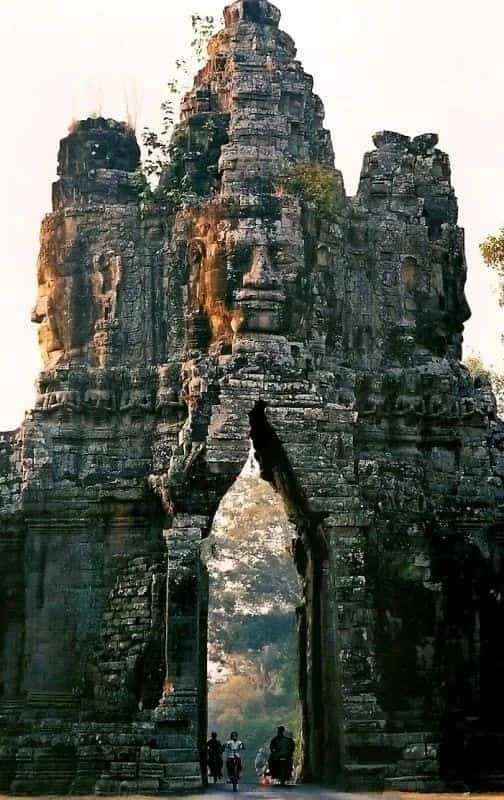
The fourth stop on the route is Angkor Thom, the Great Fortified City. Among the ruins still standing is the impressive Victory Gate, 20 meters tall, with 4 carved faces of Buddha, each looking toward a different point of the compass.
Next comes Baphuon Temple, dedicated to the god Shiva. It's a five-story pyramid structure, 25 meters tall in all.
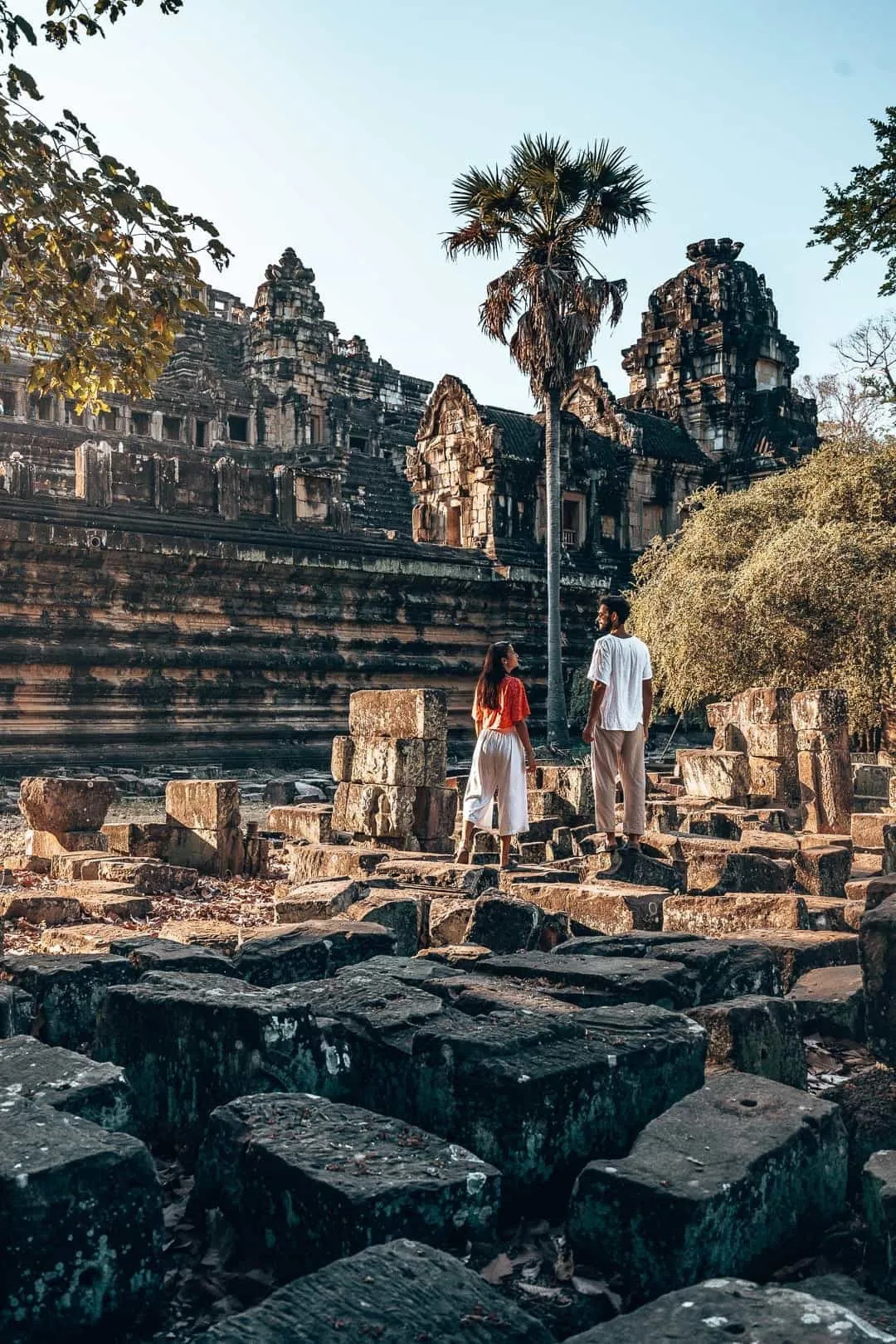
From Baphuon you can see the Terrace of the Elephants, a wall with carved elephants.
The Terrace of the Leper King is the second-to-last stop in Angkor Thom. Its statues depict the Hindu god Yama.
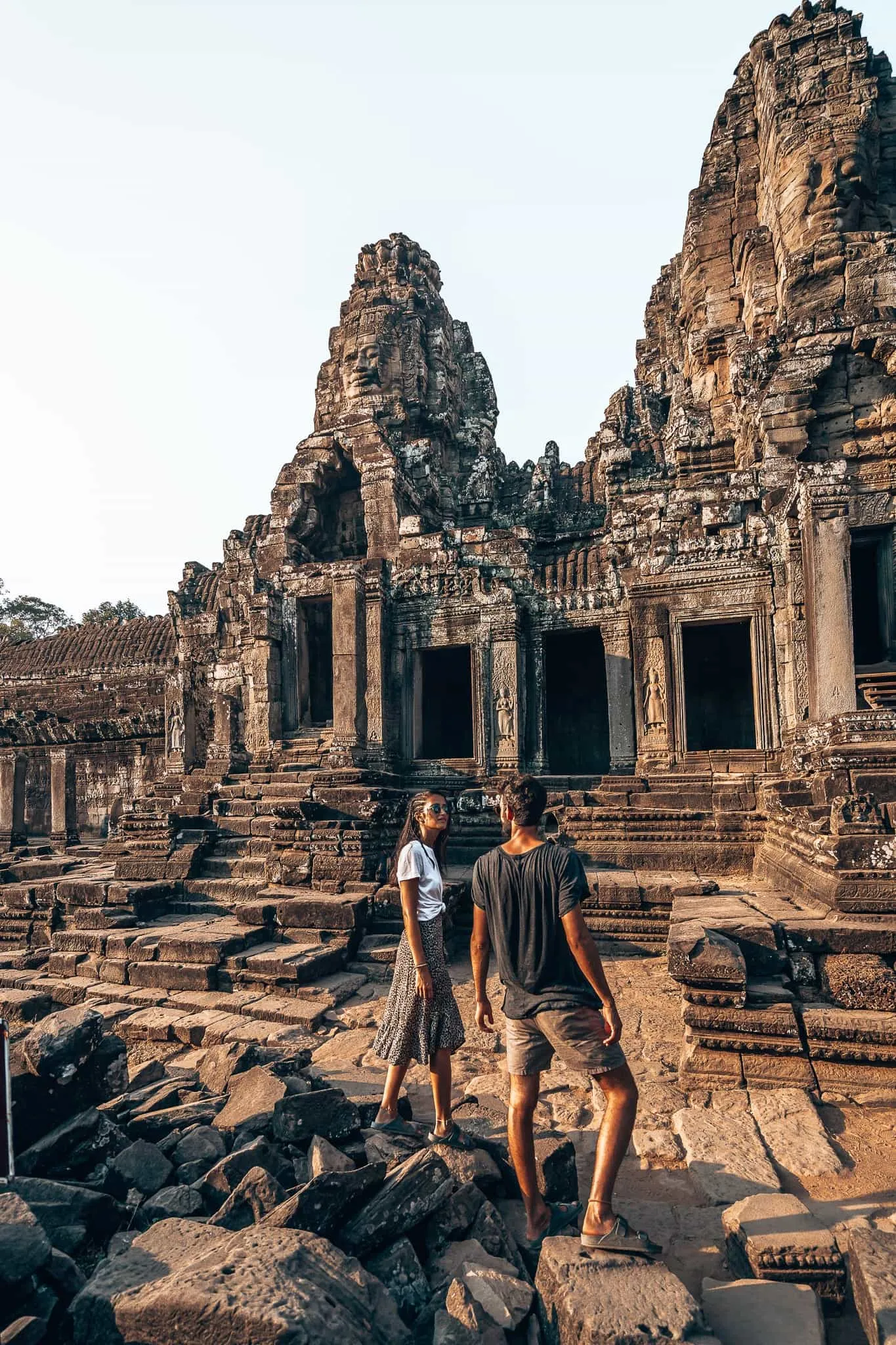
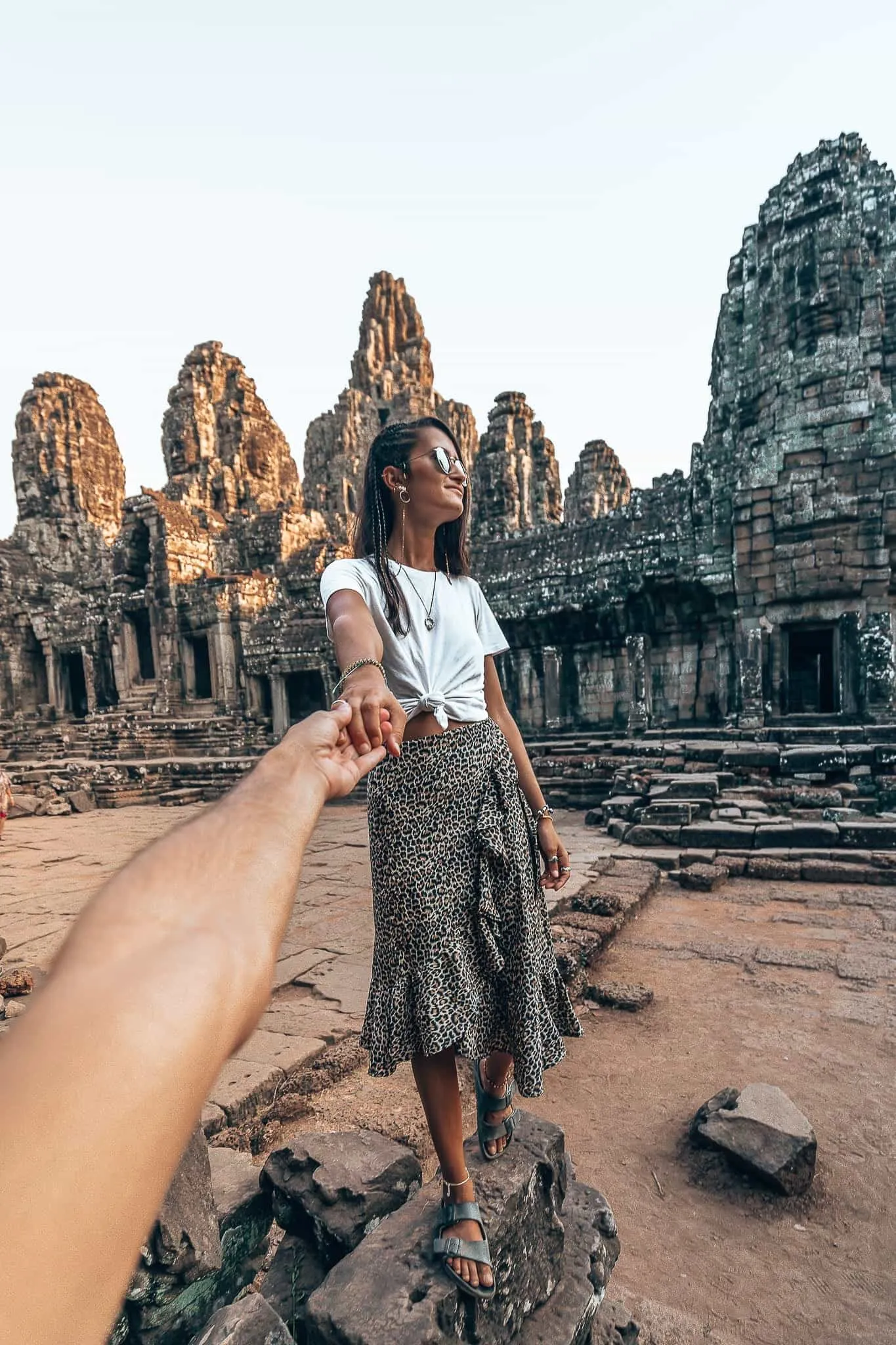
The last stop on the Small Circuit is Bayon, a temple famous for its 37 towers (originally there were 54) with more than 200 carved faces of Buddha.
Tip: At 5PM it's completely empty!
Grand Circuit
This circuit usually starts at 11 in the morning and ends at sunset.
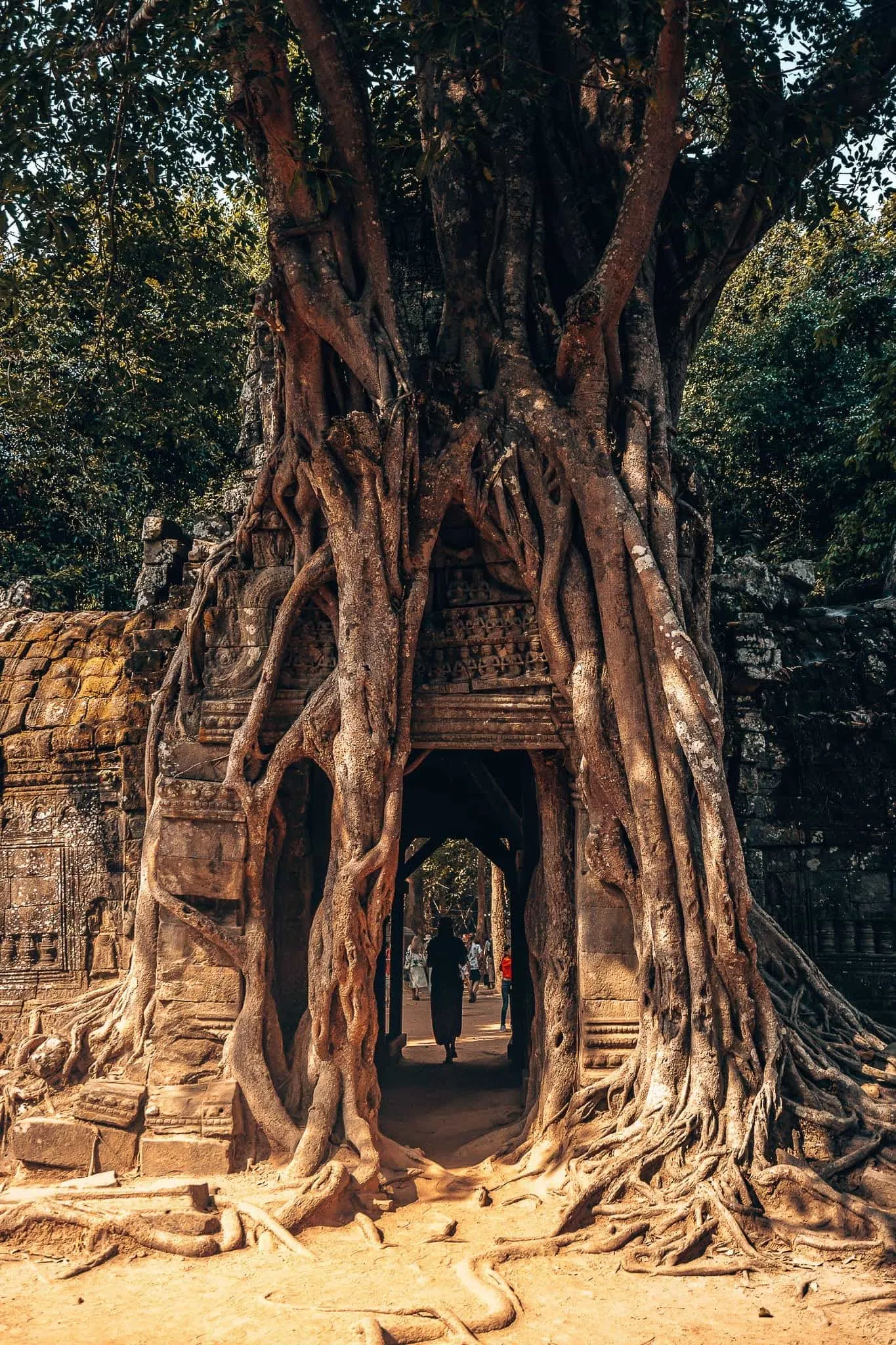
The first stop is Ta Som, a temple also surrounded by nature and trees. It's gorgeous! It was built at the end of the 12th century for King Jayavarman VII.
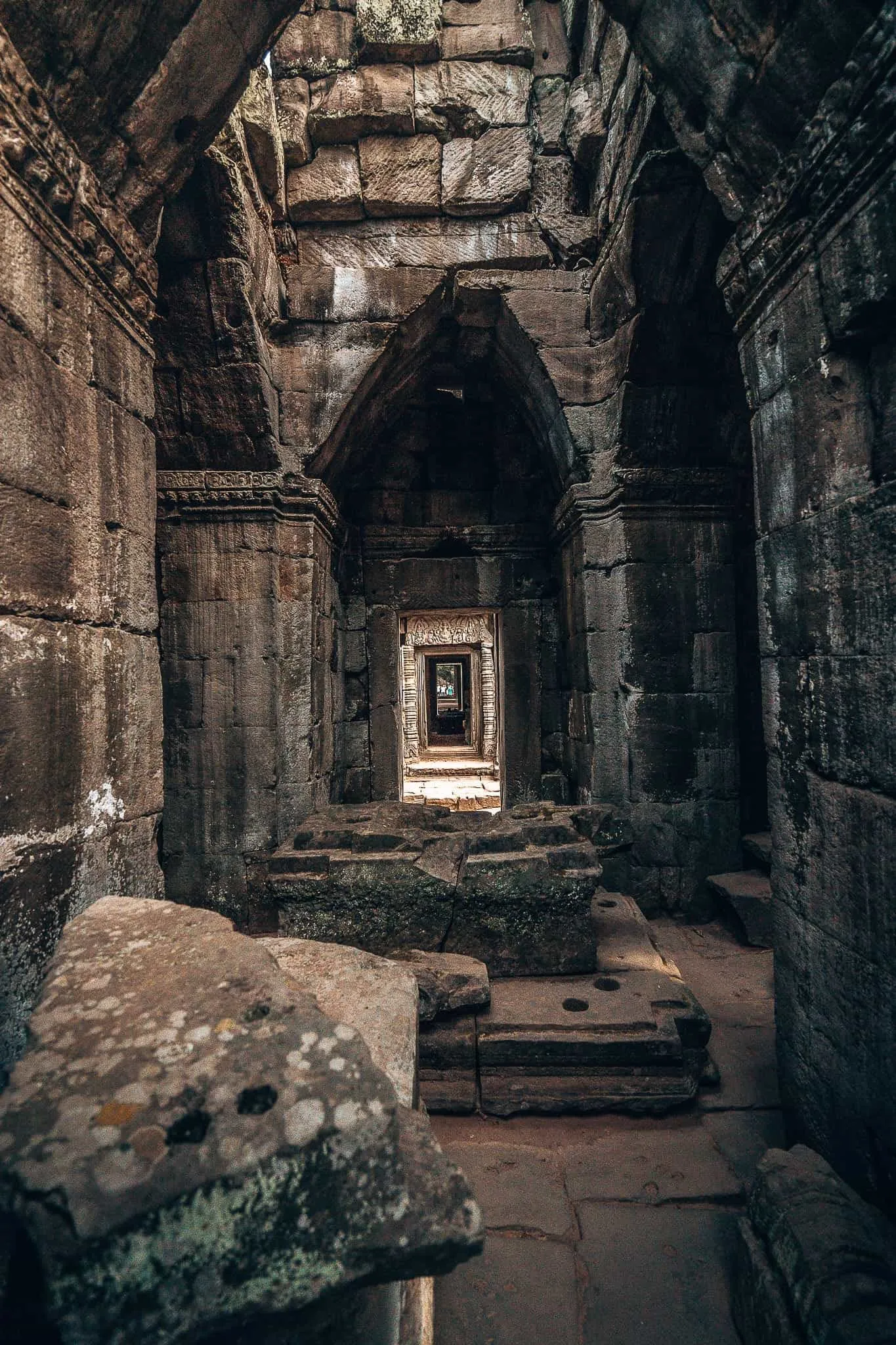
The next stop is East Mebon Temple, built in the 10th century during the reign of King Rajendravarman. It has three levels crowned by 5 columns, and it's dedicated to the Hindu god Shiva, in honor of the king's father.
Then we'll visit Pre Rup Temple, whose name means “turn the body”. It was built as the state temple of the Khmer king Rajendravarman and dedicated in 961. Pre Rup is one of the few temples that close at 7 PM, which makes it a great option for sunset. It's one of the tallest temples in Angkor, so if you go in and climb to the top, you'll get an impressive view of the sun setting over the jungles of Cambodia.
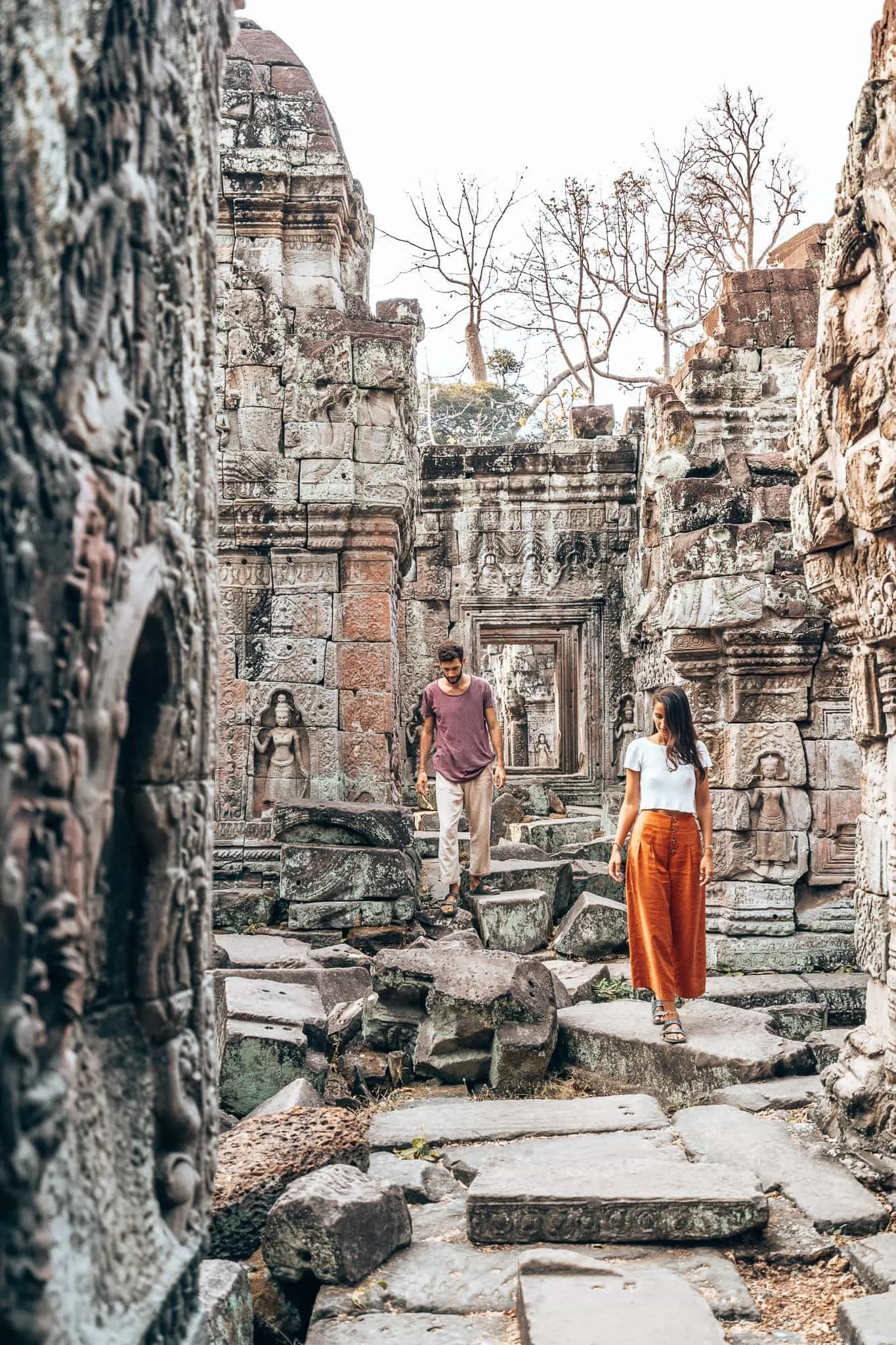
Preah Khan Temple is one of the largest in Angkor and also one of our favorites. Preah Khan translates as “Sacred Sword” in Khmer, and Jayavarman VII named it that in honor of his victory in battle against the Cham invaders.
It spreads over a site of 800 by 700 meters, covering an area of 56 hectares. It looks a lot like Ta Prohm, surrounded by trees and vegetation.
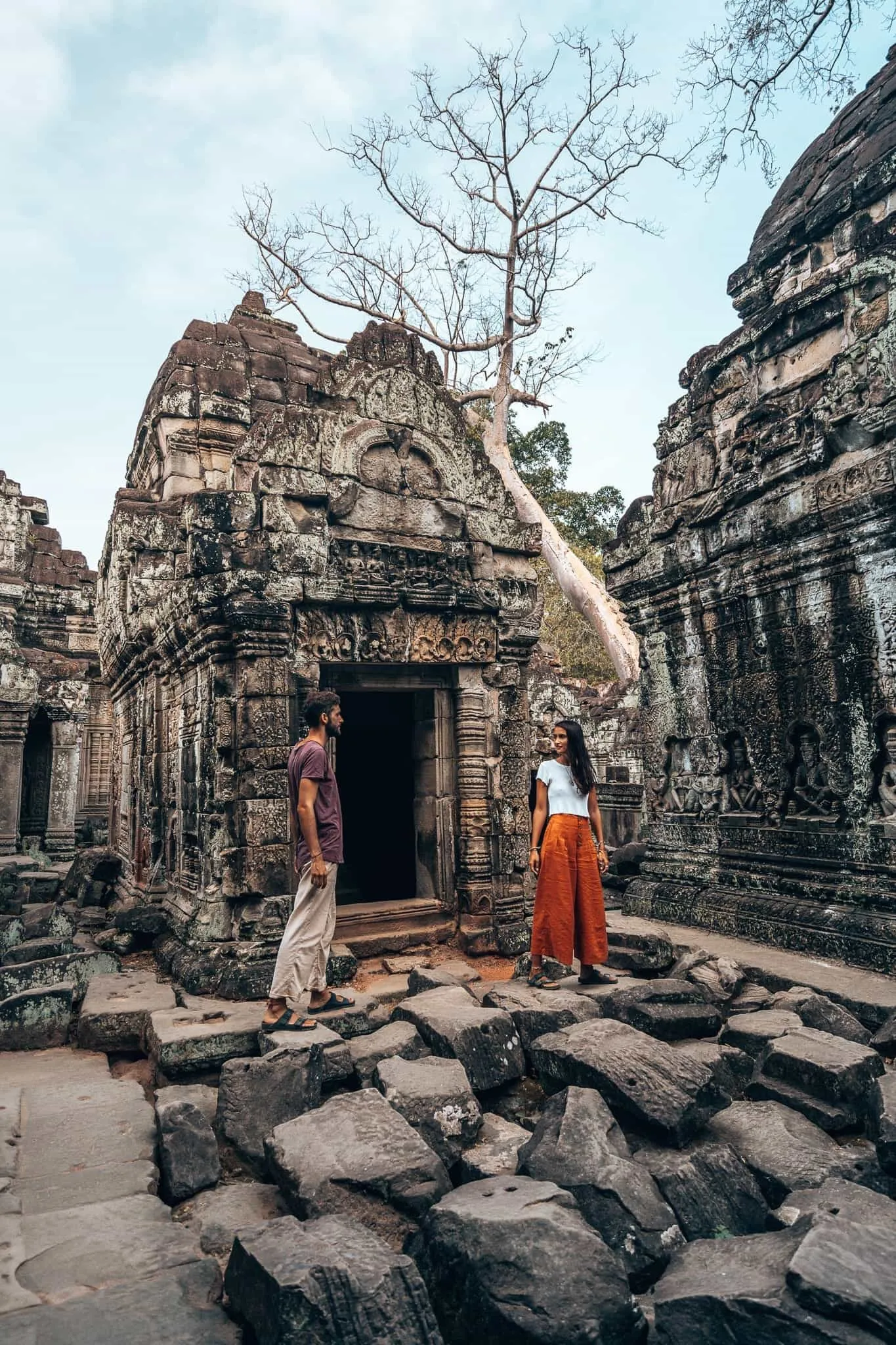
The last temple we'll visit on this circuit is Preah Neak Pean, a small Buddhist temple from the end of the 12th century. In the center is an island, surrounded by 4 pools that represent the 4 elements: fire, earth, wind and water.
Other temples to see:
Phnom Bakheng: A mountain-shaped Hindu temple dedicated to the god Shiva. It's 60 meters tall, which is why it's one of the favorite places to watch the sunset. It's usually full of tourists, so if you're looking for somewhere quiet, we recommend going early.
Srah Srang: This isn't a temple but a reservoir. Many people choose it to watch a magical sunrise away from the crowds of tourists.
Banteay Srey: This temple is 20 km from the main area of Angkor. It's known as the temple of women, the little temple and the pink temple. It's a beautiful temple of pink limestone with decorative carvings of many female deities on its walls.

Stay connected with a Holafly eSIM
Get an eSIM on Holafly (opens in a new tab)
This is an affiliate link: if you book or buy through it, we earn a commission at no extra cost to you.
How do you avoid the crowds at the temples of Angkor?
It's true that the temples of Angkor get 2.6 million tourists a year, which means you'll be sharing your visit with hundreds of other tourists. But there are ways to avoid them and enjoy these incredible temples almost empty.
- Do the circuits in the opposite direction from the usual one
- Visit Bayon, the temple of a thousand faces, at 5 PM. We had it all to ourselves!
- Go to the most popular temples shortly before closing. For example, Ta Prohm closes at 5:30PM and we got there at 5:10 PM, begging them to let us in and saying we'd be really quick. It turned out we were almost alone inside: all the tourists had already gone back to their hotels to rest or were on their way to see the sunset at Phnom Bakheng, so we got to walk around with no crowds. Plus, once you're inside they let you finish your visit, and we were in there for about 40 minutes. The experience was completely different from the first day, when we toured it surrounded by thousands of tourists.
- Visit the temples very early, right when they open. Apart from Angkor Wat, Srah Srang, Phnom Bakheng and Pre Rup, the rest of the temples open at 7:30AM.
- Did a price or a detail change? Tell us at hello@charoandmarcos.com
- Still have a question? Ask us on Instagram (opens in a new tab)